Hauru Point or Motu Fareone: Which Moorea Beach
Published 2026-11-07. Conditions described are typical and never guaranteed.
The verdict first
These two sit on the same stretch of Moorea's northwest coast, they both cost nothing, and they both put you over clear lagoon water with real snorkelling. Yet they ask completely different things of you, and that is what decides the day.
Choose Hauru Point Beach if you want to drive up, park free, use a public toilet, drop your towel on soft white sand and be in a turtle friendly lagoon within minutes. It is the low effort, high reward option, and on an island where most of the shore sits in front of resorts, the free parking and restrooms alone make it unusually easy.
Choose Motu Fareone if you want a tiny wild islet, a sense of having paddled somewhere, and the island's standout easy snorkel in the channel beside its neighbour. It rewards effort and preparation. There are no services at all, so you carry your own water, shade and gear, and you take everything home again.
Put simply: Hauru Point is the beach you reach by car and settle into for the day. Motu Fareone is the beach you earn by kayak or boat and keep deliberately simple. Neither is better overall. The right one depends on how much you want handed to you and how much you want to go and get.
Sand and setting
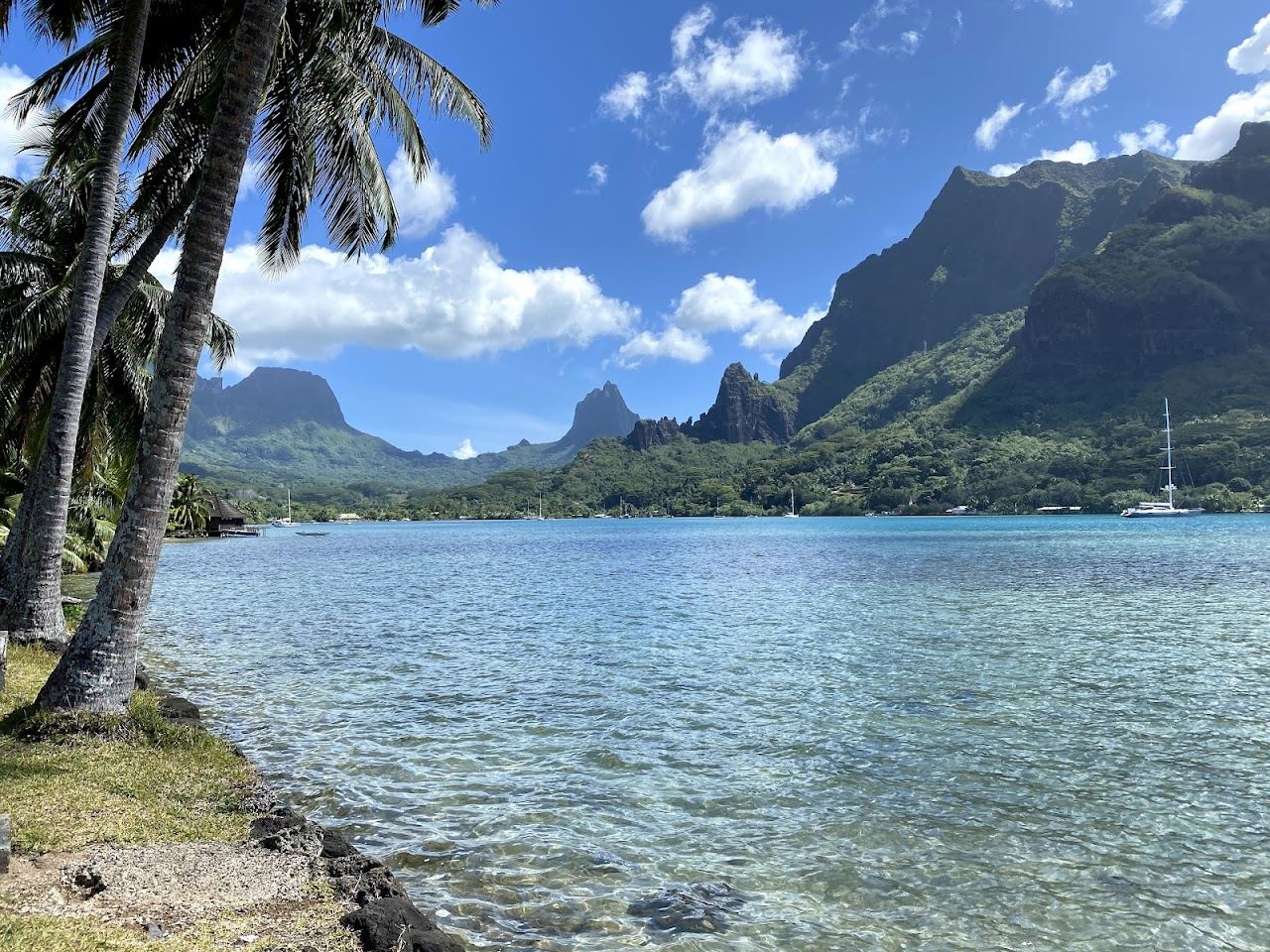
Hauru Point gives you a proper stretch of soft white sand on the mainland shore, backed by palms and green hills near Le Petit Village. It is part of the wider Hauru and Tiahura coast, so there is room to walk, room to spread out, and a familiar beach shape: sand behind you, lagoon in front, somewhere to sit in the shade. This is the kind of beach most travellers picture when they think of a Moorea beach day.
Motu Fareone is a different animal. It is a small islet ringed with powdery white coral sand, a miniature desert island off the northwest corner of the island, fringed with palms and low greenery. It shares its lagoon with the neighbouring Motu Tiahura just across a short channel of clear water. The sand is lovely, but the point is the isolation and the setting, not the square footage. You come here for the feeling of being on your own scrap of coral in the middle of a turquoise lagoon.
If your ideal photograph is a wide palm backed beach you can stroll, Hauru Point wins. If it is a lone islet with water on every side, Motu Fareone wins, and nothing on the mainland quite matches it.
Water and snorkelling
This is where both beaches genuinely shine, and where the margins are narrow. Hauru Point sits over a calm, shallow turquoise lagoon that rates as one of the best shore access snorkelling spots on the whole island. There are fish in the shallows, and the channel is visited by sea turtles and rays. The move is to snorkel near the pier by Captain Taina for the best chance of turtles, with your own mask brought from home.
Motu Fareone's lagoon is shallow, clear and usually calm, protected by Moorea's barrier reef, with depths that rarely pass a couple of metres. White sand and scattered coral heads sit below, so visibility is excellent on a settled day. The standout is the shallow channel between Motu Fareone and Motu Tiahura, an easy snorkel over sand and coral where rays often cruise through, and a nearby sandbank is known for small blacktip reef sharks, best visited with a guide.
So both deliver clear water and easy, beginner friendly snorkelling over coral. The tie breaker is the experience: at Hauru Point you simply wade in from your towel, which suits anyone who wants the water close and the effort low. At Motu Fareone you are snorkelling a channel in a wild lagoon you had to cross to reach, which feels more like an expedition and rewards confident swimmers and keen snorkellers.
One point applies to both and must be honest. Neither beach has a lifeguard, both are over coral, and both sit near boat channels. Treat each as unpatrolled, snorkel with a buddy, mind the passes and deeper water where current can pick up, and keep children close. Conditions here are typically calm, but they are typical only and never guaranteed.
Getting there and access
Hauru Point is as straightforward as Moorea beaches get. The sand and lagoon are free and open to all, there is free parking on site, and public restrooms too, both of which are uncommon on this island. You arrive, you park, you walk onto the sand. The one catch worth planning around: the beach park closes in the late afternoon, commonly around half past five, so treat it as a daytime spot rather than a place to linger for sunset.
Motu Fareone is free once you are standing on it, but you have to reach it across the lagoon. The easiest route is a kayak from the Tiahura and Hauru Point area, a paddle of roughly twenty minutes over calm water, with rentals available at nearby hotels such as Les Tipaniers. You can also come by small boat or on a lagoon tour, and some visitors combine the trip with lunch on Motu Tiahura, which arranges its own transfers. Pick a calm, clear day for the easiest crossing and the best visibility over the sand.
The access question flips the answer for a lot of people. If you have young children, limited time, mobility concerns, or you simply do not want the logistics of boats and kayaks, Hauru Point is the sensible call. If a short paddle sounds like part of the fun and you are comfortable on open lagoon water, Motu Fareone pays you back for the effort.
Facilities and comfort
Here the gap is wide, and it is deliberate. Hauru Point has more infrastructure than most Moorea beaches: free parking, public toilets and a restaurant just behind the sand for a meal or a drink. It is not a beach club scene, and there are no rentals on the sand, so still bring your own snorkel gear, but you are not entirely self reliant.
Motu Fareone has nothing. No shop, no bar, no services, which is precisely its charm and its demand. You bring your own water, sun cover, snorkel gear and reef shoes, and you carry all your rubbish away. Shade is limited to what the palms offer, so plan for strong sun and treat it as a wild lagoon spot rather than a serviced beach.
- Want a toilet, parking and lunch within reach: Hauru Point.
- Happy to go fully self sufficient for a wilder setting: Motu Fareone.
- Travelling with gear heavy young kids and little patience for logistics: lean Hauru Point.
- Chasing the quietest water and the best easy snorkel channel: lean Motu Fareone.
Crowd and atmosphere
Hauru Point is a known, accessible public beach with parking, so it draws a steady, easygoing daytime crowd of snorkellers and value travellers. It is social without being a party. Motu Fareone, because you have to paddle or boat out, naturally thins the numbers, and even when lagoon tours arrive it keeps a castaway calm. If solitude and quiet water matter most, the motu holds the edge most of the time.
When each one wins
The honest summary is that the situation flips the answer more than any single feature does.
Hauru Point wins when you want a full, easy beach day with the car close, the toilet close and a restaurant behind you, when you are easing children into snorkelling, or when the weather is only so so and you would rather not commit to a water crossing. It is also the better bet if time is tight, since there is no paddle to arrange.
Motu Fareone wins on a calm, clear morning when you want the best easy snorkel on the island, a wild islet to yourself and the satisfaction of having travelled to your beach. It wins for confident swimmers, for couples chasing a quiet picnic on coral sand, and for anyone who finds facilities less interesting than a lagoon with rays gliding across it.
Both read best in the drier austral winter from May to October, when the lagoon is clearest and the rain least likely. If you are weighing up the wider island, it is worth comparing the big public strand at Temae Beach, the beloved calm water of Ta'ahiamanu Beach, and the dramatic setting of Cook's Bay Beach, and our guide to the best time to visit Moorea can help you time the water. Families can dig deeper on the family beach notes, and couples on the couples guide.
Thinking about a club day on Moorea
Neither of these two is a club: Hauru Point is a free public beach and Motu Fareone is a wild islet, so loungers, service and day passes are arranged elsewhere on the island. If you want that side of Moorea alongside the snorkelling, browse the Moorea beach clubs page to see what is available and to enquire about a club day, and use the wider Moorea beach index to plan the rest of your shore time.