Cook's Bay Beach or Motu Fareone: which Moorea beach wins
Published 2026-09-10. Conditions described are typical and never guaranteed.
The verdict, before you unfold a towel
These two beaches answer different questions, so the smart move is to know which question you are asking. If you want a jaw dropping bay you can drive to, ease children into calm water, and pair the swim with the shops and hotels of Paopao village, choose Cook's Bay Beach. If you want a tiny wild islet ringed with powdery white sand, reached across the lagoon by kayak or boat, with some of the easiest snorkelling on the island and nothing else at all, choose Motu Fareone.
Put another way: Cook's Bay is the scenic, convenient, get in and out spot with backup close by. Motu Fareone is the effort spot, the reward for people who like the idea of a desert island in miniature and are happy to bring everything they need. Both sit inside Moorea's sheltering reef, both are free, and neither has a lifeguard, so supervision is on you at either.
Short version: Cook's Bay for scenery and access, Motu Fareone for a wilder swim and quieter water. The situation that flips the answer is almost always how much effort you want to spend getting there, and whether you need facilities within reach.
Who Cook's Bay Beach is really for
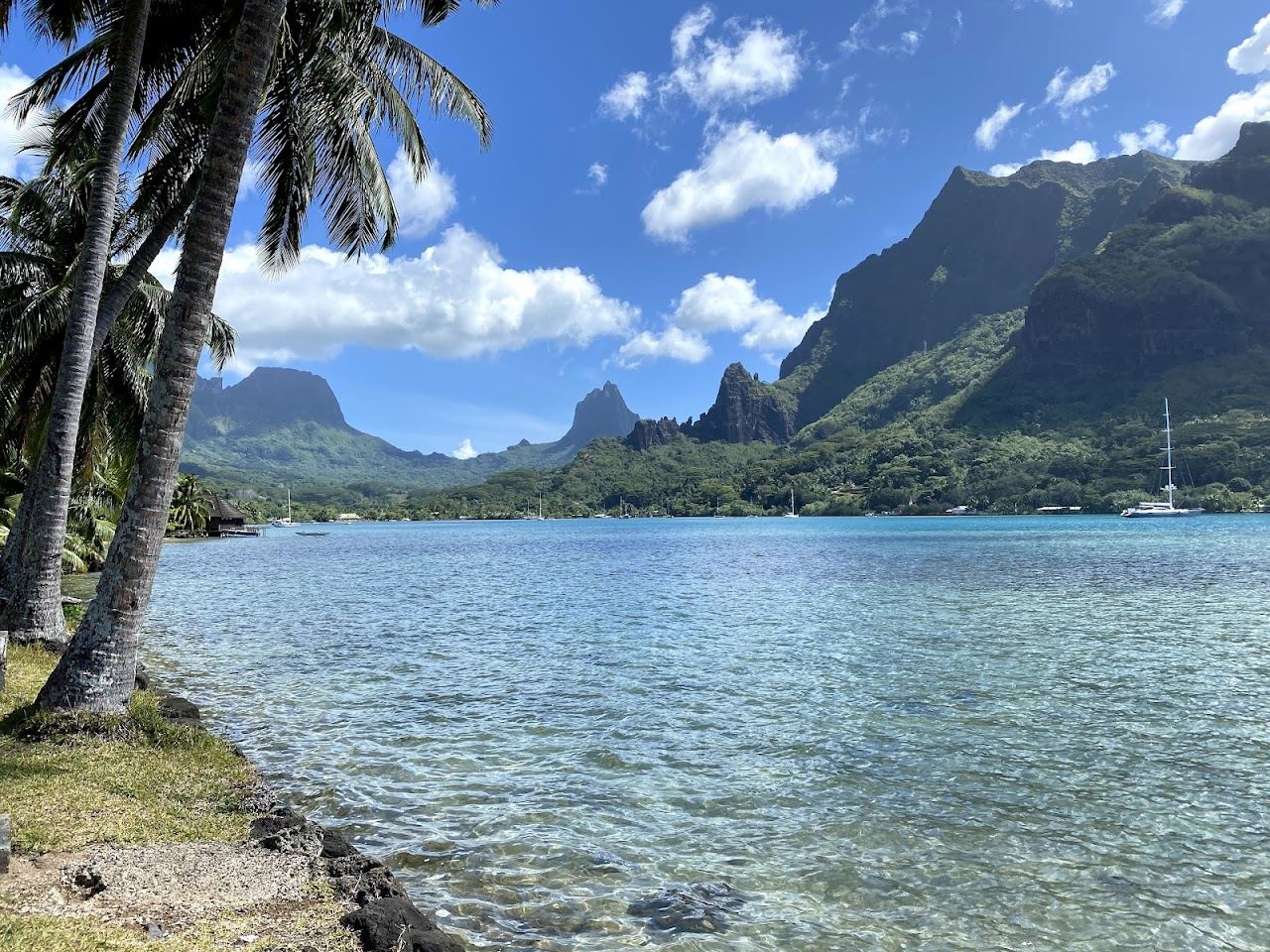
Cook's Bay suits families and couples who care more about the setting and the snorkelling than about a wide beach. The draw here is the bay itself: warm, calm, clear lagoon water deep inside the reef, with sandbars and coral close to shore and one of the great mountain backdrops in the Pacific rising behind it. For easing children into the water, that stillness matters more than any amenity.
It is honest to say Cook's Bay is not a long sandy strand. It is a spectacular bay with pockets of public sand near the north eastern mouth, plus palm shaded lawns along the shore. There is enough soft sand to spread a towel and slip into the water, but if a wide beach day is the whole point of your afternoon, this is not the place, and the beach knows it. That distinction is the single most useful thing to understand before you go.
What makes it easy is what sits nearby. There are no dedicated public facilities on the sand, but the hotels, restaurants and shops around Paopao village supply food, toilets and supplies close at hand. A couple of hotels on the bay sell day passes that add a pool, loungers and service if you want more comfort, so carry a little cash or a card for a drink, a meal or a pass. Bring your own mask, though, since there are no rentals on the beach itself.
The best spot in the bay
Aim for the small public beach and sandbars near the north eastern mouth. That is where the water is clearest and gentle enough for children to snorkel over the coral. Keep an eye on depth, on the reef underfoot, and on any small boats using the bay, because this is a working, scenic bay rather than a cordoned swimming zone.
Who Motu Fareone is really for
Motu Fareone is for snorkellers and quiet water lovers who want the wild version. It is a small islet off the north western corner of Moorea, near Hauru Point, ringed with white coral sand and fringed with palms and low greenery, a proper desert island in miniature. It shares its lagoon setting with the neighbouring Motu Tiahura, just across a short channel of clear water, and that channel is the reason many people come.
The lagoon around the motu is shallow, clear and usually calm, protected from the open ocean by the barrier reef. Depths rarely pass a couple of metres, with white sand and scattered coral heads below, so the swimming is gentle and the visibility excellent on a settled day. It is beginner friendly and genuinely lovely for easy snorkelling, but you are still crossing open water to reach it and swimming over coral once you are there.
The trade you accept is total self reliance. Motu Fareone has no shops, no bar and no services, which is exactly its charm and exactly its limitation. Bring your own water, sun cover, snorkel gear and reef shoes, mind the coral, and take every scrap of rubbish out with you. Shade is limited to what the palms offer, so plan for strong sun and treat it as a wild lagoon spot rather than a serviced beach.
Getting there, and the best spot
The motu itself is free, but you have to reach it across the lagoon. The usual route is a kayak from the Tiahura and Hauru Point area, a paddle of roughly twenty minutes on calm water, with rentals available at nearby hotels such as Les Tipaniers. You can also arrive by small boat or on a lagoon tour, and some visitors book lunch on Motu Tiahura, which arranges its own transfers. Once there, the standout easy snorkel is the shallow channel between Motu Fareone and Motu Tiahura, where you will find sand, coral heads and often rays. Take care near the passes and the deeper channel, where the current can pick up.
Head to head: sand, water, facilities, crowd
On sand, they are barely comparable. Cook's Bay offers pockets of soft sand and palm shaded lawns rather than a broad beach, so it is a place to perch and swim. Motu Fareone is ringed by powdery white coral sand all the way round, which is more classically beachy underfoot, but it is a tiny islet, so there is far less of it than a mainland strand.
On water, both deliver calm, clear lagoon swimming inside the reef, and both suit children and beginners. Cook's Bay tends to feel like a sheltered, deep bay with sandbars and coral close in. Motu Fareone feels like a shallow lagoon flat, rarely more than a couple of metres deep, which is why the snorkelling reads so gentle on a settled day. Neither has a lifeguard, so conditions are typical only and never guaranteed at either.
On facilities, Cook's Bay wins clearly by proximity, leaning on Paopao village and the hotels for food, toilets and even day passes. Motu Fareone has nothing, and that is the point. On crowd and atmosphere, Cook's Bay carries hotel frontage and passing boat traffic, while the motu feels remote and wilder simply because getting there filters out the casual visitor.
- Choose Cook's Bay if you want to drive up, swim, and have backup close by.
- Choose Motu Fareone if you want a paddle out, a quieter lagoon, and no crowds.
- Both reward the drier season, roughly May to October, when the water is clearest.
When the other one wins
Cook's Bay wins the moment your day needs to be easy: young children who tire fast, a party that wants lunch and toilets within reach, weather that is not settled enough for a lagoon crossing, or simply no appetite for hauling a kayak. On a murkier day in the wetter months from November to April, the convenience of being able to duck into the village also counts for a lot.
Motu Fareone wins on a calm, clear morning when the crossing is easy and you are chasing the best visibility and the quietest water. It wins when you want the snorkelling itself to be the memory, and when the absence of shops and loungers feels like freedom rather than a hardship. If your ideal beach day is a wild one and you are self sufficient, the motu is the better story.
One honest aside for anyone whose real wish is a long sandy afternoon: neither of these is the island's big strand. For that, the main beach at Temae Beach on the east coast is the better call, and the loved public beach at Ta'ahiamanu Beach on the north coast is a fine calm water alternative. Value seekers who want free white sand with real snorkelling and rare public facilities should also look at Hauru Point Beach, which sits close to the launch point for the motu.
How to plan the day
If you are travelling with young children, weigh our notes for family friendly beaches and keep the day flexible. Couples plotting a quieter, more scenic outing may prefer the ideas gathered for two on Moorea. Either way, time your swim for a calm morning, and check the best months to visit before you commit, since the dry season stacks the odds for clear water at both beaches. For the wider picture, the island overview is a good starting point, and if you are still torn between styles of shore, our comparison of Cook's Bay against Hauru Point covers a different fork in the road.
Prefer a serviced day with loungers and a pool
Neither Cook's Bay nor Motu Fareone is a club scene, so if you want loungers, service and a pool alongside the lagoon, the better route is a day pass at one of the island's clubs or resorts. Browse the options on our Moorea beach clubs page to compare what is on offer and to enquire about booking a club day that fits your trip.