Bwejuu or Kendwa: Which Zanzibar Beach Wins for You
Published 2026-10-15. Conditions described are typical and never guaranteed.
The verdict in one screen
If you want to walk into warm water at any hour and swim without studying a tide chart, go north to Kendwa. It holds deep, clear, swimmable water through the day, it faces west for the kind of sunset people plan a trip around, and it has the bars, dive centres and watersports to fill the gaps between swims. The trade off is simple: it is lively, it has grown fast, and once a month it throws a full moon party that fills the sand.
If you want wide space, quiet and a slower village rhythm, go southeast to Bwejuu. The sand here is broad and bright, the lagoon is flat and kite friendly, and the scene is a scatter of small resorts rather than a strip of bars. The catch is the tide. Bwejuu sits on the big tidal southeast coast, so a proper swim means timing your day around a rising or higher tide rather than wading out whenever you fancy it.
That tide is the hinge this whole decision turns on. Pick Kendwa for swimming freedom and buzz. Pick Bwejuu for calm, space and kitesurfing. Below I set the two side by side so you can see exactly where each one pulls ahead, and the single situation that flips the answer either way.
Sand: both are wide and white, but they wear it differently
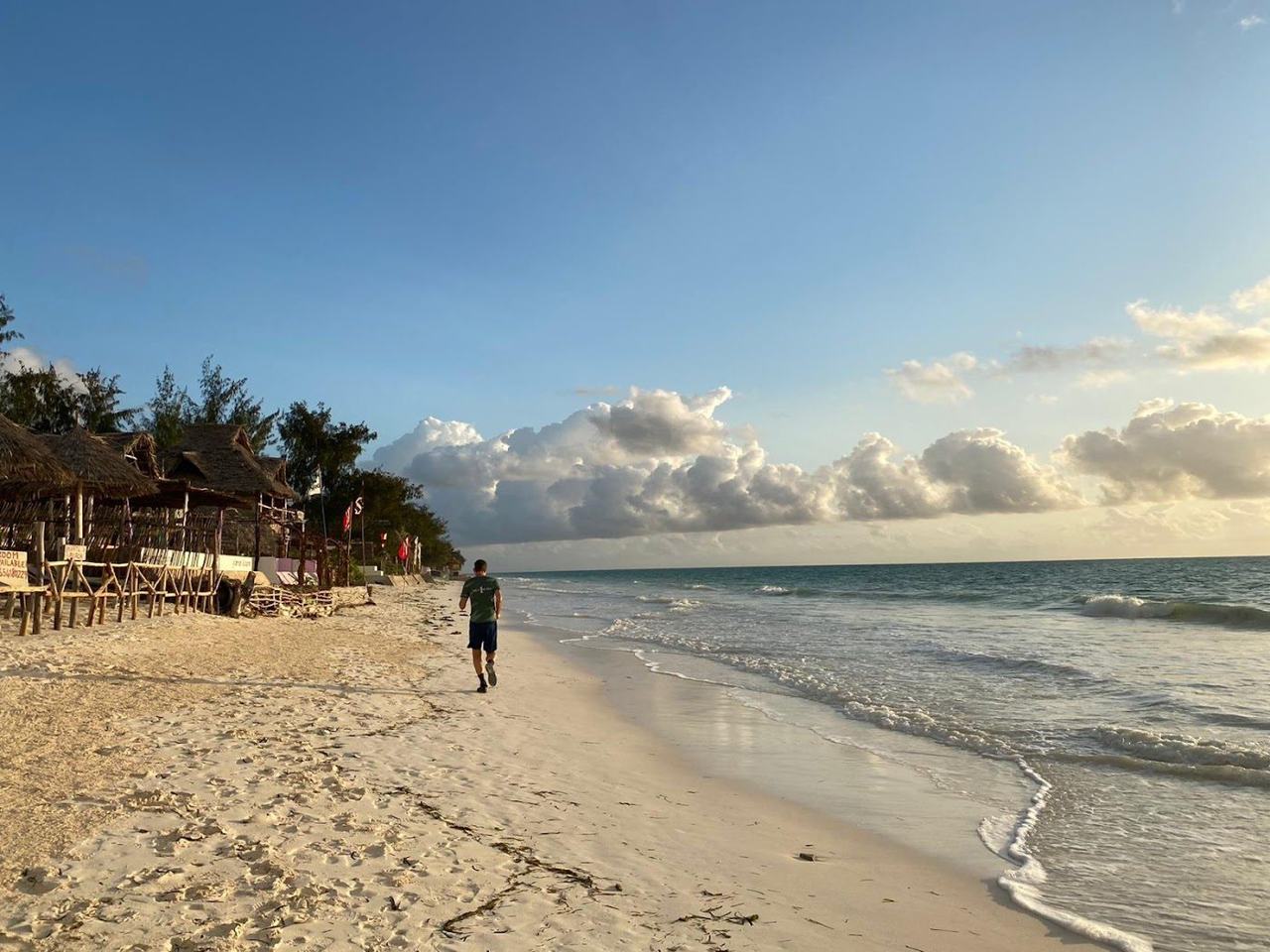
You will not be disappointed by the sand at either beach, so this is not where the choice is won. Kendwa is a broad sweep of soft white sand that generally feels more spacious underfoot than the busier centre of its northern neighbour. Bwejuu is a long band of soft, bright white sand that is at its most dramatic at low water, when the tide draws back and the flats open up for long barefoot walks.
The difference is in how you use that sand. At Kendwa the beach is the stage for a day in and out of the water. At Bwejuu the sand itself is the main event at low tide, a huge pale expanse for walking rather than wading. If your ideal morning is a long quiet walk with almost nobody on it, Bwejuu edges this. If your ideal morning ends with a swim straight off the towel, Kendwa does.
Water and swimming: this is the decider
Here is the honest heart of it. Kendwa keeps deep, clear water at low tide, so swimming works through the day. That puts it in a small group of Zanzibar beaches where you are not a slave to the tide chart, and it is the single biggest reason people choose the northwest over the east.
Bwejuu is the opposite story. The lagoon inside the reef is calm, warm and turquoise, but the tidal range is large, so the sea empties a long way at low water. Deep swimming off the sand is limited and best saved for a higher tide. On a rising or higher tide the shallow lagoon is lovely and gentle. At low water it becomes a walking beach, not a swimming one.
If you only remember one line: Kendwa swims all day, Bwejuu swims on the tide.
Neither beach has reliable public lifeguard cover. Kendwa has limited cover that is not dependable, and Bwejuu has no public patrol at all. On both you should judge the conditions, mind the depth, and at Kendwa keep an eye on boat traffic. Treat any swim as your own call rather than a guaranteed safe one, and swim near your resort where you can.
Where the tide flips it
If your trip happens to land on a week of good high tides during daylight, Bwejuu narrows the gap considerably. You get the quieter beach and still get easy swimming in the warm lagoon when the water is up. Check the tide times before you commit, because a favourable tide window turns Bwejuu from a walking beach into a genuine swimming one and removes Kendwa's main advantage. If the tides are awkward and you want water at midday no matter what, Kendwa wins outright.
Facilities and the scene: busy versus low key
Kendwa is the more developed of the two. It is fronted by a growing line of resorts, bars and dive operations, with watersports on hand, and it feels busy, though a touch calmer than the livelier beach immediately to its north. You can walk between the two along the sand at lower tides, which makes Kendwa a good base if you want a night out within easy reach but a slightly more relaxed daytime.
Bwejuu is deliberately quieter. You get a handful of relaxed resorts and guesthouses with dining and watersports, less built up than the kite hub just to the south. There is no strip of bars and no reliable nightlife here. That is the point. It suits travellers who want peace and space, and it reads as a calm base rather than a scene.
On entry, both are free, open public beaches, so nothing stops you visiting either. What differs is what sits behind the sand: resorts and dive centres at Kendwa, a thin scatter of small lodges at Bwejuu.
Crowds and atmosphere
Kendwa is lively rather than undiscovered. The monthly full moon parties at long running beach venues draw big crowds with music into the early hours. If that is your scene, time your trip to land on one. If it is not, do the opposite and check the dates so you can avoid it. Either way, go in knowing Kendwa is sociable by design.
Bwejuu is one of the calmer stretches of the southeast coast, with a low key village feel and only a scatter of small resorts. It suits couples and families who want room to breathe. If a quiet holiday is the goal, this is the natural pick, and it pairs well with a browse of our ideas for couples or, if you are travelling with children, the family friendly notes for the island.
Kitesurfing: Bwejuu's quiet strength
This is the one activity where Bwejuu clearly leads. The flat lagoon and steady trade winds make the wider area popular for kitesurfing, and conditions mirror the island kite hub just to the south. There are fewer schools right on Bwejuu itself, but the same flat water and wind make it a calmer base within easy reach of the lessons and rentals nearby. If you want to learn or ride without the crowd, Bwejuu is the smarter home.
Kendwa is not a kite beach in the same way. Its draw is swimming and sunsets, not flat water and wind. So if a kite holiday is the plan, the comparison is short: Bwejuu, every time.
Getting there and when to go
Bwejuu sits on the southeast coast, roughly an hour to ninety minutes by road from Stone Town and the airport, with most visitors arriving by private transfer arranged through their accommodation. Kendwa is up on the northwest tip, a longer run from town. Both beaches share the same best months: the dry seasons from June to October and December to February bring the clearest water, the strongest sunshine and, at Kendwa, the most dependable sunsets. The long rains from March to May are best avoided for a beach trip. For a fuller view of timing, see our guide to the seasons.
So which one, honestly
Choose Kendwa if swimming at any hour matters to you, if you want a west facing sunset and a sociable beach with dive centres and bars, and if a full moon party is a draw rather than a problem. Choose Bwejuu if you want wide quiet sand, a flat kite friendly lagoon, a village pace and far fewer people, and if you are happy to plan swims around a higher tide.
The one thing that can overturn all of this is the tide calendar for your dates. Good daytime high tides make Bwejuu a far stronger all rounder and close the gap on Kendwa's biggest selling point. Awkward tides push the decision firmly back north. If quiet and seclusion rank above everything, our secluded beaches notes are worth a look too, and if you are weighing Bwejuu against its nearest rivals, compare it with Jambiani or the sheltered bay at Chwaka before you book.
Plan a club day on the island
Once you have picked your shore, the next step is deciding where to base your day on the sand. Browse the Zanzibar beach clubs page to see the options and enquire about a day by the water, whether that is a sunset stretch in the northwest or a quieter base on the southeast coast.