Bwejuu or Jambiani: Which Zanzibar Beach Suits You
Published 2026-09-30. Conditions described are typical and never guaranteed.
Here is the short answer before you scroll. If you want space, a broad pale beach for long low tide walks and a base within easy reach of the kite lagoon, go to Bwejuu. If you want a living fishing village where the ordinary rhythms of the island set your day, and you value that over facilities, choose Jambiani. These two sit on the same southeast coast, share the same warm turquoise lagoon and the same big tides, and at a glance they look almost identical. What separates them is character and pace, not scenery, and that is exactly what makes the choice easy once you know yourself as a traveller.
Neither is the busy option. If you are chasing beach bars, dive shops on every corner and a social scene that runs late, neither of these villages is your match, and I will say plainly where you would look instead. But if the appeal of Zanzibar's southeast is quiet, wide sand and a slower gear, then the decision comes down to a handful of specific conditions I will walk through below.
The one thing they have in common: the tide runs the day
Both beaches sit inside the reef on a coast with a pronounced tidal range, and you cannot understand either without understanding that first. At low water the sea draws back a long way across pale flats. That is when the sand looks its most dramatic and its brightest, and it is prime time for walking, beachcombing and watching village life at work. It is not the time for a proper swim. For that, you plan around a rising or higher tide, when the lagoon fills warm and calm inside the reef.
This is true at Bwejuu and it is true at Jambiani in equal measure. Neither has a public lifeguard patrol, so on both you judge the tide and the wind yourself, swim within your depth and take your cue from the water in front of your accommodation. If all tide swimming is non negotiable for you, the southeast is simply the wrong coast, and you should be looking at the northwest instead. More on that at the end.
Read the tide chart before you read the reviews. On this coast it matters more than the name of your hotel.
Sand and water: a near tie, decided by mood
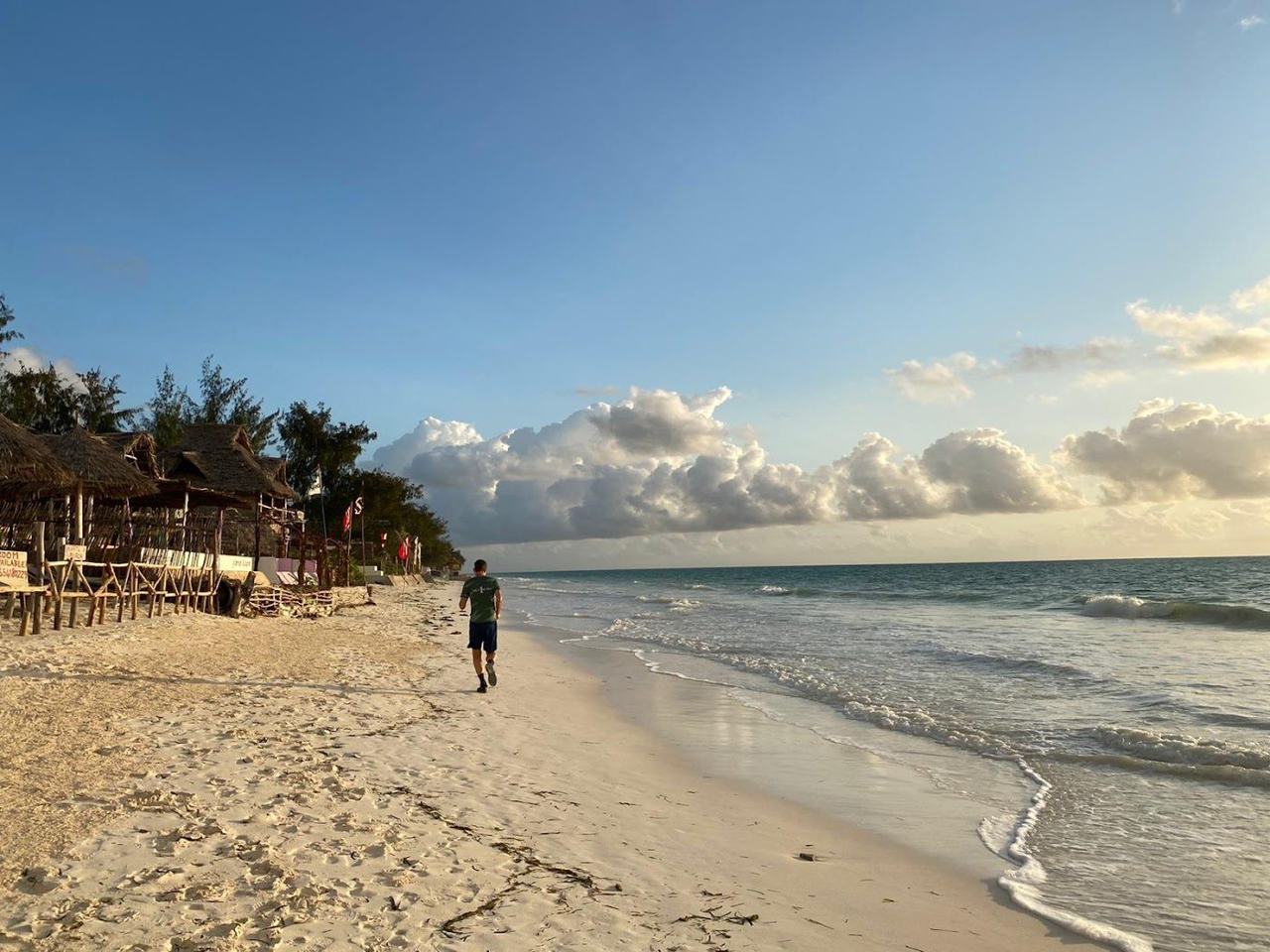
Bwejuu gives you a long band of soft, bright white sand, broadest and palest when the tide is out. It reads as a wide, open, generous beach, the kind you can walk for a long stretch without meeting many people. The lagoon behind it is flat and warm, and the same conditions that make it calm also make the wider area popular for kitesurfing.
Jambiani offers a long ribbon of pale soft sand too, but the texture of the place is different. Here the sand runs in front of a working fishing and seaweed farming village. At low tide you will see outrigger boats resting on the flats and women tending their seaweed plots. The water is the same shallow turquoise lagoon inside the reef, warm and calm, gentlest and clearest on a rising tide.
So on raw sand and water quality, this is close to a draw. The tiebreaker is what you want in your eyeline. Bwejuu leans toward open, uncluttered space. Jambiani leans toward scenery with people in it, the everyday theatre of a village that earns its living from the sea. If the sight of seaweed farms and fishing boats reads as authentic and interesting to you, Jambiani wins here. If you would rather an emptier horizon, Bwejuu does.
Facilities and crowd: both quiet, but not identically so
This is where the honest distinction sharpens. Bwejuu is a calm village beach with a scatter of small resorts and guesthouses set behind the sand, offering dining and watersports. It is relaxed and less built up than the livelier stretches to the south, but there is a little more in the way of resort comfort woven along it.
Jambiani is more local still. Accommodation is mostly guesthouses and small lodges stitched into the village, with local cafes and a few small kite spots. It is modest by design, and there is very little nightlife. That is a feature, not a fault, but you should arrive knowing it. If you want a village that has barely tilted toward tourism, Jambiani delivers it more completely than Bwejuu.
For couples weighing a peaceful escape, both fit the brief, and our wider notes on where two travellers do best on the island are worth a look. Families who want space and calm rather than a crowded strip will find either works, though the practicalities in our guide for families are worth reading against your own tide planning.
Who should book Bwejuu
- Kite curious travellers who want the flat lagoon and trade winds nearby without staying in the busiest hub.
- Couples and families who want wide white sand and space, with a few small resorts on hand for dining and watersports.
- Anyone who wants to walk long low tide flats in the morning and reach kite schools and variety with an easy trip south.
Who should book Jambiani
- Slow travellers who want authenticity over amenities and are happy in guesthouses rather than large resorts.
- Anyone drawn to real village life, fishing boats and seaweed farming, ideally understood through a community guided walk.
- People who actively want quiet evenings and almost no nightlife, and see that as the point.
Kitesurfing: the condition that tips it to Bwejuu
If wind is part of your plan, Bwejuu has the edge. It sits just north of the island's kitesurfing hub, so the conditions are similar, with steady trade winds in season and the same flat lagoon that riders want. There are fewer schools directly on Bwejuu itself, but the wind and water are there, and the hub is an easy hop away. Jambiani has only a few small kite spots by comparison. For a wind first trip where you still want a calmer base than the main scene, Bwejuu is the clearer call.
Where the answer flips to Jambiani
Now the honest reversal. Bwejuu is the safer all round pick for most first timers, but there are real situations where Jambiani is the better beach.
Choose Jambiani if the texture of daily island life is the thing you have travelled for. Bwejuu is calm and pretty, but it is a beach with resorts behind it. Jambiani is a village with a beach in front of it, and that order matters. If you want to wake to fishing boats going out, watch the seaweed harvest at low tide and eat in local cafes rather than resort dining rooms, Jambiani gives you a fuller, more grounded version of that. It also wins if you specifically want the quietest evenings, since it has even less going on after dark than its neighbour.
The flip goes the other way just as clearly. If you find yourself wanting more variety, more dining choice and the option of a livelier scene without moving hotels, Bwejuu's easier access to the busier coast to the south is the practical advantage.
When neither is right
Honesty means naming the mismatch. If your heart is set on swimming at any hour regardless of the tide, the southeast coast will frustrate you, because both Bwejuu and Jambiani empty a long way at low water. That is a coastline trait, not a flaw in either village, but it is the wrong fit for a swim first holiday. In that case look to the northwest, where beaches such as Kendwa hold deep, clear water through the day and are known for their sunsets, at the cost of more development and bigger crowds.
Timing shapes both southeast options too. The dry, windier seasons bring the clearest water and the best conditions, and it is worth checking our overview of the best months to visit before you lock in dates. If pure seclusion is the goal above all else, our notes on the island's quietest shores will help you weigh these two against the rest.
The verdict in one line
Bwejuu for space, wide white sand and the kite lagoon within reach. Jambiani for a slower, more local village where the fishing day sets the pace. Same lagoon, same tides, two different holidays, and now you know which is yours.
Planning a beach club day in Zanzibar
If you want to pair a stay on the southeast coast with a proper day of loungers, dining and service, browse the options on our Zanzibar beach clubs page and enquire about a club day that fits your trip. For the bigger picture across the island, start at the Zanzibar hub and build your route from there.