Bwejuu or Fuji Beach: Which Zanzibar Shore Wins
Published 2026-09-15. Conditions described are typical and never guaranteed.
Here is the short answer before you scroll. Choose Bwejuu if you want a proper stretch of holiday coast on the southeast side, wide white sand, a flat lagoon that suits kite riders, and a few small resorts to lean on for meals and watersports. Choose Fuji Beach if you are based in or near Stone Town, you want a quiet local strand within a short drive, and you care more about a long soft beach and a good sunset than a full day of facilities. These two shores sit on opposite coasts and they solve different problems. One is a destination in its own right. The other is a quick, calm escape close to the old town.
Both are open public beaches, both are free to reach, and both ask the same thing of you: respect the tide. Neither has a public lifeguard, so whatever you choose, judge the water yourself, swim within your depth, and treat conditions as typical rather than promised on any given day.
The quick verdict by traveller
- Kite curious or lagoon lovers: Bwejuu, for the flat water and steady trade winds of the southeast.
- Stone Town based day trippers: Fuji Beach, because it is one of the closest quiet beaches to the old town.
- Couples wanting space and calm: both work, but Bwejuu gives you dining and comfort behind the sand while Fuji gives you a rawer, emptier feel.
- Sunset chasers: Fuji, thanks to its west coast aspect and golden hour reputation.
- Families who want resort backup: Bwejuu, for the scatter of small resorts with food and gear.
Where they sit, and why that changes everything
Geography does most of the work here. Bwejuu runs along the southeast coast, just north of livelier Paje, roughly an hour to ninety minutes by road from Stone Town and the airport. Most people arrive by private transfer through their accommodation and settle in for several nights. It is a place you go to, not a place you pop by.
Fuji Beach lies on the west coast near Bububu village, just north of Stone Town and reached down a small dirt road. That proximity is its whole personality. If you are staying in the old town and want sand without committing to a cross island drive, Fuji is the obvious afternoon plan. It stays undeveloped and uncrowded through the day, then gathers a small, relaxed crowd for the sunset.
So the first fork is simple. Where are you sleeping, and how far do you want to travel for your toes in the sand. If your base is the east coast or you want a longer beach holiday, Bwejuu makes sense. If your base is Stone Town, Fuji wins on convenience before either of them touches the water.
Sand and space
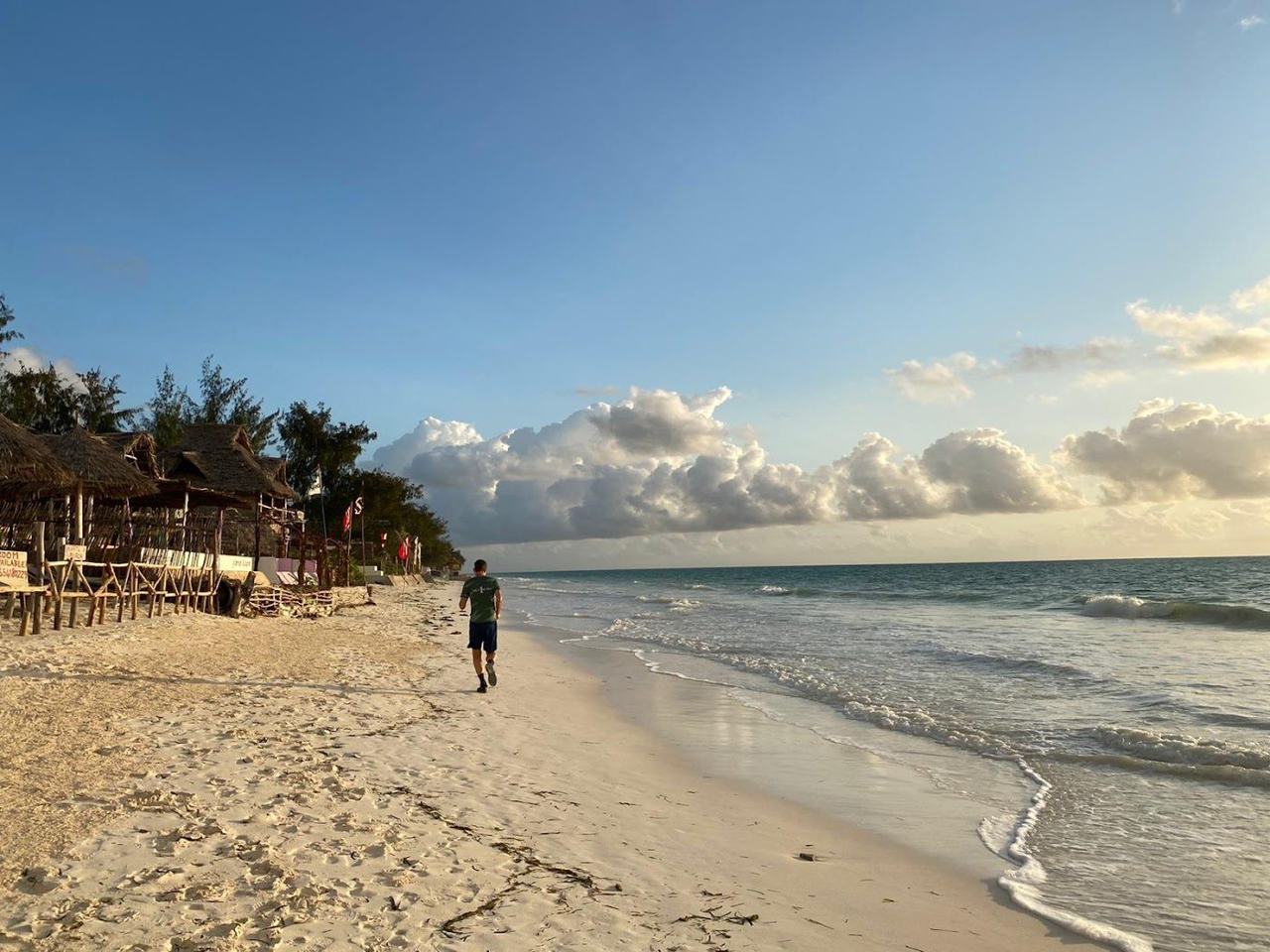
Bwejuu delivers a long band of soft, bright white sand that is at its most dramatic at low tide, when the sea draws back and the flats open up for long walks. It is broad and pale, the kind of beach that photographs beautifully in the morning light and gives you room to spread out even when a few resorts are busy behind you.
Fuji answers with a generous stretch of soft pale sand that stays quiet for most of the day. It is a beautiful strand, genuinely, and its emptiness is the point. There is little development behind it, which means fewer people and a more local feel, but also less to fall back on. Both beaches score well on sand. The difference is what sits behind that sand and how much company you will have.
Water and the tide question
This is where honesty matters more than brochure talk. Neither of these is an all tide swimming beach. If deep water on demand is your priority, you would be looking north to the likes of Kendwa, which keeps swimmable water at low tide. Both Bwejuu and Fuji ask you to plan.
Bwejuu fronts a calm, warm, turquoise lagoon inside the reef, flat and kite friendly, but it shares the southeast coast's large tidal range. That means deep swimming off the sand is limited and best on a higher tide. At low water the lagoon empties a long way, which is wonderful for walking and terrible for a serious swim. The trade off is that the same flat lagoon and steady wind make the wider area a natural home for kitesurfing, with more schools clustered a short way south around Paje.
Fuji is also tide dependent. The shallow west coast water is best on the higher tide, and as it drops the flats are exposed and swimming becomes limited. Most people come to Fuji for the sand and the sunset rather than long swims, and if you treat it that way you will never feel short changed. If you treat it as a guaranteed swim at any hour, you will be disappointed at low water.
Both beaches reward a glance at the tide chart before you set off. On a rising or higher tide either can give you a lovely dip. At low water, plan a walk, not a swim.
Facilities and what you should pack
Here the gap opens up. Bwejuu has a handful of relaxed resorts and guesthouses with dining and watersports, less built up than Paje but still enough to keep you fed, watered and equipped. You can swim near your resort, eat when you are hungry, and hire gear without a full expedition. It is comfortable without being a resort strip.
Fuji is deliberately minimal. At most you will find a bar or a vendor, anchored historically by the old Fuji Beach Bar that gave the beach its name. That means you should bring water, snacks and cash, and not expect daybeds, kitchens or kit for hire. The upside of that emptiness is genuine peace. The downside is that a hot afternoon with hungry kids and no supplies can turn sour quickly. Pack accordingly and Fuji is a joy.
Crowd and atmosphere
Bwejuu is one of the calmer stretches of the southeast coast, a low key village with space to breathe and only a scatter of small resorts. It suits couples and families who want peace but still like a little life around them. If you want the busier social scene, kite crowds and beach bars, that is Paje's job just to the south, and Bwejuu positions you as a quieter base within easy reach of it.
Fuji is quieter again for most of the day, almost sleepy, a calm local spot rather than a resort beach. The energy arrives late, when a small crowd drifts in for the sunset. If your ideal beach day is empty sand and a golden evening, Fuji is hard to beat. If you want people, music and things to do from morning onward, it will feel too still.
When each one wins
The answer flips on a few clear conditions, so let me be specific.
Bwejuu wins when
You are staying on the east coast, you want a multi night beach base, you are curious about kitesurfing or just love a wide flat lagoon, and you want small resorts nearby for meals and gear. It also wins for families who value a bit of backup on the sand and for couples who want calm without going fully off grid. If you like the sound of this but want to weigh a nearby alternative, our comparison of Bwejuu against the fishing bay at Chwaka is worth a read.
Fuji Beach wins when
You are based in or near Stone Town and do not want a long transfer, you are happy to bring your own supplies, and you are chasing a quiet stretch of sand and a memorable sunset over the water. It also wins on any day you simply want a few peaceful hours by the sea without the machinery of a resort beach. Time it for late afternoon on a higher tide and it is one of the easiest good decisions near the old town.
The honest caveat
If your single non negotiable is deep water you can swim in at any hour, neither of these is your beach, and it is fairer to say so than to sell you a compromise. The southeast lagoon at Bwejuu and the shallow west coast water at Fuji both retreat at low tide. For all tide swimming you would point yourself elsewhere. But if you can work with the tide, and most visitors happily do, both of these deliver something the busier beaches cannot: room, calm and a sense of the real island.
Plan the rest of your trip
Still deciding on a season, a coast or a travelling style? Our guide on the best months to visit Zanzibar lines up the dry windows, while our picks for couples, families and quieter, secluded shores help you match a beach to your group. For the wider lay of the land, start at the Zanzibar hub.
Want a club day arranged
If you would rather have the comfort side sorted before you arrive, from loungers and food to watersports and transfers, browse and enquire through our Zanzibar beach clubs page. Tell the team your dates, your coast and your priorities, and they can help you plan a beach day that fits whichever of these two shores you choose. Details such as exact hours and prices should always be confirmed directly before you commit.