Ajuy or Esquinzo: Which Fuerteventura Beach Wins
Published 2026-11-02. Conditions described are typical and never guaranteed.
Here is the short version, so you can stop reading and start packing if you like. If you want to swim, laze and let small children paddle, go to Playa de Esquinzo. If you want scenery, sea caves and a long plate of fish on the wild side of the island, go to Ajuy. These two beaches are not rivals so much as opposites. One is a calm golden sweep built for a lazy day. The other is a dark, dramatic half day that happens to have sand. Choose by the day you want, not by which is objectively better, because neither wins that argument.
They sit on different coasts for a reason. Esquinzo runs below the Jandia resorts in the south, on the sheltered flank of the island. Ajuy faces the open Atlantic on the west, where the weather arrives first and the sea rarely settles. That single geographic fact decides almost everything that follows.
Who Playa de Esquinzo is for
Esquinzo is the easy choice, and I mean that as a compliment. The sand is fine, soft and golden, running unbroken for around three kilometres below a line of cliff top hotels. The water shelves gently and stays shallow a long way out, which is exactly what you want with paddling children or with anyone who likes to wade rather than plunge. On a still morning it is calm and clear, and a short walk from any of the access ramps buys you a near empty stretch even in summer.
That last point is the quiet selling point. The hotels here sit up on the cliff rather than down on the beach, so the sand itself stays open and uncrowded. You are not fighting for a towel space. Drop down one of the ramps, turn north toward Esquinzo proper, and the crowd thins within a few minutes of walking. For families and couples who want room to spread out without the density of the main Jandia strip, this is one of the best value beach days on the island.
Facilities are present but modest. There is sunbed and parasol hire near the access points, and a scatter of beach bars for a cold drink and a simple plate of fish. Most of the proper eating sits up in the cliff top resorts behind the sand, which is the honest catch. Entry is free and parking sits on the cliff top above the beach.
Esquinzo in one line: a long, calm, spacious resort beach where the water is gentle and the sand stays uncrowded if you walk a little.
Two caveats keep this truthful. First, this is still the open Atlantic, so an afternoon breeze and a little shore break are normal, and the water is calmest in the morning. Second, lifeguard cover varies by season and by stretch on a beach this long, so read the flags before you swim and treat conditions as typical rather than guaranteed. For more on which months bring the softest seas, the island's seasonal timing notes are worth a glance before you commit.
Who Ajuy is for
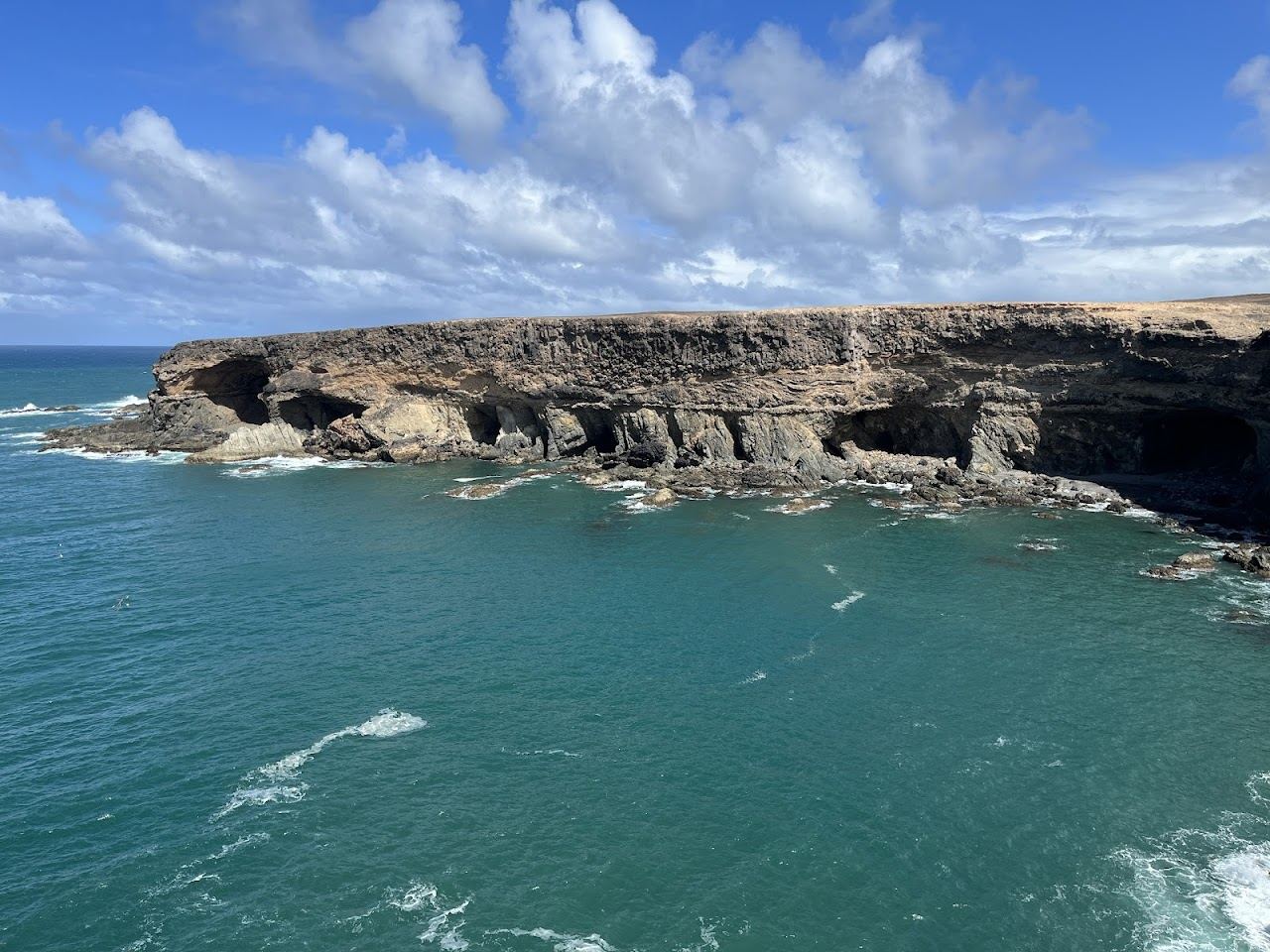
Ajuy asks something different of you. Come here for the look of the place and the story it tells, not for a swim. The sand is black and volcanic, born of the island's eruptions and streaked with pebbles, framed by tall ochre and black cliffs that make the whole cove feel carved rather than built. It is one of the most characterful corners of Fuerteventura, and it photographs like nowhere else.
The real draw is the walk. A signed coastal path climbs north from the beach to a cliff top viewpoint and then drops into the Cuevas de Ajuy, the island's most dramatic sea caves, set in a protected natural monument. The rocks here are among the oldest in the Canaries, lifted from the sea floor long before the islands themselves existed, which gives the short hike a genuine geological pull. Reckon on around twenty minutes each way. Afterwards you walk back into a working fishing village where seafood is the point, mussels are something of a local specialty, and island families fill the tables at weekends, which is the surest sign the kitchens are doing their job. Specific venues, hours and prices are to be confirmed and change with the season.
Now the warning, because it matters. This is the exposed west coast. The sea is often rough, with a heavy shore break and strong currents, and it is calm only on settled days. There is usually no lifeguard. Local families do go in on still summer mornings, but you should stay shallow, watch the water before you commit, and accept that swimming here is a sometimes thing rather than a given. If you arrive hoping for a long float in calm water, you may be disappointed. Arrive for the scenery, the cave walk and the fish lunch, and you will have one of the best half days on the island.
Ajuy in one line: a wild black sand cove with sea caves and a seafood village, a place to walk and watch more than to bathe.
The straight contrast
Laid side by side, the differences are clean.
- Sand: Esquinzo is soft golden sand over a long open sweep. Ajuy is dark volcanic sand and pebbles in a dramatic cove.
- Water: Esquinzo shelves gently and stays shallow, calm on a still day. Ajuy is open Atlantic, often rough, calm only when the sea lies down.
- Facilities: Esquinzo has sunbed hire and beach bars near the access points. Ajuy has village seafood restaurants behind the sand and the cave path close by.
- Crowd: Both stay manageable. Esquinzo is a quiet resort beach where a short walk empties the sand. Ajuy draws visitors for the caves and lunch rather than for a beach lie, so the sand is rarely a battle.
- Swimming: Esquinzo is the clear choice for an actual swim, with the usual flag checking. Ajuy is for careful dips on calm days only.
When the answer flips
The verdict is not fixed, and knowing what moves it is the whole game.
Ajuy wins when the weather is settled and you want a day that stays in the memory. It also wins when the point of the outing is lunch and landscape rather than lying down: the cave walk, the cliffs and a fish table give you a fuller story than a towel ever could. If you are touring the west coast or chasing the island's wilder edges, Ajuy is the natural stop, and travellers drawn to that mood often pair it with the empty vastness of Cofete Beach further south.
Esquinzo wins the moment swimming is non negotiable, which with young children it usually is. It wins on any day with west coast swell, because while Ajuy is churning, the sheltered Jandia sand is still calm enough for a paddle. And it wins for the long lazy day, the kind where you want sunbeds, a beach bar and hours of doing very little. Families weighing up the gentlest options will find more in the island's family beach notes.
There is a third situation worth naming. If what you actually want is the calmest, most convenient swimming on the island, neither of these is the textbook answer. That title belongs to the sheltered horseshoe at Caleta de Fuste, where breakwaters hold the water shallow and the whole resort sits a few steps from the sand. Esquinzo is calmer and more spacious than most southern beaches, but it is still open Atlantic. Be honest with yourself about how nervous your swimmers are.
So which should you book
Most readers should do both across a week, and on the right days. Give Ajuy a settled morning: the cave walk first, the fish lunch second, the black sand as a backdrop throughout. Give Esquinzo the slow day: an early swim while the water is calmest, then nothing in particular until the afternoon breeze picks up. If you only have time for one and your group wants a proper swim, take Esquinzo. If your group wants a day that feels like an adventure, take Ajuy and keep your expectations off the water.
Couples torn between the two might also compare how Ajuy stacks up against other southern contenders in our Ajuy and Costa Calma head to head, or against the north coast in the Ajuy and El Cotillo comparison, both of which flip on similar swimming and scenery trade offs.
Thinking about a beach club day
Neither Ajuy nor Esquinzo is a beach club in the lounger and service sense, so if a full day on a sunbed with food and drink to hand is the dream, that is a separate plan. To see what is bookable and to enquire about a club day on the island, start with our Fuerteventura beach clubs page and go from there.