Ajuy or Costa Calma: Which Fuerteventura Beach Wins
Published 2026-10-19. Conditions described are typical and never guaranteed.
Here is the short version, so you can stop reading and start packing. If you want to actually get in the water, swim without a knot in your stomach and spend a slow morning on soft sand with children nearby, go to Playa de Costa Calma. If you treat a beach as scenery and a story, a place to walk, photograph and then eat very well, go to Ajuy. These two shores are barely talking the same language. One is a sheltered, shallow, golden resort beach on the gentler south. The other is a wild black sand cove on the open west coast where the Atlantic rarely lies flat. Pick by what you want from the day, not by which one sounds prettier in a caption.
The quick verdict by type of traveller
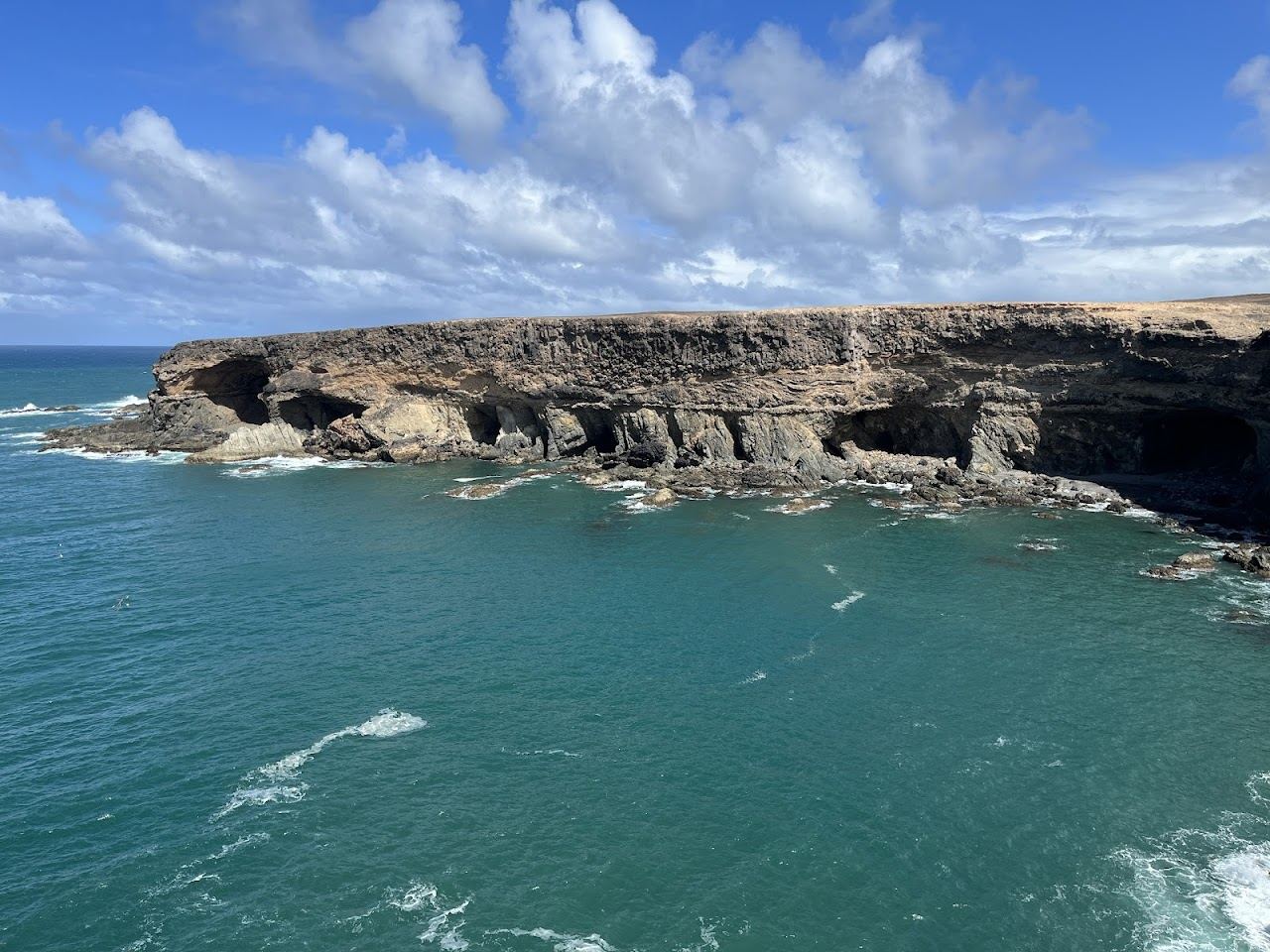
Costa Calma wins for families, nervous swimmers and anyone whose idea of a good beach day involves a long, lazy paddle. The water here is usually sheltered and shallow, among the gentler swims in the south, which is exactly how the resort earned its calm name. Ajuy wins for the restless traveller, the walker, the photographer and the long lunch devotee. It gives you dark volcanic sand, tall ochre and black cliffs, the island's most dramatic sea caves and a fishing village that takes its seafood seriously. What it does not reliably give you is a safe swim.
That single difference, the sea, is the hinge the whole decision turns on. Everything else flows from it.
Sand and setting: drama against ease
Costa Calma is soft golden sand along quiet town beaches at the neck of the southern peninsula, with room to spread out and relax. It is a resort beach in the honest sense: access points, car parks and hotels line the coast above the water, and the whole stretch is built for an uncomplicated day. The look is pleasant rather than spectacular. You come here for comfort, not for a gasp.
Ajuy is the gasp. The sand is black and volcanic, born of the island's eruptions, mixed with pebbles and framed by cliffs that glow in late light. It is one of the most characterful beaches on Fuerteventura precisely because it refuses to be tidy. The signed coastal path north of the beach climbs to a viewpoint and drops into the Cuevas de Ajuy, a protected natural monument where the rock is among the oldest in the Canaries. That walk takes around twenty minutes each way and is the real reason to come. You are here for geology and atmosphere, and the sand is a bonus underfoot rather than the main event.
The water: this is where the answer is decided
If you remember one thing, remember this. Costa Calma faces a sheltered southern coast, and the water along the town beaches is usually shallow and gentle, among the calmest swims the south offers. The afternoon wind does freshen across this coast, so the stillest conditions come in the morning. Swim early, read the flags and keep children close, and you have a genuinely easy bathing beach. Conditions are typical rather than guaranteed, and lifeguard cover varies by season and stretch, so check before you commit.
Ajuy is the open west coast, and it behaves like it. The sea is often rough, with a heavy shore break and strong currents, and it is calm only on settled days. There is usually no lifeguard, status to be confirmed, so this is water to watch rather than water to trust. Local families do go in on settled summer days, staying shallow and watching the sea before they commit, but the honest guidance is simple: if there is any swell running, do not swim. Treat Ajuy as a beach for walking and wonder, not for a casual dip.
The rule of thumb: Costa Calma is where you plan to swim, Ajuy is where you hope to swim and are perfectly happy if you do not.
Facilities and the day around the beach
Costa Calma runs on resort infrastructure. Expect sunbed hire and hotel beach bars along the front, with a small town behind, operators to be confirmed. It is low key rather than lively, which is the whole point. The trade for that calm is quiet. This is not a place for a buzzing scene or a long list of restaurants to work through. For the best food many visitors drive south to Morro Jable, and plenty stay in Costa Calma purely for the gentle beach and the short run to the lagoon.
Ajuy flips the equation. There is little in the way of beach furniture, but there is a cluster of seafood restaurants and cafes just behind the sand, and eating is genuinely the point of the day. This is a fishing village, mussels are something of a local specialty, and island families fill the tables at weekends, which is the surest sign the kitchens are doing their job. Specific venues, hours and prices are to be confirmed and shift with the season. Parking sits near the village with a short walk to the sand and the start of the cave path. Both beaches are free to enter.
Crowd and mood
Neither of these is a party beach, but they are quiet in different registers. Costa Calma is calm by design, a relaxed family resort where the energy stays low and the day runs on its own gentle schedule. Ajuy is quiet in the wilder sense, a half day destination rather than a sunbathing strip, busiest at lunch and on weekends when islanders come for the fish. If you want people watching and a lively promenade, neither delivers, and you would be looking at a different part of the coast entirely.
When the other one wins
The answer flips more often than you might expect, so here is where the loser of your first instinct becomes the right call.
- If you booked Ajuy for a swim and wake to swell on the west coast, the day is lost for bathing. On any day with wind or waves running, Costa Calma is the safer, saner choice for getting in the water.
- If you are staying in the south and the forecast is settled, Ajuy earns a half day trip for the caves, the cliffs and the lunch, even though you will do your swimming elsewhere.
- If your group splits between a toddler who wants to paddle and an adult who wants to walk somewhere memorable, Costa Calma handles the first and Ajuy handles the second. They do not do both at once.
- If the afternoon breeze has already freshened Costa Calma and you want shelter and a story instead, the cave walk at Ajuy does not care about the wind.
One honest warning worth repeating: do not choose Ajuy expecting a lazy swimming beach and then feel cheated. It is overrated only in that single respect, because people arrive hoping for a bathing cove and find the wild Atlantic. Reframe the visit as scenery and seafood and it becomes one of the best days on the island.
How they fit the wider island
Costa Calma is also the closest and quietest base for the famous Sotavento lagoon, a short drive south, which makes the southern peninsula a rounded pairing for a longer stay. If your priority is reliable calm with full resort ease, the family beach at Caleta de Fuste on the east coast is worth weighing too, with its sheltered horseshoe bay and short airport transfer. If Ajuy has you hungry for raw landscape, the vast empty sweep at Cofete Beach pushes the wildness even further, while the reef lagoons and harbour of El Cotillo in the north give you a calm morning swim and a wild surf beach in the same small town. For planning the trip as a whole, the island overview and the seasonal guide help you time it, and families will find more sheltered options on the family beach roundup.
Still torn between a west coast cove and the rest of the island? Two companion pieces go deeper: Ajuy measured against El Cotillo and Ajuy weighed against Caleta de Fuste.
Planning a beach club day
Once you have chosen your shore, the comfortable way to anchor a day on Fuerteventura is a club with loungers, shade and a kitchen close to the sand. Browse the options and enquire about availability on the Fuerteventura beach club page, and match the setting to whichever of these two beaches suits the day you have in mind.