Ajuy or Cofete Beach: Which Fuerteventura Shore Wins
Published 2026-09-06. Conditions described are typical and never guaranteed.
Here is the short answer before you scroll. Both of these are wild beaches, not swimming beaches, and neither will give you a lazy afternoon of soft calm water. If you want black sand, sea caves and a long plate of fresh fish inside a real fishing village, go to Ajuy. If you want the single most spectacular empty sweep of sand on the island and you will pay for it with a rough mountain track and almost no facilities, go to Cofete Beach. Choose by appetite: Ajuy is a half day of scenery plus lunch, Cofete is an expedition you plan your whole day around.
What links them is the coast they sit on. Both face the open Atlantic on the western side of Fuerteventura, which means powerful water, currents and no promise of a safe dip. If a gentle bathe is the point of your day, honestly, neither belongs at the top of your list, and I say where to go instead further down. But if you treat a beach as landscape and story rather than a pool, these two are among the most memorable places the island holds.
Ajuy in one honest paragraph
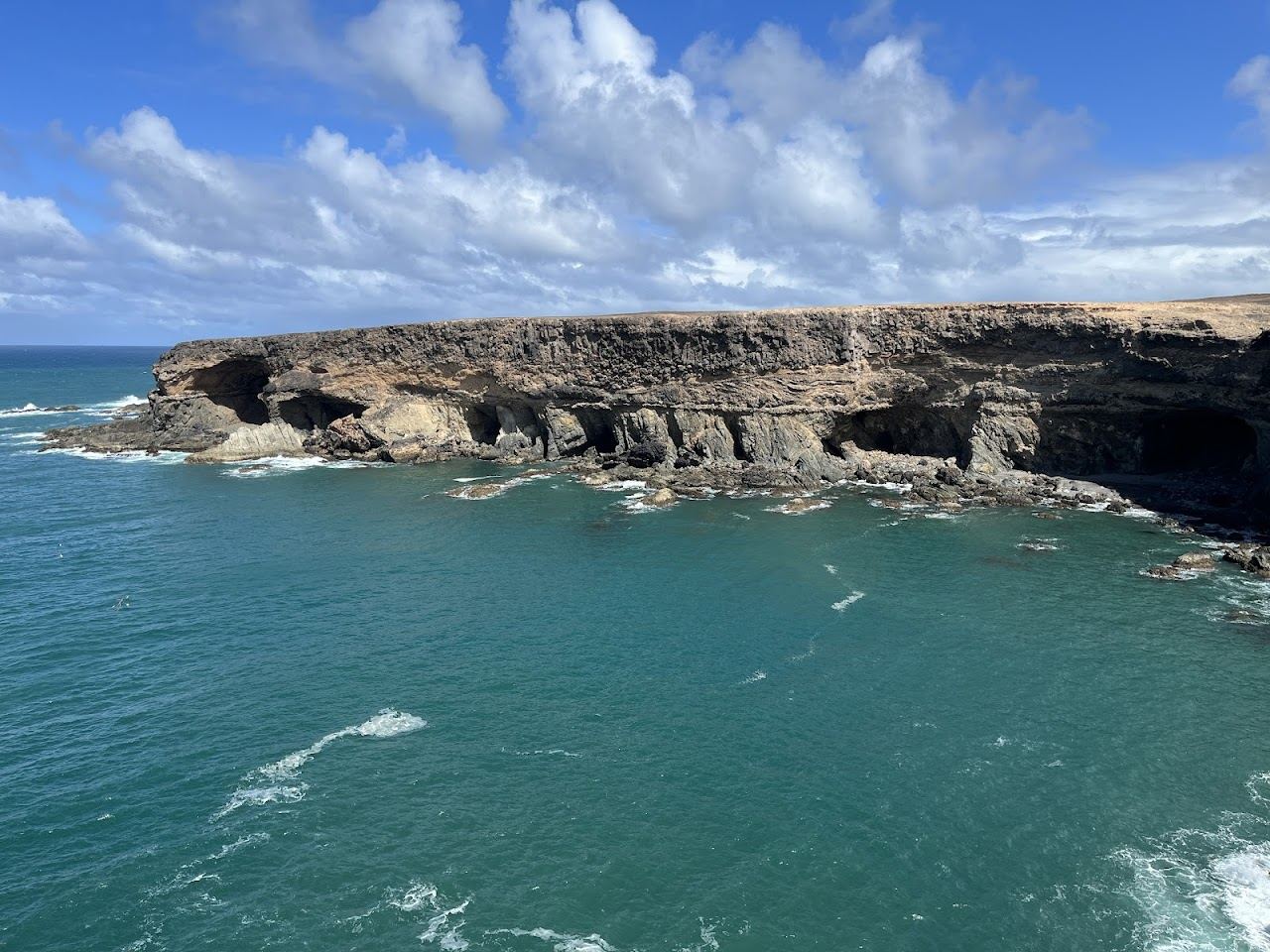
Ajuy is small, dark and dramatic. The sand is black volcanic grit and pebbles, born of the island's eruptions and framed by tall ochre and black cliffs, so it photographs like nowhere else in Fuerteventura. It is free to reach, with parking near the village and a short flat walk to the sand. Behind the beach sits a genuine fishing village of seafood restaurants and cafes, with the old lime kilns and, most importantly, the start of the cave walk close by. The signed coastal path leads north up to a viewpoint and down into the Cuevas de Ajuy in around twenty minutes each way, and the rock here is among the oldest in the Canaries, raised from the sea floor long before the islands took shape. That geological pull is the real reason to come.
The water is the catch. This is the exposed west coast, often rough, with a heavy shore break and currents, calm only on settled days. There is usually no lifeguard, so treat the sea as wild Atlantic rather than a bay. Local families do wade in on still summer mornings, but they know the beach and they watch it first. Conditions are typical rather than guaranteed, and swimming here is only for calm days and only with real care.
Who Ajuy is for
- Travellers who want scenery and a story over a swim, here for the black sand, the sea caves and a long seafood lunch.
- Anyone who likes a short walk with a big payoff and a table waiting at the end.
- Day trippers who want the west coast drama without committing to a full expedition.
The lunch deserves its own line. Ajuy is a fishing village, so seafood is the whole point, and mussels are something of a local specialty, best eaten at a table looking out at the black sand and the surf. Island families fill these tables at weekends, which is the surest sign the kitchens are honest. Specific venues, hours and prices are to be confirmed and shift with the season, so arrive hungry rather than with a fixed plan.
Cofete in one honest paragraph
Cofete is on another scale entirely. It is a vast sweep of soft golden sand running for kilometres beneath the dark Jandia mountains, undeveloped and almost always empty. Stand on the central sand at the right hour and it feels like the edge of the world, which is exactly why people rank it among the most unforgettable places in the Canaries. Above the slope sits the mysterious Villa Winter, and the light at sunset is the sort you remember for years. The beach itself is free.
The cost is access and comfort. A long unpaved mountain track climbs from Morro Jable and drops to the coast, roughly twenty kilometres of slow driving. A high clearance vehicle is wise, and many hire car agreements do not cover the track, so check before you commit; a local bus and guided tours also run and spare you the drive. Once there, facilities are close to none. There is a simple village restaurant in the tiny hamlet of Cofete, known for fresh fish, though its status and hours are to be confirmed, and beyond that there are no shops, no sunbeds and little shade. Bring plenty of water, food, sun cover and cash, and carry every scrap of rubbish out to keep this protected coast as wild as you found it.
As for the sea, the honest word is powerful. Open ocean, strong surf, strong currents and a steep shelving shore, with no lifeguard. It is beautiful to watch and not a safe family swimming beach. Treat Cofete as a place to walk the sand and wonder at the water rather than swim.
Who Cofete is for
- Travellers chasing the wildest, most spectacular beach on the island who will trade all comfort for it.
- Photographers and walkers who want space, silence and the great sunset light.
- Anyone who enjoys the day being a small adventure rather than a quick stop. Our guide to the island's quietest shores leans hard on places like this.
The head to head
Set them side by side and the differences are clean.
Sand. Ajuy is black volcanic grit and pebbles, compact and dramatic in a small cove. Cofete is soft golden sand stretching for kilometres. If you want the striking dark shore and close cliffs, Ajuy wins the look up close. If you want sheer scale and emptiness, Cofete has no rival on the island.
Water. Both are exposed and often rough, so this is a draw in the worst sense: neither is a reliable swim. Ajuy can settle on calm summer mornings enough for locals to paddle with care. Cofete's surf tends to run stronger and the shelving shore adds risk, so it edges further toward look, do not touch. On any day with swell running, keep well out of both.
Facilities. This is where Ajuy pulls clear. It has a village of restaurants and cafes a few steps from the sand, parking near the beach and the cave path on the doorstep. Cofete has almost nothing beyond that one simple restaurant of uncertain status, so you carry your own day in with you.
Crowd and effort. Ajuy is an easy, popular half day, busier at weekends when island families arrive for lunch. Cofete is remote by design, so it stays quiet, but only because the track filters out anyone unwilling to make the drive. If you want low effort, Ajuy. If you want low crowds and will earn them, Cofete.
The conditions that flip the answer
Timing changes everything here. Cofete is at its best in May, June and September, when the seas are calmer, the days are warm and the light is soft for both the drive and the walk. Miss that and a big swell or a grey sky strips away much of the magic while leaving all of the effort. Ajuy is lovelier whenever the sea lies down, with summer mornings and settled spells the most likely calm windows, and because the day is anchored by the caves and the lunch rather than the water, a slightly rougher sea matters less. If you want help pinning the right month, our seasonal timing notes for Fuerteventura are the place to start.
Your vehicle flips it too. No high clearance car and no cover for the track means Cofete becomes a booked tour or bus day, or it drops off the list; Ajuy stays reachable in any hire car. And your group flips it hardest of all. With small children or nervous swimmers, both of these wild beaches are hard work, and the day is better spent elsewhere.
When neither one wins
If your priority is a calm, safe, shallow swim, be honest with yourself and skip both. The sheltered horseshoe at Caleta de Fuste is arguably the easiest family beach on the island, with breakwaters holding the water gentle and full facilities a few steps from the sand, and it is a short drive from the airport. For a beach that gives you a calm lagoon in the morning and wild surf sand for the evening, El Cotillo in the north pairs reef sheltered pools with a fishing harbour that eats very well. And for white dunes and turquoise water beside a sociable town, the Grandes Playas de Corralejo deliver scale without the mountain track. Families weighing the calm option against the wild one may also like our family beach roundup, and our Ajuy or Caleta de Fuste comparison tackles that exact trade off.
So, the verdict once more. Pick Ajuy for drama, caves and a proper fish lunch with minimal effort. Pick Cofete for the wildest, emptiest, most cinematic day on Fuerteventura, planned like an expedition and taken in a settled month. Both reward you for treating the sea as scenery, and both ask you to respect it.
Prefer a lounger and a poured drink
Wild coast days are the opposite of a club day, and sometimes you want the loungers, the shade and the service instead. If that is the mood, browse our Fuerteventura beach club listings to compare options and enquire about a day pass or a table by the water.