Faragas or Lageri: which Paros beach suits you
Published 2026-10-10. Conditions described are typical and never guaranteed.
Here is the short answer before you read a word further. Choose Faragas if you want a calm, grown up swim in sheltered turquoise water with a kitchen, a sunbed and a roof for the hot hours, especially on a day when the north wind is up. Choose Lageri if you want space, silence and a wild stretch of sand with nobody selling you anything, and you are happy to arrive self sufficient with water and your own shade. These two beaches sit on opposite ends of the same question: do you want to be looked after, or do you want to be left alone.
Both are on Paros, both reward June and September over the August crush, and both can be gorgeous. But they are not interchangeable, and the wind, your group and your appetite for service will decide which one is right on any given morning. Let me take them apart properly.
The quick verdict by type of traveller
- Couples wanting a refined, easy day: Faragas, for the design led club, the lunch and the calm cove.
- Swimmers chasing shelter on a Meltemi day: Faragas, because its southern aspect is built for exactly that.
- Travellers who prize solitude and natural scenery: Lageri, for the dunes, the room and the quiet.
- Anyone who wants a beach day on a budget with no minimum spend: Lageri, since it is free and undeveloped with nothing to buy.
- Families wanting easy services and shade: this is the one case where neither is the obvious pick, and I will explain why below.
Sand and setting: a tended cove against an open wild sweep
Faragas is a compact affair, about 300 metres of golden sand curling into a sheltered cove on the south coast, with a low headland splitting the organised club side from quieter public sand. It is pretty rather than vast, and the whole place has a contained, cared for feel. You are never far from the water, the bar or the shade, which is the point of it.
Lageri is the opposite idea of a beach. It is a long, wide run of soft golden sand backed by low dunes and a scatter of cedar trees, one of the most natural beaches on the island. There is no headland dividing it into managed zones because there is nothing to manage: you simply walk out onto open sand and find your own patch among the dunes. If your idea of a good day is a horizon of empty beach and the quiet of a small reserve, this is a place that still delivers it.
So the sand verdict splits cleanly. Faragas gives you a neat, sheltered cove with structure. Lageri gives you scale, dunes and the sense that you have the coast mostly to yourself. One is a destination you settle into; the other is somewhere you spread out.
Water: both clear, but calm for different reasons
Faragas is among the stillest swimming on Paros when a breeze is blowing, and that is its entire reason for existing. Its southern face is sheltered from the north wind, so the water stays clear, turquoise and usually calm when exposed beaches are chopped up. On a strong Meltemi day this is the smart bolt hole, the cove people drive south to find.
Lageri holds up surprisingly well too. The water is clear and clean with a sandy entry that stays mostly gentle even when a breeze is up, and there is little seaweed close in. It is not as reliably glassy as Faragas on the windiest days, because it is more open, but it is far calmer than the fully exposed southeast coast. For a wild beach, the swimming is genuinely good.
One honest note that applies to both: there is no guaranteed lifeguard at either. Faragas has seasonal cover that varies by year and is to be confirmed, and Lageri has none at all. Conditions here are typical rather than promised, so judge the sea yourself on the day and keep a close eye on your group, particularly with children.
Facilities: full service versus nothing at all
This is the widest gap between the two, and it is the fact most likely to decide your day.
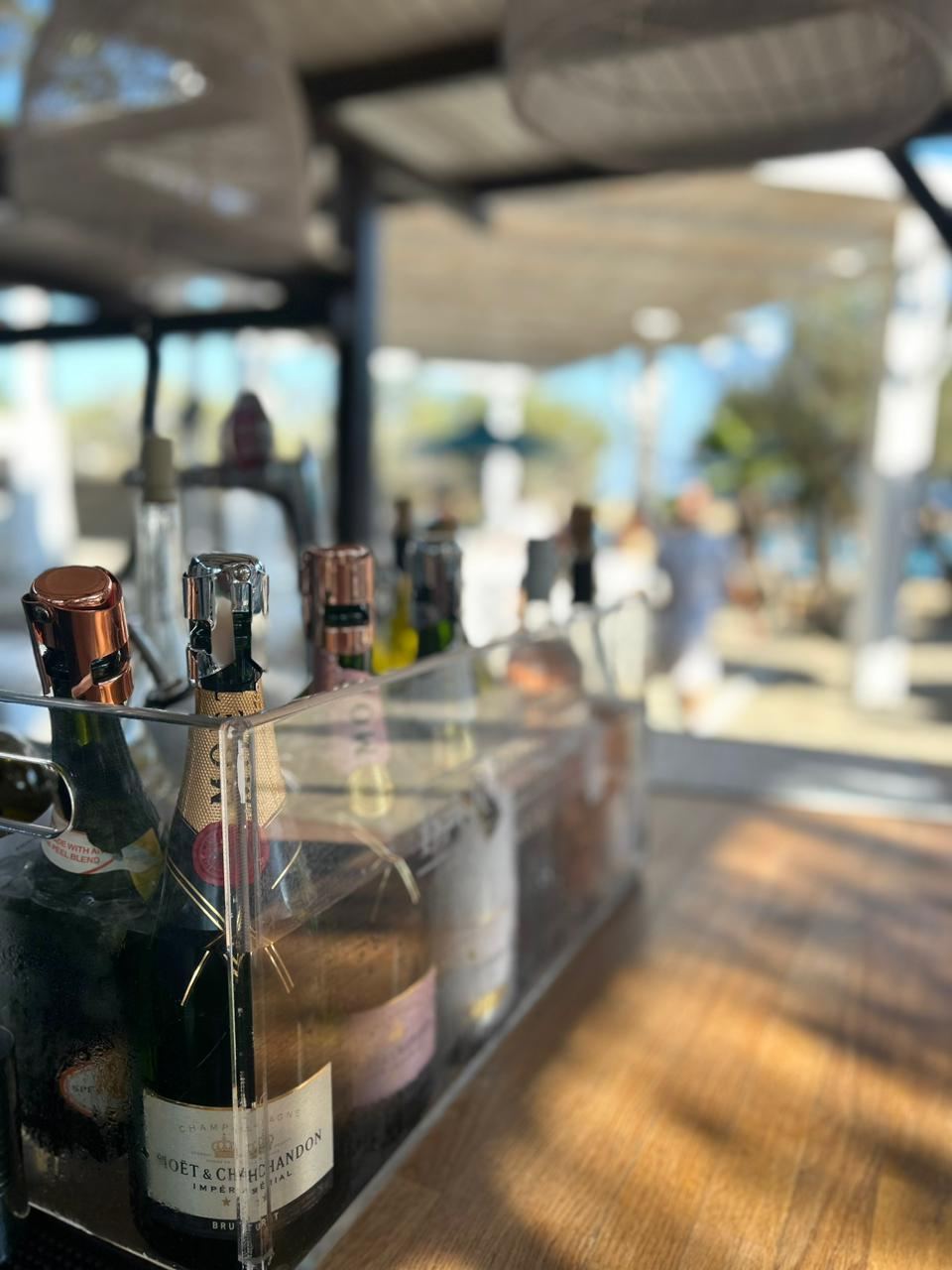
Faragas has a design led beach club and restaurant, all wood and cream fabric, with sunbeds, umbrellas and a good kitchen, kept low key and grown up rather than loud. There is a mix of free public sand and the organised club section, and club hire and any minimum spend are set locally and to be confirmed. If you want to arrive with just a hat and a card, this is the beach that makes that possible.
Lageri has nothing. No taverna, no sunbeds, no umbrellas, no showers. That is not a failing; it is the whole appeal. But it means you must come prepared with water, food and your own shade, and carry your rubbish out. The nearest services are back toward Naoussa. Treat the lack of facilities as the entry fee for the peace, and you will understand the beach correctly.
If the thought of a beach with no bar and no shade sounds freeing, Lageri is your beach. If it sounds like a logistics problem, Faragas will make you much happier.
Crowd and mood
Faragas draws a calm, refined crowd who have usually driven south on purpose, often on a windy day. It is unhurried and grown up rather than buzzy, and the beds near the club fill on calm peak days, so a morning arrival helps. If you want a scene, this is not it, and that is deliberate.
Lageri is quieter still, kept thin by its rough access. The reserve and the bumpy dirt track in do the work of a bouncer, so August crowds largely stay away. One thing worth knowing before you plan the day: parts of Lageri have long been popular with naturists, particularly the quieter dune backed stretches. The beach is large enough that people find their own space, but it is a fact to weigh if you are bringing a family. For a wider look at where the island hides its quiet corners, the secluded beaches guide is a useful companion.
When each one wins
The honest truth is that the answer flips with the wind and with what you want from the day.
Faragas wins on any breezy day across the season. When the Meltemi gets up and the north coast is blown out, its southern shelter makes it the obvious choice, and the club means you can turn a windy forecast into a long, comfortable lunch by calm water. It also wins any time you simply want to be served: a bed, a kitchen and shade on tap.
Lageri wins on a calm, settled day when you want room to breathe and no commerce at all. If the forecast is gentle and your priority is space, dunes and solitude over service, Lageri is the better beach and it costs nothing. It also wins for travellers who actively dislike organised beaches and want something closer to wild.
And the case where neither quite wins? Families wanting easy services with shallow water and shade. Lageri has no facilities and naturist use in places, and Faragas, while calm and clear, is a compact cove at the higher end rather than a long family sand. If that is you, the island's longer family sweeps are a better fit, and the family beach rundown will steer you well. The longest Blue Flag stretch on the island and the granite coves of Naoussa bay both answer that brief more directly.
Getting there, briefly
Faragas lies on the south coast near Aliki, roughly twenty to twenty five minutes by car from Parikia and the airport and about thirty five from Naoussa, with parking that fills on calm peak days and no frequent bus, so a hire car or scooter is the practical way in. Lageri sits off the Naoussa to Santa Maria road, about four kilometres from Naoussa down a signed dirt track through a small reserve; many park near the end and walk in. If you are still weighing other contenders, the Faragas against Golden Beach comparison and the Faragas against Kolymbithres piece cover the next questions most people ask. For timing the whole trip, the season guide is worth a read.
Book a club day on Paros
If the Faragas side of this decision is calling you, and you want a tended cove day with a bed and a kitchen rather than a wild one, enquire through the Paros beach club page to check availability and plan your visit. It is the simplest way to lock in a sheltered swim and a good lunch, especially on a breezy day when that southern cove comes into its own.