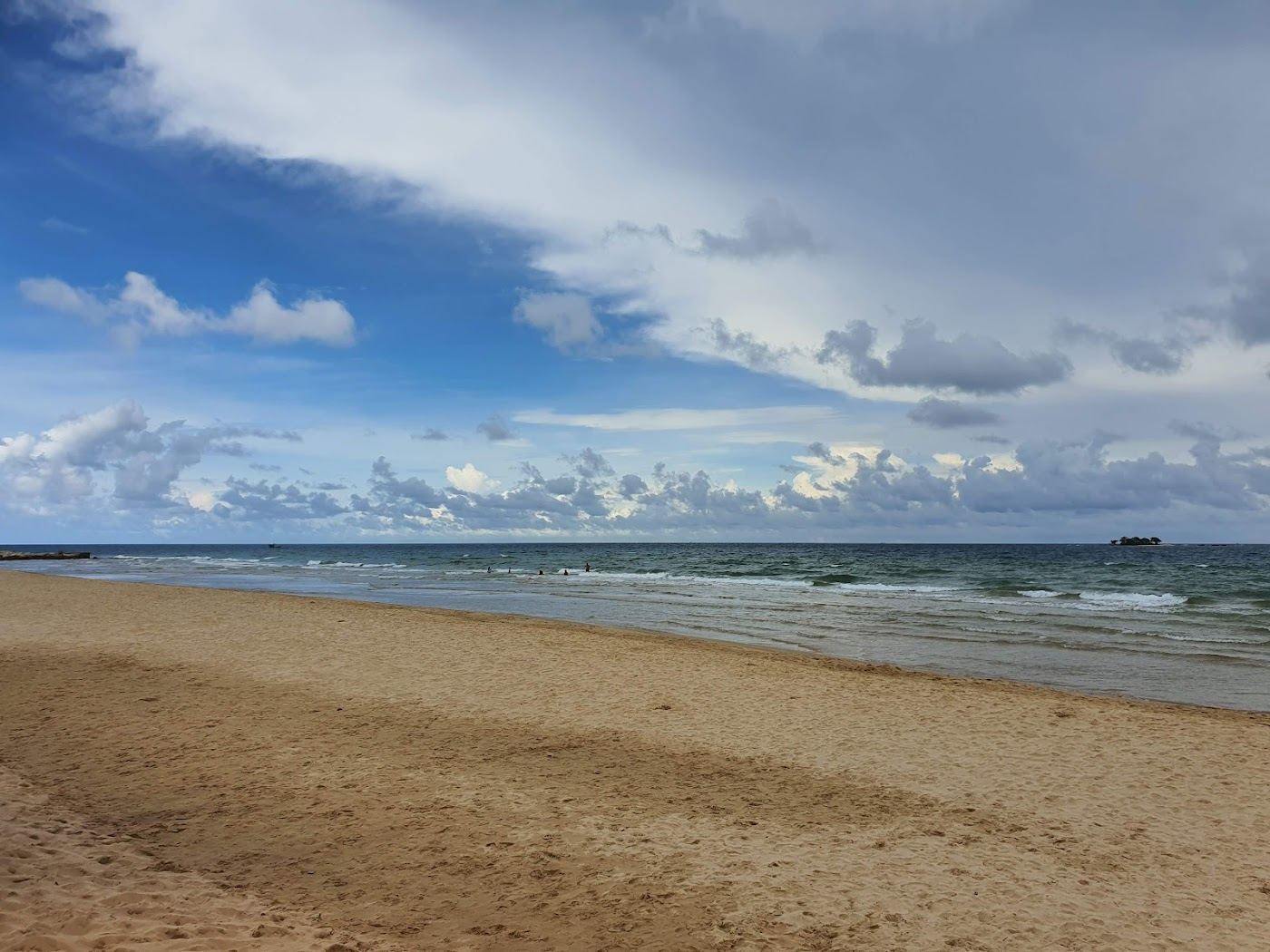
Bai Dai or Bai Ong Doi: Which Phu Quoc Beach Wins
Published 2026-08-29. Conditions described are typical and never guaranteed.
Here is the verdict before you scroll: these two beaches are not competing for the same afternoon, and pretending they are is how people end up disappointed. If you want to lie down, wade into shallow water and let a long west facing shore carry you to sunset, especially while you are working the theme parks into your trip, Bai Dai Beach is your answer. If you want scenery over swimming, sculpted rock, an open horizon and one of the island's most cinematic evenings, Bai Ong Doi wins. One is a beach you settle into for hours. The other is a cape you visit for the light and the view.
That distinction runs through everything below. Bai Dai sits on the northwest coast as the shoreline of a vast resort and entertainment zone. Bai Ong Doi is a rocky headland at the southern tip of the An Thoi peninsula, more viewpoint than strand. Choose wrong and you will either be scrambling over granite looking for somewhere to swim, or standing on soft sand wondering where the drama is.
Who each beach is for
Bai Dai suits the traveller building a full day around the northwest cluster. If VinWonders, the safari or the Grand World complex is already on your list, the beach is the natural place to cool off afterward, and because the whole coast faces west it delivers the sunset without you moving an inch. It also suits families and easy swimmers who want a long, shallow, gently shelving shore where children can wade in settled conditions. Read the sea, keep them close, and note there is no public lifeguard cover reported along most of the beach.
Bai Ong Doi suits the traveller who treats a shoreline as a photograph. It is for people who chase light and form: dark granite, small creamy sand pockets and the silhouettes of the southern islands out on the horizon. Because the cape faces the sea on two sides, it is one of the rare spots where the morning light opens in the east and the sun falls into the sea in the west from almost the same point. That is a photographer's beach, not a bather's.
Simplest test: do you want to be in the water for two hours, or do you want to stand somewhere beautiful at golden hour with a camera? Bai Dai for the first, Bai Ong Doi for the second.
Sand and shore compared
Bai Dai gives you length and softness. It is a long stretch of soft gold sand running up toward Ganh Dau Cape, broken here and there by rocky outcrops but essentially a proper walking beach where you can spread out. That continuity matters. You can find your own patch, wander for a while and come back, which is exactly what a long beach day needs.
Bai Ong Doi offers the opposite. It is small creamy white sand pockets set between sculpted stone rather than one continuous strand. It photographs beautifully and it rewards a scramble, but it is limited for lying out or for a long walk. If your idea of a good beach is space to roam and room for a towel with no neighbours pressed against it, the cape will feel cramped and rocky. If your idea is a striking foreground for a picture, it delivers.
Water and swimming
This is where the gap is widest and where most people should make their decision. Bai Dai is west facing and usually calm and shallow in the dry season, shelving gently, which makes for easy wading and easy bathing on a settled day. It is a genuine swimming beach. The wet months bring choppier water and occasional debris, and there is no lifeguard reported, so conditions are typical rather than guaranteed and you should never swim a rough or rising sea.
Bai Ong Doi has clear water around the headland, but it is rocky underfoot in many spots. It reads better as a viewpoint and a scramble than as an open swim, and there is no lifeguard cover reported on the open rocks. The swell can move around the headland, so if a proper swim is the point of your day, this is not the place to build it around. The honest framing is that Bai Ong Doi is a scenic cape, not a swimming beach, and treating it as the latter is the classic mistake here.
Facilities and access
Bai Dai is backed by the island's biggest tourism infrastructure: theme parks, a safari, the Grand World complex and a run of large resorts. That means full facilities in the developed core and simpler, more open stretches elsewhere. Public sections are open and free, though large sections front the Vinpearl resorts where access is more controlled. It is convenient in the way a resort coast is convenient, and it is busy in the same way.
Bai Ong Doi is quieter but more restricted. A resort, Premier Village Phu Quoc, occupies much of the headland and its beachfront, so direct public beach access is limited and to be confirmed. The cape itself is free to view. For food and drink you look to the nearby Sunset Town and the An Thoi waterfront, which have bars and dining rather than a sand club. There is no styled daybed club on the cape, and specific operators, access, hours and prices are to be confirmed, so do not plan around a venue being open there.
Crowds and atmosphere
Bai Dai is lively and developed, lifted by theme park crowds, and busiest in the December to March peak. That energy is a feature if you want your beach day plugged into attractions, and a drawback if you pictured a wild, empty shore. The old unspoiled reputation is dated; Bai Dai is now the heart of a major resort zone, not a secret. For genuine quiet you head further north to Ganh Dau, or to the barely developed village calm of Cua Can Beach just to the south, where a small river slips into the sea.
Bai Ong Doi is atmospheric in a different register: rock, horizon and evening glow rather than a beach scene. The nearby Sunset Town is built around exactly that evening light, so the mood at dusk is more waterfront town than sand party. It is calmer on the rocks themselves, though the resort presence shapes the whole headland.
When the other one wins
The answer flips on the kind of day you are running. Bai Dai is the default for a swimming and sunset day, but if your itinerary is built around the far south, around the Hon Thom cable car or Sunset Town, then dragging yourself to the northwest for the sand makes no sense, and Bai Ong Doi becomes the obvious evening stop. Pair it with a fine sand swim at nearby Bai Khem and you get the best of both.
Equally, Bai Ong Doi is the scenery pick, but if the weather turns and the swell picks up around the headland, or if you are travelling with young children who simply want to paddle, the cape stops earning its place and Bai Dai's long shallow shore is the safer, easier call. And if what you truly want is the island's postcard, fine white sand over glassy turquoise, neither of these is it: that is Bai Sao Beach on the sheltered southeast coast, best at first light before the day trip boats land.
The quick decision
- Choose Bai Dai for a long, shallow swim, a west coast sunset and a day tied to the theme parks.
- Choose Bai Ong Doi for sculpted rock, open sea views and a twin facing sunset you photograph rather than swim.
- Weather bad or children in tow: lean Bai Dai. Already in the deep south: lean Bai Ong Doi and add Bai Khem for the water.
If sunsets alone are your currency, it is worth remembering the wider west coast too. The island's great strand, Bai Truong, runs some 20 kilometres down the west side with the same reliable evening light, busy and built up in its heart and quietly lovely at its ends. It is a broader canvas than Bai Dai and worth weighing if a long sweep of golden sand is really what you are after.
Planning a club day in Phu Quoc
Neither of these two is a styled daybed club at heart: Bai Dai is a resort shoreline and Bai Ong Doi is a cape held largely by one resort. If a proper club day is what you want, with loungers, food and a view booked in advance, browse the Phu Quoc beach clubs directory to compare the island's venues and enquire about a day. Match the club to the coast you are basing yourself on, and check opening status and hours before you commit, since several details across the island are to be confirmed.