Bai Dai or Cua Can: Which Phu Quoc Beach Wins
Published 2026-10-11. Conditions described are typical and never guaranteed.
The verdict first
These two west coast beaches sit close on the map and worlds apart in mood, so the honest answer depends entirely on the day you want. Choose Bai Dai Beach if you are building your trip around the big attractions, want full facilities a few steps from the sand and like a long, settled stretch of shoreline with plenty going on behind it. Choose Cua Can Beach if you want a quiet, palm backed strand, a slow village pace and a river to paddle, and you would happily trade loungers and bars for calm.
Put plainly: Bai Dai is the shoreline to the island's biggest tourism cluster, and Cua Can is a barely developed village beach where a small river slips into the sea. Both are soft, both are west facing, both are usually calm and shallow in the dry season. What separates them is not the sand so much as the scene. One gives you a day with structure and options. The other gives you a day with almost nothing to do, beautifully.
If you still are not sure after the first screen, use this shortcut. Families combining a beach with VinWonders or the safari, and anyone who wants reliable amenities, should go to Bai Dai. Couples and slow travellers who want space, quiet and a kayak hour should go to Cua Can. Below is the detail that makes the choice, and the specific situations where the other beach wins.
Who each beach suits
Bai Dai is the all in one day
Bai Dai runs as a long sweep of soft gold sand up the northwest coast, and its real selling point now is everything behind it. The beach is backed by VinWonders, Vinpearl Safari, the Grand World complex and a run of large resorts, which means full facilities in the developed core and simpler open stretches toward the ends. This is the beach for a traveller who wants to ride a theme park in the morning and still catch a west facing sunset over the sea in the evening, all in one place.
It suits a family that values convenience over solitude, a group that wants options for food and drink nearby, and anyone staying inside the Vinpearl complex who simply wants to step onto the sand. The water is usually calm and shallow in the dry season, shelving gently for easy wading, which reads well for children on the open stretches. If that is your brief, read our notes on travelling with children in family friendly Phu Quoc before you go.
Cua Can is the do little beach
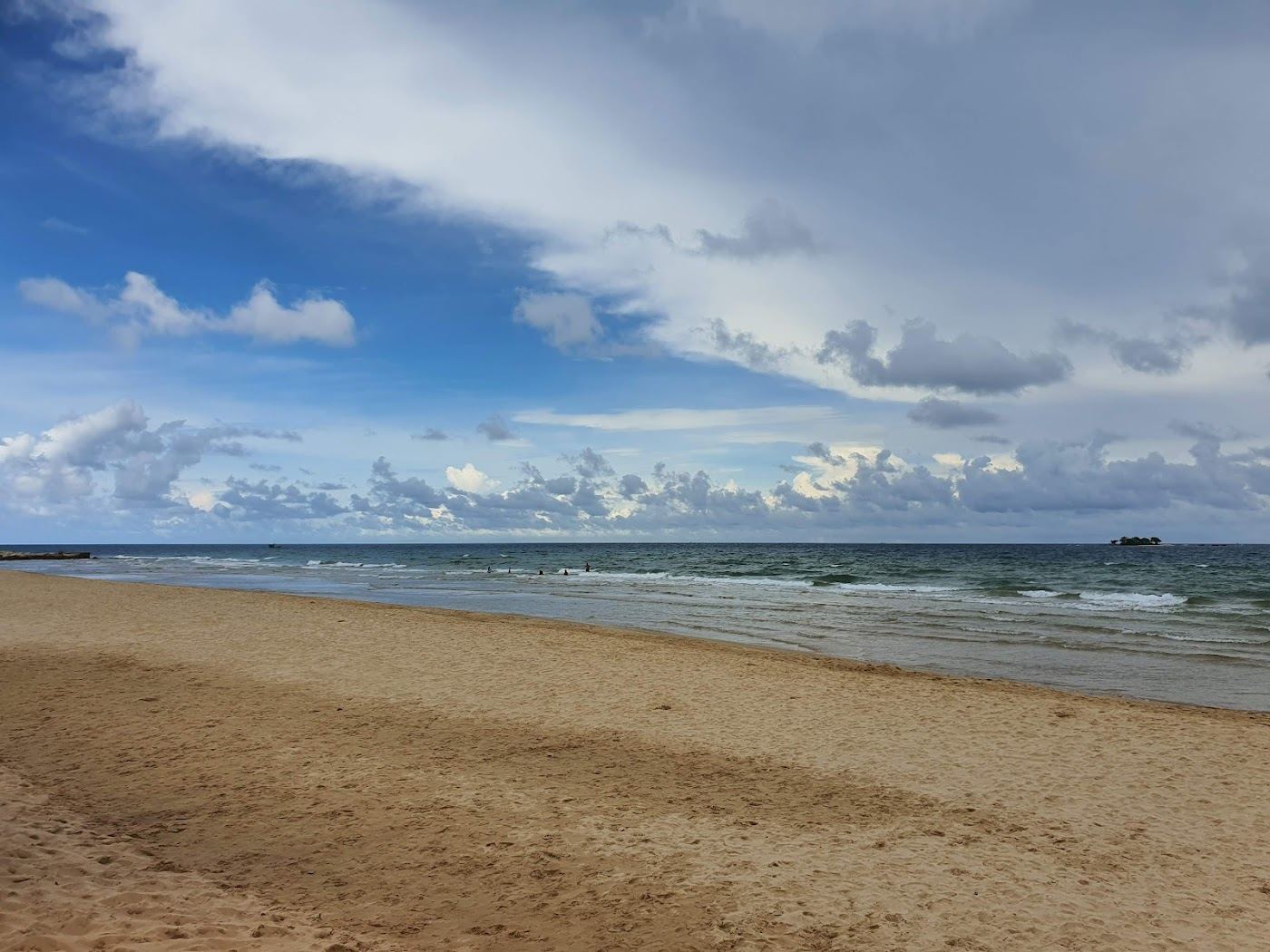
Cua Can is the opposite proposition. It is a gentle curve of fine, soft sand backed by coconut palms, where the Cua Can river meets the sea and the light runs slow. There is kayak and coracle hire and a scatter of simple local eateries, but no bar strip and almost no commercial development. The standout here is the river itself, a quiet hour paddling inland between palms and quiet banks, which is the prettiest slow thing to do on this part of the coast.
It suits travellers who would rather watch the light than queue for a daybed, couples after a calm shore with a village rhythm, and anyone who finds the theme park backdrop of Bai Dai a little too much. If you are planning a slower, quieter trip, our guide to a couples stay on the island and our quieter beaches roundup will both point the same way.
Sand, water, facilities and crowd
On sand, both are soft and both are inviting, but the texture of the day differs. Bai Dai gives you a long band of soft gold sand with rocky outcrops breaking the line in places, cleaner and more open at the quieter southern end toward Cua Can, busier and more serviced through the resort frontage. Cua Can gives you fine, soft sand that is cleaner along the open stretch than right at the river outflow, so walk a little away from the river mouth for the best of it.
On water, the two are closely matched in settled conditions. Bai Dai is west facing and usually calm and shallow in the dry season, choppier in the wet months. Cua Can is also usually calm and shallow for easy bathing, with one clear caveat: the sea turns cloudier near the river mouth and after rain when the river runs high. The clearest swimming at Cua Can is therefore along the sand away from the outflow. Neither beach reports public lifeguard cover, so on both you should read the sea, keep children close and never swim a rough or rising sea. Conditions are typical, never guaranteed.
On facilities, the gap is wide and it is the heart of the decision. Bai Dai is backed by theme parks, a safari, the Grand World complex and large resorts, with full facilities in the developed core. Cua Can offers low key village facilities, kayak hire and casual local food, with specific operators and prices to be confirmed. If you need shade, services and food within reach all day, that favours Bai Dai. If you can bring what you need and want the quiet in return, Cua Can rewards you.
On crowd, Bai Dai is lifted by theme park traffic, busiest through the December to March peak, while Cua Can stays quiet by comparison, with early morning and late afternoon the prettiest and emptiest hours. Both beaches are open and free to reach, though large sections of Bai Dai are fronted by the Vinpearl resorts where access is more controlled.
The short version: Bai Dai trades quiet for convenience, and Cua Can trades convenience for quiet. Decide which you are willing to give up and the winner picks itself.
When the other one wins
No single answer holds for every traveller or every day, so here are the situations that flip it.
- You are visiting the parks. If VinWonders, the safari or Grand World are on your plan, Bai Dai wins outright, because the coast faces west and the beach is a natural place to cool off and watch the sunset afterward. Cua Can has no such pairing.
- You want genuine calm and a kayak. If your idea of a good beach day is paddling a river between palms with almost no one around, Cua Can wins, and the developed feel of Bai Dai will not be what you pictured.
- It has just rained hard. After heavy rain the Cua Can river runs high and clouds the water near its mouth, so for the clearest swim on an unsettled day, Bai Dai's open stretches may serve you better. Avoid the river channel at Cua Can when it is flowing strongly.
- You chased the wild Bai Dai of old. The unspoiled reputation of Bai Dai belongs to the past, because it is now the heart of a major resort and theme park zone. If that word mattered to you, Cua Can is the more honest quiet, and the beaches further north are quieter still.
- You want food, shade and services all day. That is Bai Dai. Cua Can keeps things simple, and you should not plan around any one eatery or operator being open.
If neither quite fits
These are not the only two west coast options, and it is worth knowing the near neighbours. For the island's signature postcard of fine white sand over turquoise, the sheltered southeast crescent at Bai Sao Beach is the pull, best seen at first light before the day tours land. For a cape of sculpted rock and twin facing sunsets rather than easy swimming, head south to Bai Ong Doi. And if you want the famous long west coast strand with a developed strip of clubs and sunset bars, that is Bai Truong, also known as Long Beach. Timing the season matters for all of them, so check our notes on the best months to visit before you lock in dates. The dry season from November to April brings the calmest water and the clearest sunsets across this whole coast.
If you are still weighing Bai Dai against the island's other heavyweights, our head to head on Bai Dai versus Bai Truong and the comparison of Bai Dai versus Bai Sao both take the same honest approach, picking a winner for each kind of reader rather than crowning one beach overall.
Book a club day in Phu Quoc
Neither Bai Dai nor Cua Can is the place to plan a styled daybed club day. Cua Can is a low key village beach with simple eateries and no lounger scene, and specifics there are to be confirmed. For the island's beach clubs, including the sunset venues along the developed strip, browse and enquire through our Phu Quoc beach clubs directory, then start your wider planning from the Phu Quoc hub. Match the beach to the day you actually want, and the island does the rest.