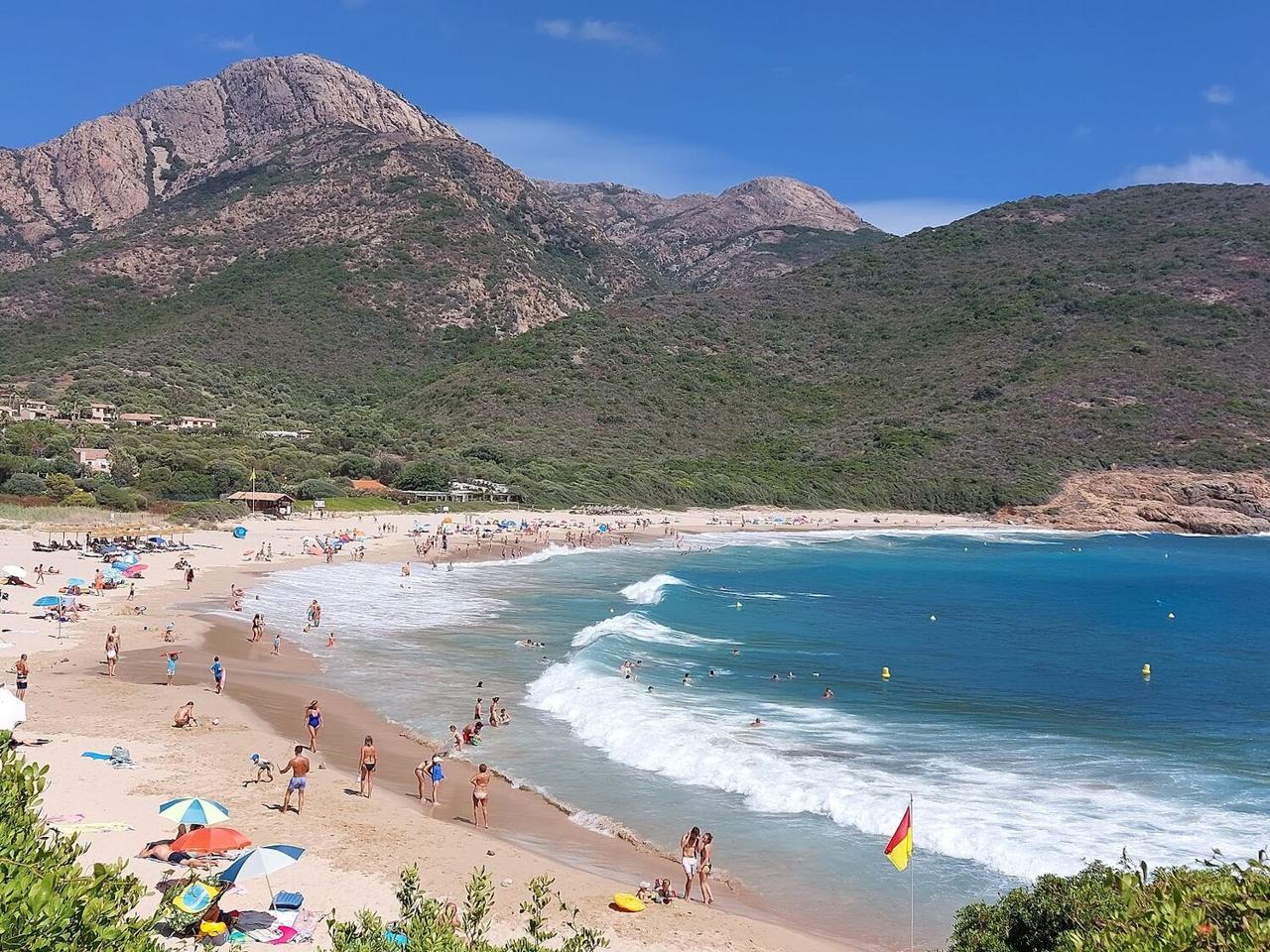
Arone or Capo di Feno: Which Corsica Beach Wins
Published 2026-09-04. Conditions described are typical and never guaranteed.
Here is the short version, so nobody wastes a slow Corsican road on the wrong bay. If you are travelling with children, or you simply want a wide, calm morning swim followed by the best light of the day, choose Arone Beach. If you surf, or you want a raw, open strand within easy reach of a city, choose Capo di Feno Beach. Both are free public beaches, both face west, and both save their finest hour for sunset. What separates them is the water: Arone is built to be gentle, Capo di Feno is built to be lively. Get that one distinction right and the rest of the day falls into place.
Neither of these is a club with daybeds and bottle service, so set that expectation now. Both offer seasonal food behind the sand and little else in the way of guaranteed comfort. What you are choosing between is two temperaments of the same coast.
The quick verdict by type of traveller
- Families with young children: Arone, comfortably. The centre of the bay shelves gently and the sand is wide and soft.
- Surfers and swell seekers: Capo di Feno, without contest. Its open western aspect is the reason it exists on any map.
- Sunset lovers: Either, honestly. Both face the right way. Pick on how you want to spend the hours before the light arrives.
- Anyone based in or near Ajaccio: Capo di Feno, for sheer proximity over the headland.
- Anyone touring the Piana and Calanche side: Arone, as the natural end point of a scenic drive.
Sand and space
Arone is a pale gold, wide western bay, soft underfoot and open enough that even in the warmer months it does not feel penned in. The stretch that rewards patience is the far southern end, where the sand runs into rock and the late light lingers longest. It is the kind of beach you settle into for the afternoon rather than dip in and out of.
Capo di Feno is broader still, and in truth it is two beaches: the wider Grand Capo di Feno strand and the smaller Petit Capo di Feno. Grand is where you want to be, both for the waves and for that same western glow at the close of day. The sand is broad and open, with the sense of scale you get from a beach that faces the full weight of the sea rather than tucking away from it.
On raw space alone the two are closely matched. The difference in feel comes from what the water is doing in front of that sand, and that is where the choice sharpens.
Water and swimming: the deciding factor
This is the heart of the comparison, so read it carefully. Arone is clear and usually calm, sheltered in the morning, with shallow shelving through the centre of the bay. That gentle middle is exactly what makes it forgiving for children and for anyone who prefers flat water. The one caveat is timing: because Arone faces west, mornings tend to be settled while the typical afternoon breeze can raise small waves. Plan your swim early and use the afternoon for lounging and the evening for the light.
Capo di Feno is a different animal. It is clear and often lively, exposed to swell, with waves that draw surfers and demand respect. On a calm summer day swimming here can be genuinely pleasant. But the beach is open to the sea, currents can run strong, and the surf that makes it a joy for boards makes it a place to judge conditions honestly. As with every beach in this guide, lifeguard cover is not guaranteed, so treat the sea as unsupervised and swim with caution. That is not a knock against Capo di Feno; it is the point of it. The autumn swell that thins the crowds is also the swell that surfers travel for.
The plain rule: if calm, predictable water is your priority, Arone wins. If you want energy, waves and a board under your feet, Capo di Feno wins. Neither one changes its nature to suit you, so choose the one whose nature you actually want.
Facilities and what to carry in
Do not arrive at either expecting a full service resort. Arone has limited facilities: a seasonal beach restaurant and snack behind the sand, with toilets to be confirmed. There is little natural shade, so bring your own. Capo di Feno has seasonal beach restaurants, often called paillotes, that open in the warmer months for lunch, drinks and sunset. Their names and hours change from season to season, so confirm before you rely on a meal there.
In both cases the smart move is to pack as if you are self sufficient: water, shade, and enough for the day. That is standard for this stretch of coast, and it is part of why these beaches still feel like beaches rather than open air lounges. If organised loungers and service are what you are after, that is a different kind of day entirely, and the Corsica beach clubs guide is where that search belongs.
Crowds, access and the drive
Getting to Arone means a slow, winding road, typically approached from Piana. It is worth it if you treat the beach as a destination rather than a quick stop. The reward for the effort is a bay that stays wide and open, and the months of June and September bring warm water and far fewer cars than the August crush.
Capo di Feno sits just over the headland from Ajaccio, a short drive on a small winding road. The distance is modest, but the road is slow, so allow more time than the map suggests. Its proximity to the city is its trump card: if you are staying in or near Ajaccio and want wildness without a full expedition, this is the easy answer.
For both beaches, June and September are the sweet spot. You get warm water and long days without peak summer pressure, and at Capo di Feno the shoulder and cooler months bring the better surf. If you are still weighing your dates, the wider view in the seasonal guide to Corsica is worth a look.
When the other one wins
Head to head guides are only useful if they admit that the answer flips. Here is when it does.
Arone loses if you want waves. Its whole appeal is calm mornings and gentle shelving, which is precisely the wrong recipe for surfing. On a day when you want the sea to work, Capo di Feno is the one.
Capo di Feno loses if you have small children or a nervous swimmer in the group. On a lively swell day the exposure that thrills surfers is a headache for families, and Arone's sheltered centre is far kinder. The choice can even flip within a single trip depending on the forecast: settled and low wind pushes toward calm swimming, a building southwest breeze pushes toward the beach that expects it.
Both lose if you actually want a developed town beach. If you would rather have restaurants, shops and easy parking within a walk of the sand, neither wild bay is the right call, and somewhere like Calvi serves that brief better. If it is pure emptiness you are chasing instead, the undeveloped sand of Erbaju Beach or the wide, wind catching Cupabia Beach take the wildness even further, with fewer services still.
So which one
Draw it down to a single question: what do you want the water to be doing? If the answer is calm, shallow and forgiving, drive to Arone, swim in the morning and stay for the southern end at sunset. If the answer is open, lively and made for a board, cross the headland to Capo di Feno and let autumn bring the best of it. Both are honest western beaches that deliver their finest hour at the end of the day. You are not picking the better beach; you are picking the one that matches the sea you came for. For a deeper tour of the region's shores, the Corsica beach index and the notes for families and couples help you build the rest of the itinerary.
Want a club day instead
Neither Arone nor Capo di Feno is a club, so if your ideal day involves daybeds, shade and table service by the sea, that is a separate plan worth making properly. Browse the options and enquire about a club day through the Corsica beach clubs guide, then keep these two wild bays for the mornings and sunsets they do so well.