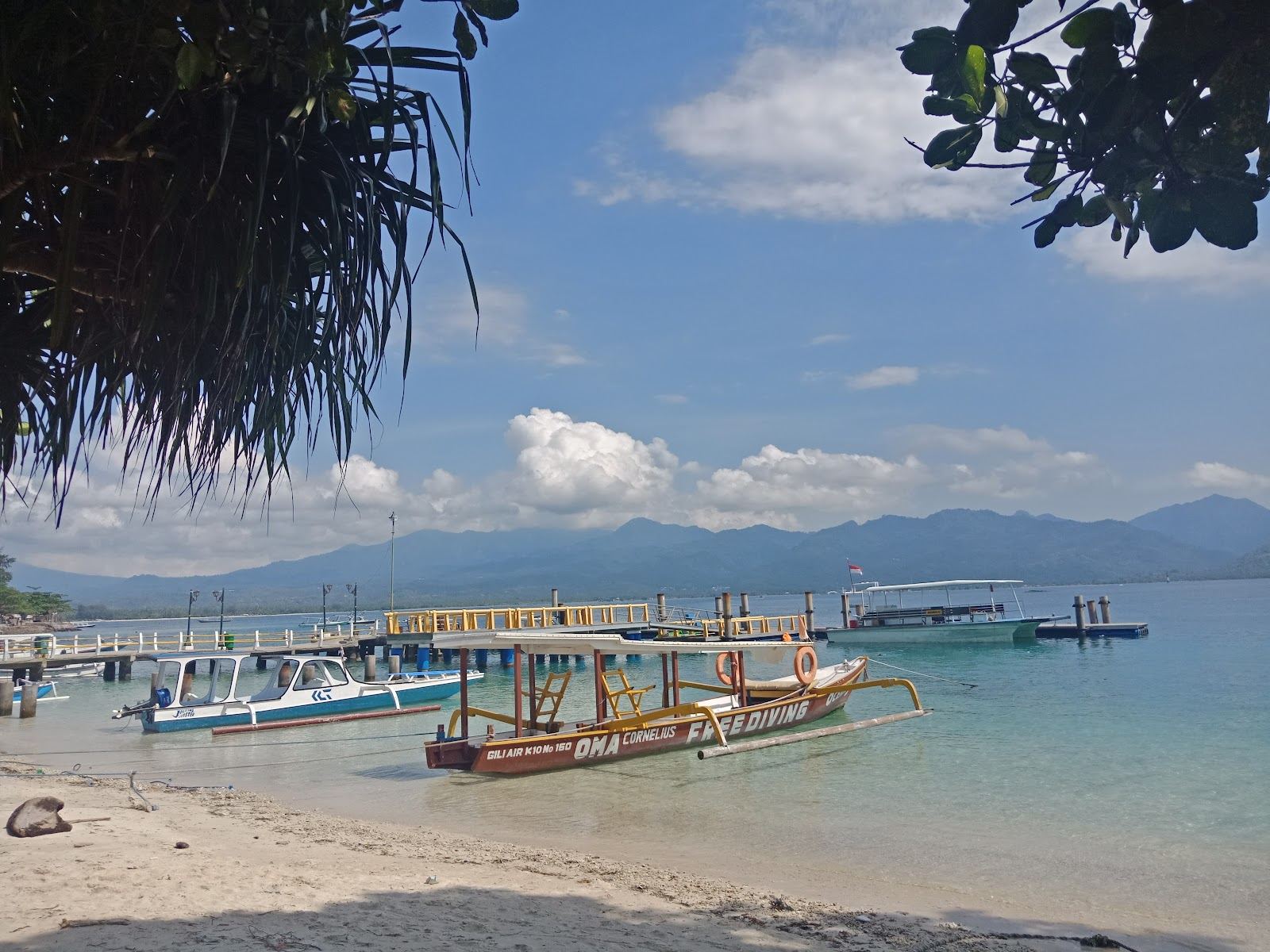
Gili Air East vs South Beach on the Gili Islands
Published 2026-08-23. Conditions described are typical and never guaranteed.
The verdict, before you unpack
If you have come to Gili Air for the water, go east. If you have come for cheap beds, cold drinks and the shortest walk from the boat, go south. That is the whole argument in one line, and the rest of this guide is about the moments when it flips.
Gili Air East Beach is the island's prettiest face: the whitest, widest coral sand, a reef you can wade to for a free snorkel, and the Rinjani volcano sitting across the strait at dawn. Gili Air South Beach is the island's engine room: the arrival jetty, most of the accommodation, the beach bars and warungs, and a patch of soft coral off the southeast point. One is where you swim and float; the other is where you sleep, eat and land. On an island you can cross in under half an hour, plenty of people use both in a single day, and that is exactly the right instinct.
So this is not a case of one shore beating the other outright. It is a case of matching the beach to the reason you are standing on it.
Who each shore is for
Choose the east shore if you are here to snorkel
The east side is built for people who came to put their face in the water. The reef sits close in, so you wade off the white sand and find coral and fish a short swim out, no boat and no tour required. Bring your own mask and a beach day here costs almost nothing beyond food. It is widely considered the best free shore snorkel on Gili Air, and the sand is the softest and widest on the island to spread out on afterwards.
It also rewards early risers. This shore faces the sunrise across to Lombok, so the light is best in the morning and the sand is quietest soon after dawn, before day visitors drift along it. Come with coffee, snorkel the reef while the water is calmest, and you will have had the best of the island before most people have surfaced.
Choose the south shore if you want the easiest, cheapest base
The south side is where the fast boats tie up, whether you are crossing from Bangsal on Lombok or coming across from Bali. Because the jetty is here, most of the island's cheap rooms, warungs and dive shops cluster within a short walk. That density is the point: competition keeps prices down, and you save on getting around because beds, food and boats all sit close together. For budget travellers who want convenience over postcard sand, this is the practical, well connected side of the island.
Snorkelling is not off the table here either. A patch of soft pink and orange coral lies off the southeast point, and you can reach it free with your own mask. The trick is to move away from the harbour before you get in, because the water right by the jetty carries boat traffic and is less clear.
Sand, water, facilities and crowd, side by side
Both beaches are white coral sand and both are free public shore, so the daily cost on either comes down to gear, food and a daybed if you want one. The differences are in the detail.
Sand
East wins on looks, and it is not close. The east shore is the whitest and widest stretch on Gili Air, soft and generous. The south sand is paler coral too, but it runs narrower and busier near the harbour, opening out only as you head along the southeast. If the quality of the sand under your towel matters to you, the east is the clear pick.
Water
East is a sheltered, flat, clear stretch with the reef close to shore, which is what makes the free snorkel so easy. South is calm and shallow too, but the water beside the jetty is busier and less clear than the island's east shore. For a clean swim and the best visibility, the east shore is the honest recommendation. For a soft coral session, go to the southeast point rather than the harbour front.
There are no lifeguards anywhere on the Gilis. On the east, check the tide and snorkel over the reef with care. On the south, mind the boat traffic near the harbour. Conditions here are typically calm in the dry season but never guaranteed, so read the water before you go in.
Facilities
Both rate as good for the Gilis, but they are good in different ways. The south side holds the harbour, most of the accommodation, the beach bars, warungs and dive shops, so it is the more serviced strip. The east has cafes, warungs and dive shops within an easy walk, which is plenty for a beach day, but it is not the commercial heart of the island. If you want everything on your doorstep, south delivers. If you want quiet with a coffee close by, east does the job.
Crowd
The south is the busier, more social shore by nature, since it is where people arrive, sleep and drink. The east is the calmer one, especially in the early morning. Neither is chaotic by the standards of the busier islands, but if solitude is the goal, the east sand soon after dawn is your window.
When the other one wins
Here is where the simple verdict bends, because the right answer changes with your day.
- You are arriving or leaving. The east may have the sand, but you land on the south, and dragging a bag across the island for your first swim is no way to start. On arrival and departure days, base yourself south and enjoy the convenience it was built for.
- You are counting every rupiah. The cheapest rooms and warungs sit south. If your budget is tight, sleep south for the value and simply walk or cycle to the east shore for the snorkel. The island is small enough that this costs you a few minutes, not a day.
- You want a soft coral snorkel over a reef swim. The southeast point holds that patch of pink and orange coral, which is a different experience from the reef off the east sand. If that is what you are after, south is the destination, not the compromise.
- It is the middle of the day and you want a drink by the water. The beach bars cluster south. The east is quieter and better for the morning; the south is livelier when the sun is high.
And the east wins back the argument the moment your priority is the water itself. For the whitest sand, the clearest swim and the easiest free snorkel, walk round to the east. Even the south shore's own logic sends you there: skip the harbour water for a clear swim and head east.
What neither shore is for
Both of these beaches face broadly east and south, which means neither is your sunset spot. For the evening show, cross to the west and settle on Gili Air Sunset Beach, where the sun drops behind Gili Trawangan and the swings line the shallows. The sand and the sky there are free; you only pay if you want the swing seat outside a bar, which usually expects the price of a drink. It is a short hop from either the east or the south shore, so the ideal Gili Air day snorkels east in the morning, bases south for food and beds, and finishes west for the light.
If you have time for a neighbouring island, the sunrise reef off Gili Meno East Beach and the still evening water at Gili Meno Sunset Beach are worth a day trip, though Meno tends to be pricier to stay on than Air. Many travellers do exactly that: sleep cheap on Air, visit Meno for the quiet.
How to plan the rest of it
The dry season months of May to September bring the calmest, clearest water on both shores and the easiest crossings, so time your trip with our seasonal notes if you can choose freely. Couples chasing quiet will find more ideas on the two of you pages, families can start with the shores that suit children, and anyone after real seclusion should browse the quietest corners across the islands.
Make it a beach club day
Want your Gili Air day organised around a specific venue rather than a public stretch of sand? See our Gili Islands beach clubs page to check what is available and enquire about a club day on the island.