Playa Cabuya or Playa Manzanillo: Santa Teresa Verdict
Published 2026-10-12. Conditions described are typical and never guaranteed.
The short answer
These are the two ends of the Santa Teresa coast that most visitors never bother with, and that is exactly why they are worth comparing. Neither is a soft sandy swimming beach, so if a long easy wade is what you want, both will disappoint you and you should look elsewhere on this coast. But if you have read that far and kept reading, here is the verdict.
Go to Playa Manzanillo if you want a long, near empty stretch of white sand to call your own, with the chance of decent snorkelling on a calm clear day. It is the north end of the coast, reached on a rough road, and it rewards anyone who comes self sufficient and in search of real solitude on actual sand.
Go to Playa Cabuya if the point of your day is a walk rather than a lie down: the low tide crossing to the island cemetery, the entrance to the Cabo Blanco reserve, and the particular hush of a tiny rural hamlet at the far south of the peninsula. This is a rocky shore where the quiet and the ritual of the tide are the whole experience.
Put bluntly: Manzanillo is the beach, Cabuya is the pilgrimage. Pick the one that matches why you got in the car.
Sand and setting: white sweep against rocky hamlet
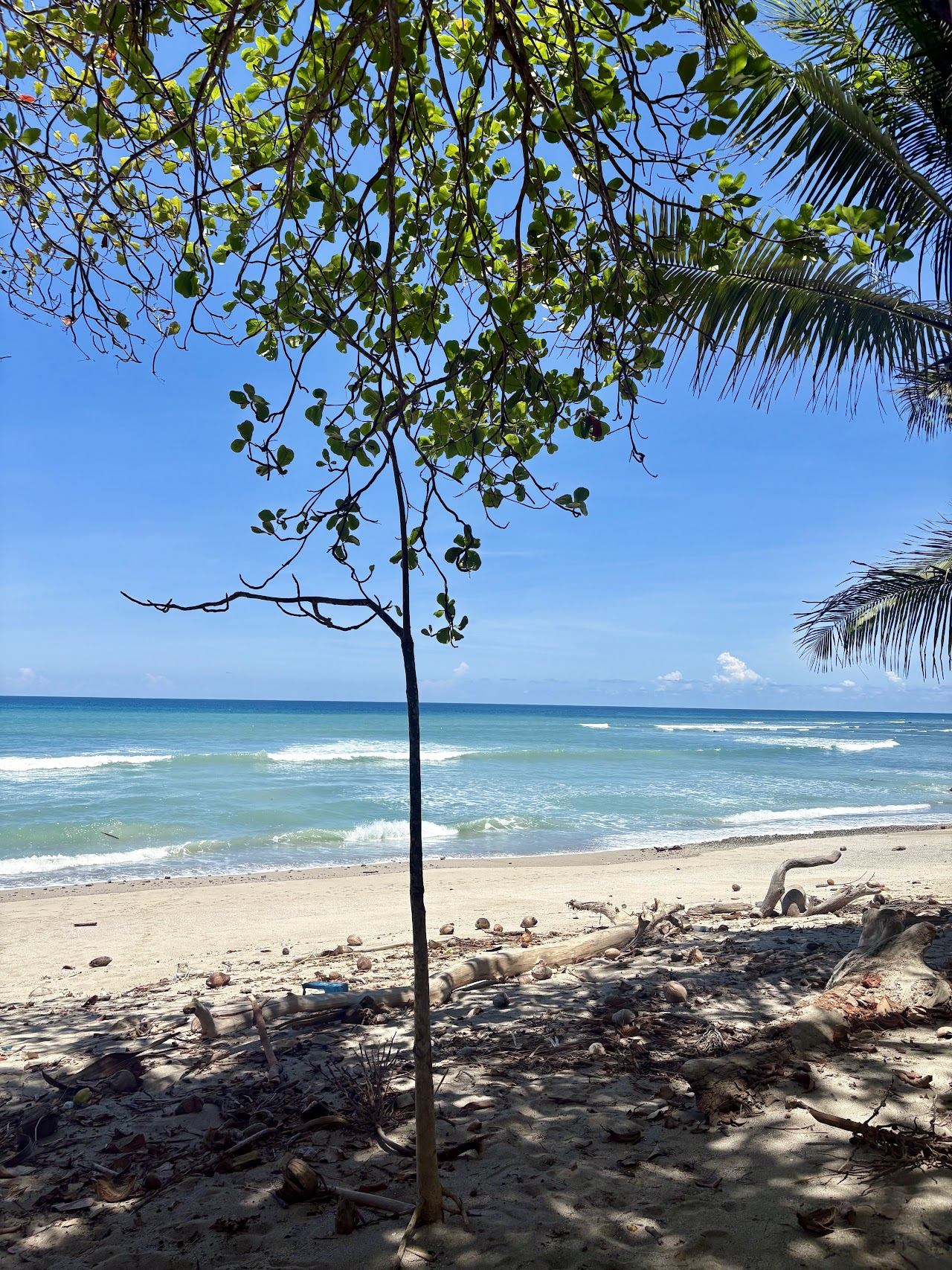
This is where the two part company most clearly. Manzanillo is a genuinely long beach, a quiet run of white sand lined with old almond trees on one side and the blue green Pacific on the other. It is often near empty even when the town beaches are busy, and that width and emptiness are its entire appeal. You can walk it, you can throw down a towel in the shade of the almonds, and you can feel like you have the coast to yourself.
Cabuya does not offer that. It is a rocky, low key rural shore rather than a long sandy beach, edged by shortleaf fig trees and the stillness of a hamlet that barely registers as a town. There are pockets of coast to sit on, but nobody comes here to sunbathe on a wide beach, because there is not one. They come for the island, the reserve and the quiet.
So if your mental image of a good beach day is bare feet on soft sand with space to spread out, Manzanillo wins without much argument. If your image is a slow, almost solemn corner of the map where the landscape does the talking, Cabuya is the better fit.
Water: snorkel reefs against a tidal crossing
Neither of these beaches is an easy swim, and both are open, unguarded ocean, so swim within your depth, mind the current and treat conditions as typical rather than guaranteed. That caution applies to both. What differs is what the water offers in return.
At Manzanillo the ocean is rocky, which makes straightforward swimming less than ideal but creates reefs and lagoons that hold marine life. On a calm, clear day at low tide the snorkelling can be genuinely good. Bring your own gear, because the village will not supply it, and go when the sea is settled. This is the one real in water draw between the two, and it belongs to Manzanillo.
Cabuya's water is shallow and rocky over much of it, with a reef that uncovers at low tide. That reef is not primarily something to snorkel over: it is the path. When the tide pulls back, a rocky strip is revealed and you can walk across to Isla de Cabuya, the offshore island cemetery, in around ten minutes. The crossing floods again as the water returns, so you check the tide before you set out and you turn back in good time. That rhythm, in and out with the sea, is the experience here.
Both beaches are at their gentlest and clearest in the dry months from December to April. For Manzanillo that means the calmest water and the best snorkelling. For Cabuya it means surer footing for the island walk and the clearest conditions for the reserve.
Facilities: tiny village, tinier hamlet
Do not come to either expecting a food strip. Manzanillo is a small, quiet fishing village with a handful of bars and sodas serving simple fresh fish off the local boats. It is a place for an unhurried lunch, not a dining scene, so arrive with low expectations on choice and high ones on the catch. We never invent venues, so check current names and opening days locally, as they change with the season.
Cabuya is even sparser. There is only a scattering of casual sodas and simple kitchens in the hamlet, and the fuller spread of restaurants sits a short drive north in Montezuma. If eating well matters to your day, you will likely be driving away from Cabuya to do it, whereas at Manzanillo you can at least count on a plate of grilled fish by the water.
On that narrow measure of food within reach, Manzanillo edges it. But both reward the visitor who packs water, snacks and shade and plans to be largely independent. Neither has a reliable lifeguard, and neither pretends to.
Crowd and mood: two kinds of quiet
If you came to the peninsula and found the main surf beaches busier than you hoped, both of these are your escape, and both deliver quiet in different registers. Manzanillo is the quiet end of the coast proper, the point where the road north thins out and the crowds simply fall away. It keeps a backwater, fishing village feel and a sense of the coast before the boom, which the busier central stretches have largely lost.
Cabuya's quiet is more total and more rural still. It is a tiny hamlet at the edge of the Cabo Blanco Absolute Natural Reserve, Costa Rica's first protected area, and the silence there is close to the whole reason to go. This is not a social beach or a sunset scene. It is a place to walk, to visit the reserve on its opening days, and to stand on the reef at the right state of tide.
For a quiet day that still looks and feels like a beach, Manzanillo. For a quiet that feels more like stepping off the map, Cabuya.
When the other one wins
The answer flips on a few specific conditions, and they are worth naming plainly:
- If the tide is high all through your window and you cannot cross to the island, much of Cabuya's point evaporates, and Manzanillo becomes the smarter use of the day.
- If the sea is churned up and cloudy, Manzanillo's snorkelling advantage disappears, and Cabuya's walk and reserve give you a day that does not depend on clear water.
- If you are travelling in the green months on a rough road without four wheel drive, weigh the drive carefully for both, as the far ends of this coast get tougher underfoot after rain.
- If you want the reserve trails and wildlife as the centrepiece, Cabuya is the gateway and wins outright.
Whichever you choose, treat the sea as natural and unguarded, mind the rocks and the current, and do not make assumptions about safety from a calm looking surface.
If you want neither
Be honest with yourself about what you are after. If you actually wanted a forgiving wave and cafes behind the sand, the beginner break at Playa Carmen is the obvious call, and the roomier Playa Hermosa suits improving surfers who want space. For a rocky coast closer to town with tide pools and a fishing port lunch, Playa Malpais covers similar ground to Cabuya with easier access. Our wider Santa Teresa beach overview lays out the full coast, and the quietest corners guide helps if solitude is the only thing you are chasing. To time any of it well, read the seasons and conditions notes before you commit. Travelling with little ones or a partner changes the maths too, so the family focused guide and the couples guide are worth a look.
Prefer a lounger and a kitchen for the day
Both Cabuya and Manzanillo are raw, rural and self sufficient by nature, so if your ideal day leans toward a sunbed, shade and a kitchen you can walk to, that is a different trip entirely. See our Santa Teresa beach clubs page to compare the options and enquire about a club day on this coast.