Cabo Pulmo or Chileno: Best Beach in Los Cabos
Published 2026-08-26. Conditions described are typical and never guaranteed.
Here is the short answer before you scroll. If you want to swim, snorkel over a reef that sits almost under your feet, and do it with restrooms, showers and a lifeguard stand within sight, book a morning at Chileno Beach. If you would happily trade every lounger and cocktail for a living coral reef, empty water and a night sky with no light pollution, drive north to Cabo Pulmo and do not look back. These two shores answer completely different questions, so the winner is really about who you are and what you are willing to organise.
They are not near each other, and that matters. Chileno sits on the Tourist Corridor between Cabo San Lucas and San Jose del Cabo, an easy roll off the highway. Cabo Pulmo is a village and marine park on the East Cape, roughly ninety minutes to two hours north of San Jose del Cabo, with a final stretch of graded dirt road. One is a day you slot into a Los Cabos holiday. The other is a small expedition you plan the trip around.
Who Chileno Beach is for
Chileno is the beach I send families and cautious swimmers to first, and I do it without hedging. This coast is notorious for beaches that look inviting and then punish anyone who wades in, so the fact that Chileno is genuinely built for swimming is rare and worth stating plainly. It is a curved cove of soft pale sand, sheltered by the bay, and the water here is usually calmer and clearer than the open Pacific beaches nearby. It carries Blue Flag status and has a lifeguard stand, which on this stretch of coast is close to a miracle.
The snorkeling is the other reason to come. There is a living reef close to shore, often within about twenty yards of the sand, and the fish gather over the rocks at each end of the cove rather than in the sandy middle. Turtles and rays turn up. Go early, along the rocky right hand end, while the water is still glassy and the boats have not started churning it. That first hour is the good stuff.
Facilities are the quiet strength here. You get clean public restrooms, freshwater showers, foot wash stations, some shade structures near the walkway and a large paved car park right off the corridor. For Cabo, that is an unusually complete set up, and the wooden walkways down to the sand make it easier for strollers and wheelchairs than most beaches in the region. The one real catch is food: there is very little on the sand, so bring water and supplies, or plan a taco stop in town on the way. The other catch is the car park, which is free but fills early on busy days, so arrive in the morning and you solve two problems at once.
Chileno rewards the early riser twice over: calmer water for snorkeling, and a parking space you did not have to fight for.
Timing across the year favours the drier, calmer months from October to June, with the warmest water in late summer and autumn. September is peak hurricane season and can bring closures, so plan around it. If you want to line this up against the rest of the calendar, the seasonal guide to Los Cabos is worth a look before you commit dates.
Where Chileno falls short
Chileno is popular, and popularity has a texture. On a peak day the cove fills, the car park turns over slowly and the snorkeling spots get busy enough that the glassy morning window closes fast. There is no beach club scene, no bar service, no vendors weaving between loungers. If your idea of a beach day involves a drinks list and a DJ, Chileno will feel spare. That is a feature for some readers and a flaw for others, which is exactly why the honest answer is not one beach for everyone.
Who Cabo Pulmo is for
Cabo Pulmo is for divers, snorkelers and couples who want wild, quiet nature and a real night of dark skies, and who understand the trade they are making. This is the only living coral reef in the Sea of Cortez, protected as a national marine park since 1995, and the recovery of the fish life here is the kind of thing marine biologists cite in papers. You can snorkel to it straight from shore, either off the town beach or at the shallower cove of Los Arbolitos a few kilometres south, and find yourself among schools of fish, rays and turtles.
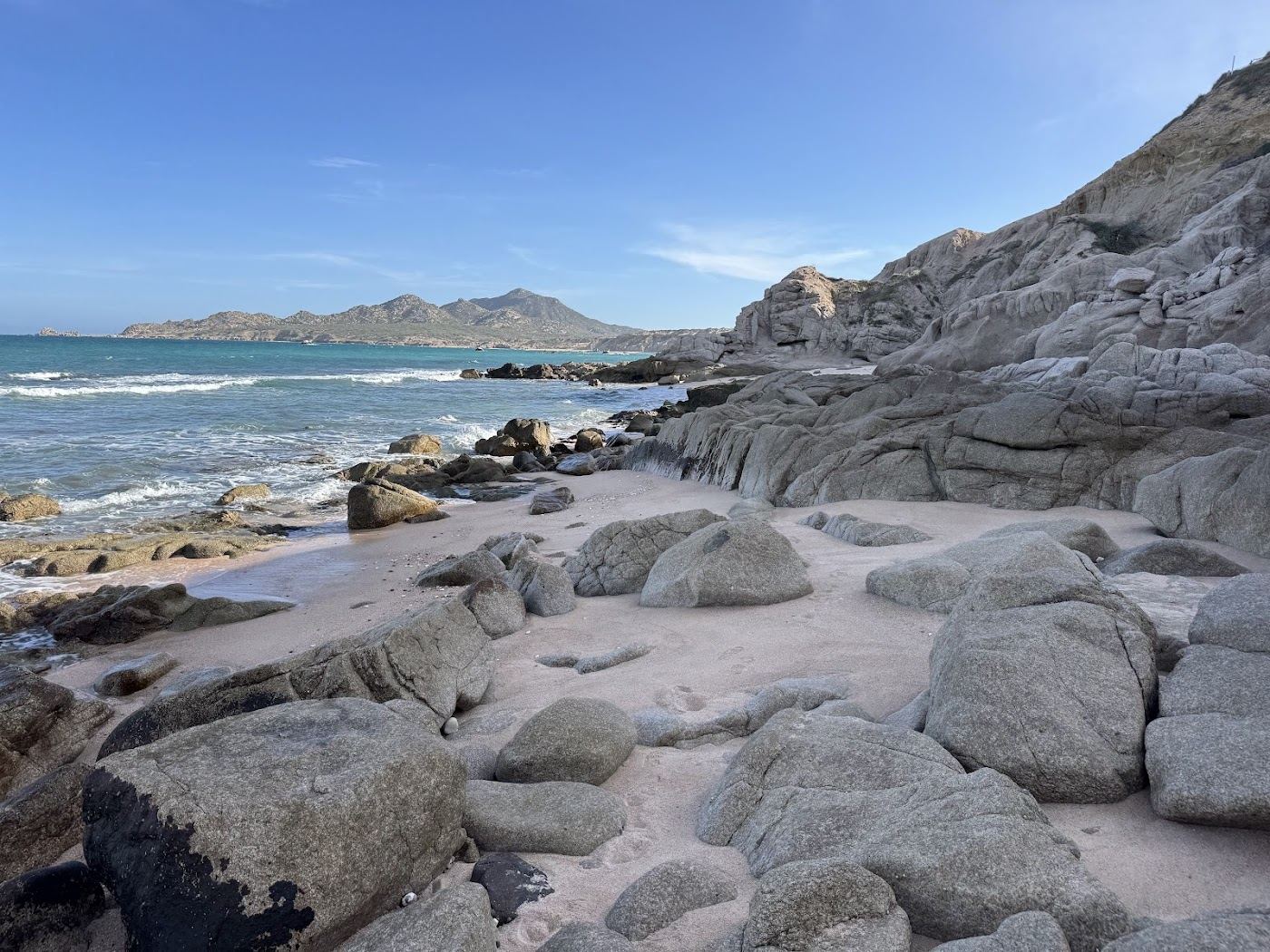
The sand tells you immediately that this is a different world. It is coarse gold mixed with pebble, the beaches are small and natural, and the backdrop is desert rather than groomed resort strand. It looks and feels like a national park because it is one. The village has a handful of dive shops, a few small restaurants and simple lodgings, and very little else. There are no big resorts, no chain shops, no ATMs and no fuel, so you bring cash and plan ahead for everything you need.
The marine park charges a small entry and activity fee that goes toward protecting the reef, usually folded into a dive or snorkel tour, and paying it is simply part of keeping the place alive. There is no lifeguard, which is the honest heart of the matter. This is a remote, self reliant coast, currents and swell vary around the reef, and the sensible approach is to snorkel with a local guide or a buddy, read the conditions, and never touch or stand on the coral. Early morning tends to give the calmest, glassiest water.
The best window runs from July to November, when the warmer water brings the best visibility and the richest marine life, including bigger schools and the chance of larger visitors passing through. Winter is cooler and windier with choppier seas and lower visibility, though a well wrapped diver is still rewarded. If a genuinely quiet, undeveloped shore is what pulls at you, this is the strongest example in the whole destination.
Where Cabo Pulmo falls short
Everything that makes Cabo Pulmo special also makes it demanding. There are no beach clubs, no cocktails, no nightlife, no ATMs and no fuel, deliberately so. If you want loungers and a drinks menu, that belongs back in the Los Cabos corridor. The drive is long, the last stretch is dirt, and a normal car can usually manage in dry weather but higher clearance is more comfortable and the road needs checking after rain. Add small children who cannot yet snorkel, or a traveller who wants an easy day with facilities on tap, and Cabo Pulmo becomes the wrong call.
The situations that flip the answer
A straight verdict is useful, but the conditions that reverse it are more useful still. Here is when I would switch my own recommendation.
- Travelling with toddlers or nervous swimmers: choose Chileno every time, for the sheltered bay, the lifeguard stand and the facilities. Cabo Pulmo has no lifeguard and no easy exit if conditions turn.
- Serious about the reef above all else: Cabo Pulmo wins outright. A protected living coral reef you can reach from shore is something Chileno, for all its fish, simply is not.
- Short on time and staying in the corridor: Chileno is the sane choice. The Cabo Pulmo drive eats most of a day before you even get wet.
- Chasing quiet, dark skies and a couples' escape from the resort machine: Cabo Pulmo, without question, and pack for self sufficiency.
- Visiting between July and November when the northern water clears: this tilts toward Cabo Pulmo, since that is precisely its best season while Chileno brushes up against the hurricane months.
If your priority is comfort, safety infrastructure and a reef you can enjoy without a guide, families will find more of what they need on the family focused side of Los Cabos. If it is wildness and privacy, and you are two people who want the reef and the stars to yourselves, the romantic end of the destination points the other way.
Planning a beach club day instead
Neither of these two is a beach club shore. Chileno keeps its facilities modest and Cabo Pulmo has none by design. If loungers, service and a proper day bed are what you are really after, that is a different plan entirely, and the place to start is our Los Cabos beach club index, where you can weigh the options and enquire about booking a club day. For the wider picture of every shore in the destination, the main Los Cabos guide ties it all together.