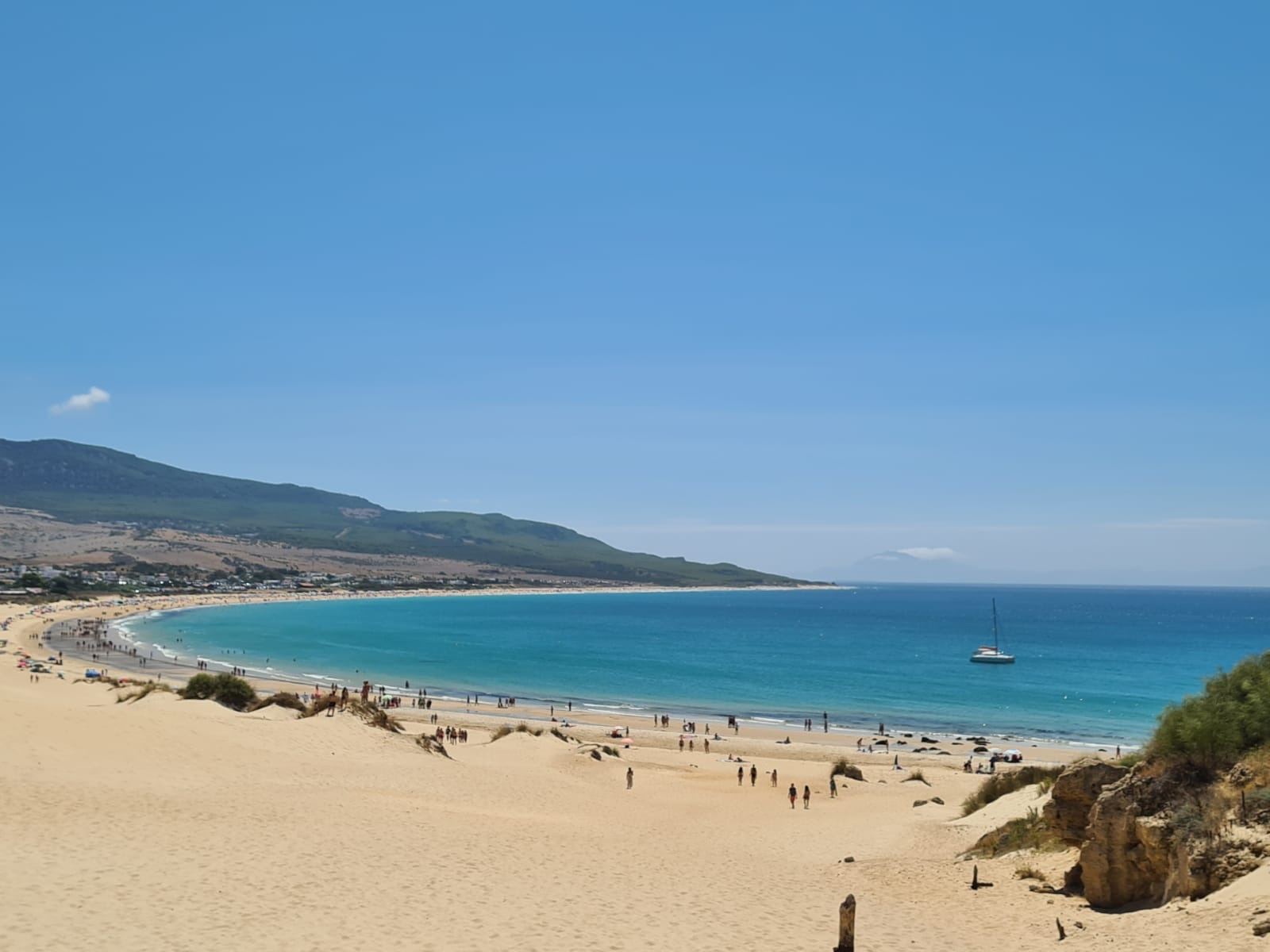
Bolonia or El Palmar Beach on the Costa de la Luz
Published 2026-09-19. Conditions described are typical and never guaranteed.
Here is the short version, so you can plan before you read on. Choose Bolonia Beach when you want the full theatre of the Atlantic: a giant protected dune to climb, a well preserved Roman town sitting right on the sand, and turquoise water on the days the wind lies down. Choose El Palmar Beach when you want a long, easy, surf leaning day with a proper line of summer chiringuitos, huge sunsets and a beach that is simpler to reach from Vejer and Conil. Both are free, wild, open Atlantic beaches near the same corner of Cadiz, and neither is a resort strip. The winner is not one beach over the other. It is whichever answers the day you are actually planning.
The one line verdict for each kind of traveller
Read this like a menu and pick your seat. If you want a sight as much as a swim, Bolonia wins, because nothing on El Palmar rivals climbing the Duna de Bolonia or walking straight from your towel into the ruins of Baelo Claudia. If you want to surf, take a lesson or simply plant yourself in front of a beach bar for the afternoon, El Palmar wins, because its whole coast is built around that rhythm. Couples chasing a golden hour photograph will be happy at either, though El Palmar has a slight edge for the sheer scale of its sunsets over open country. Families should read the wind first, then decide, and we will get to why below.
Sand and setting: spectacle versus space
Both beaches share the same raw material, a long broad sweep of golden sand with no towers behind it, which already sets them apart from the built up Mediterranean coast. The difference is what frames that sand.
Bolonia is backed by pine woods and, at its western end, by the great dune, a shifting mountain of pale sand protected as a natural monument. That single feature changes the mood of the whole beach. You are not just lying on a strand, you are sharing it with a landscape that feels older than the road in. El Palmar, by contrast, runs flat and open behind low dunes and country, so its gift is honest room. There are acres of it outside August, and the long, straight shore is made for walking rather than for scrambling toward hidden corners.
If your idea of a great beach day includes a bit of exploring, a climb and a landmark, Bolonia is more rewarding. If you simply want to unroll a towel, walk for a mile and not think about anything, El Palmar delivers that with less fuss.
The water: two moods of the same Atlantic
This is open ocean at both, which means water that is cooler, cleaner and livelier than the Mediterranean, with a shore break to respect and conditions that are typical rather than guaranteed. Read the surf and the wind yourself at either, keep children close, and do not assume a lifeguard is on duty, because seasonal cover is usual in peak summer but is to be confirmed and is not a year round promise.
Within that shared character, they lean different ways. Bolonia sits near Tarifa, which is famous for strong Levante and Poniente winds, so it can genuinely blow. On calm days the bay turns a lovely turquoise and the swim is a joy. On windy days it becomes a place kitesurfers love and swimmers tolerate. El Palmar is more consistently a surf beach: rolling waves on many days, best from roughly October to March when the Atlantic wakes up, and gentler in summer when beginners fill the water alongside the schools. An offshore Levante cleans the waves and an onshore Poniente can flatten or mess them, so surfers should check the forecast before committing.
Simple rule of thumb: if the wind is up, Bolonia rewards the watcher and the kite crowd, while El Palmar rewards anyone who came to ride a wave rather than float in flat water.
Facilities and the day around the beach
Neither beach is a serviced resort, and both largely close down for the quiet winter months, so plan to bring your own kit outside the season. In summer the picture differs in a way that matters.
El Palmar runs a line of chiringuitos, surf schools and sunbed hire through the warm months, so you can arrive with little and still make a full day of it, from a morning lesson to a long lunch to a drink held up against the sunset. Bolonia keeps things smaller, with a handful of chiringuitos and simple services in the little village behind the sand. What Bolonia adds instead is culture on tap: Baelo Claudia has its own visitor entrance and hours, treat any opening times and fee as to be confirmed and check before you go, and it pairs beautifully with a swim.
So the question is what you want your day to be built around. A beach bar and a board, or a Roman forum and a dune. That single choice separates these two more cleanly than sand or sea ever will.
Crowds, timing and the month to skip
The honest overrated proposition here is not a beach, it is a date: both Bolonia and El Palmar in August. That is the one month to avoid at either if you value space, easy parking and lower prices. The beaches are still beautiful, but the crush and the cost blunt everything that makes them special. Go instead in June or September, when the sea is warm, the chiringuitos are open and the crowds thin right out. For a proper look at how the seasons behave along this coast, the timing guide for the region is worth a read before you book.
If your only free window is August and you have young children, that is exactly the situation where a third option beats both. A sheltered cove like Cala del Aceite sits out of the worst of the wind with calmer, clearer water and real pine shade, which can make for an easier family day than either open Atlantic giant when the surf is up.
When the other one wins
The point of a head to head is knowing the moment the answer flips, so here are the honest reversals.
- You picked El Palmar for the surf, but a hard Levante is forecast and you also want to see something. Switch to Bolonia, climb the dune and tour the ruins while the wind does its worst.
- You picked Bolonia for the spectacle, but it is blowing a gale and you came to actually swim or ride a wave. El Palmar will likely give you a friendlier line up and a beach bar to retreat to.
- You want gentle, shallow water and a full service beach for small children. Neither of these two is really that beach. A wide, calmer family strand such as La Barrosa below Chiclana is the softer landing, with a gentle slope and a long row of chiringuitos.
- You are chasing the most photogenic corner of this coast rather than the biggest beach. Consider the cliffs, pine forest and lighthouse frame at Canos de Meca, which trades scale for atmosphere.
Which to book if you can only do one
For a first time visitor who wants the definitive Costa de la Luz image, Bolonia edges it, because the dune and Baelo Claudia give you a story as well as a swim, and on a calm day the turquoise water seals it. For a repeat traveller, a surfer, or anyone who values a relaxed day with services close to hand, El Palmar is the more comfortable pick and a strong value day given that the sand and the sunsets cost nothing. Couples can weigh both against the wider romantic beaches around the region, while parents should start from the family beach picks before deciding. For the full spread of options, the regional beach index lays everything out, and if you are torn on Bolonia specifically, our Bolonia against Canos de Meca comparison and the Bolonia versus Cala del Aceite piece go deeper.
Want a beach club day instead
Both of these beaches are wild and free rather than club territory, so if what you really want is a booked sunbed, a table and a served afternoon, that is a different plan. Browse the Costa de la Luz beach clubs to see what is available and to enquire about a club day that fits your dates.