Banol Beach or Kayangan Lake: Which Palawan Shore Wins
Published 2026-10-25. Conditions described are typical and never guaranteed.
The verdict in one screen
These two famous Coron stops are not really rivals, because one is a beach and the other is not. Banol Beach is a small white sand cove with shallow, usually calm water, so it is the pick for families with young children, nervous swimmers, or anyone who wants to spread a towel, rent some shade and let the little ones paddle in front of them. Kayangan Lake is the postcard viewpoint and the clear deep swim, reached by a steep stepped climb over a limestone ridge, so it suits families with older, confident children who want the iconic Coron image and do not mind that there is no sand at all.
Put plainly: if your day hinges on a shallow wade and a shaded lunch, choose Banol. If it hinges on that ridge photo and a cool swim in brackish water between towering walls, choose Kayangan. The answer flips the moment you change who is travelling with you, and I will be specific below about when each one wins.
Sand, or the complete absence of it
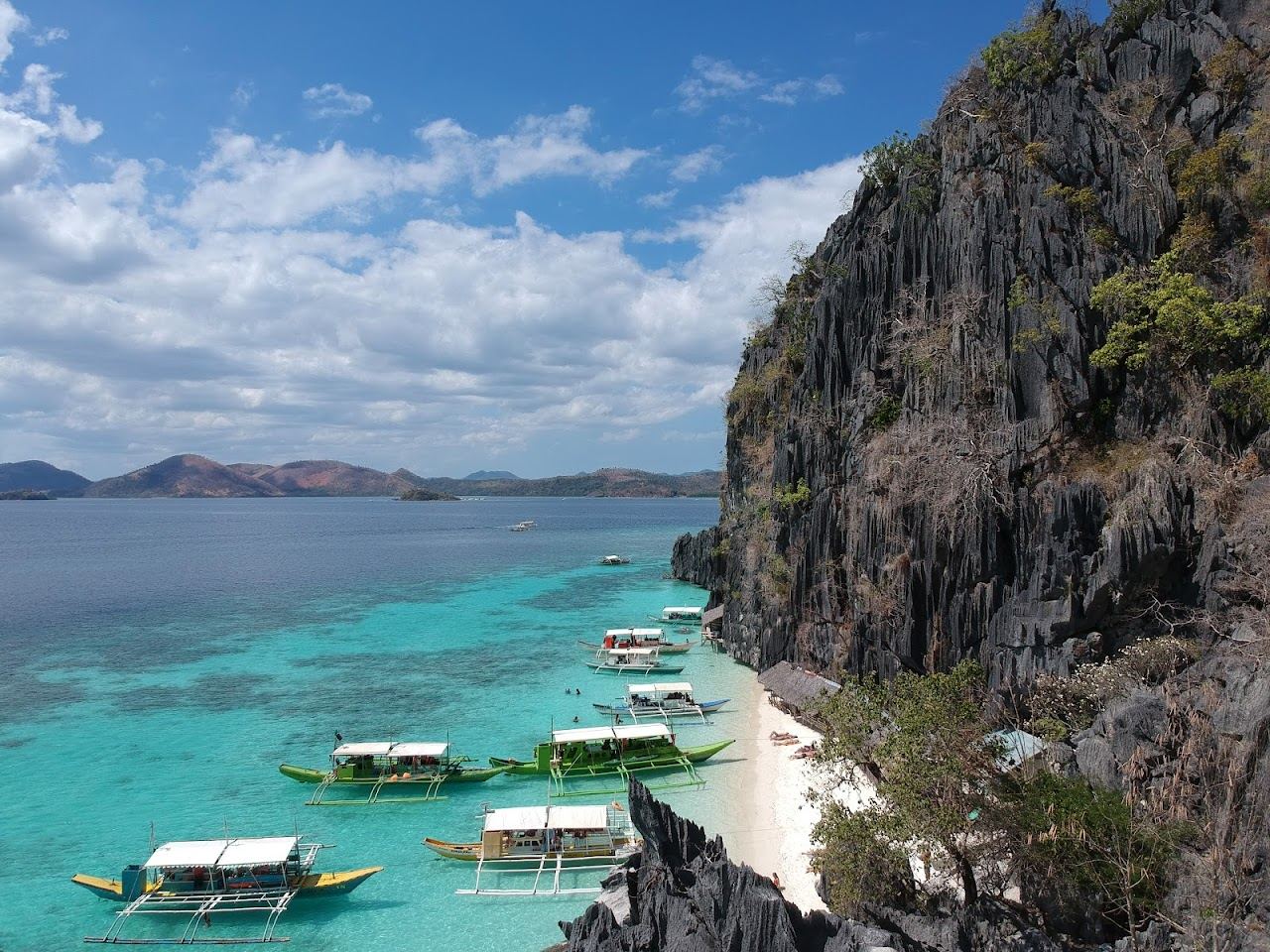
This is the cleanest line between them. Banol is a genuine cove: soft, white, compact sand framed by karst and greenery, small but sandy end to end. You arrive, you find a spot, you sit. Children can walk straight off the sand into the water, which is exactly the kind of gentle transition that keeps a beach day calm.
Kayangan has no sand whatsoever. You enter the lake from a small wooden platform, stepping into water that drops away quickly against limestone walls. That difference changes the whole rhythm of the visit. There is nowhere to build a sandcastle, nowhere for a toddler to potter at the shoreline, and nowhere to retreat to between swims other than the deck itself. If the youngest member of your group needs sand underfoot to feel safe, that decision is already made for you.
The water: shallow and warm versus deep and cool
At Banol the water is shallow, clear and usually calm near the shore, which is why it reads so well for paddlers. Conditions are typical rather than guaranteed, and there is no patrolled cover to rely on, so supervision stays with you at all times. Still, the shape of the place, a sheltered cove with gentle shallows, is forgiving for small swimmers in the dry season.
Kayangan is a different proposition. The water is clear, cool and deep, brackish rather than salty, calm on the surface but with the limestone dropping straight down beneath you. Life jackets are commonly required for swimming here and are a sensible idea given the depth, though the current rule is best confirmed with your boat operator on the day. For a confident ten year old this is thrilling. For a toddler or a nervous swimmer it is harder work than a beach, and no amount of scenery changes that.
If you want to be in the water as much as on the sand, Banol gives you a gentle shallow playground. Kayangan gives you a dramatic deep swim that rewards strong swimmers and asks more of everyone else.
Getting there, and the climb that decides it
Both are reached on a Coron island hopping tour, both involve a boat, and both usually carry a fee, an entrance charge at Banol and an environmental fee at Kayangan, often handled by your tour. Carry a little cash either way and confirm what is included when you book, since amounts can change.
The physical catch is unique to Kayangan. From the jetty a stairway of stone and timber steps climbs over the ridge, passing the famous viewpoint, then drops down to the lake on the far side. It is short but genuinely steep and can be slippery, so sturdy footwear and a steady pace matter, especially with children in tow. Banol asks nothing of the sort. You step off the boat and you are on the sand. For families managing a pushchair age child, a grandparent, or anyone who would rather not tackle wet steps, that contrast alone often settles the question.
Facilities and food
Banol is the more serviced of the two, which fits its role as a lunch stop. You will find rentable picnic huts for shade and a base, most island hopping tours serve a beach lunch here, and there are basic toilets. Book a hut early in the day if you want a shaded spot, and still bring your own water and sun care, because the permanent facilities are basic rather than resort grade.
Kayangan is deliberately spare. Expect very limited facilities, basic toilets and the viewpoint itself, and little else. Bring water and reef safe sun care, and plan to eat before or after rather than there. Neither place should be treated as somewhere you can simply top up supplies, so arrive stocked for the hours you intend to stay.
A quick side by side
- Shore: Banol is soft white sand. Kayangan is a wooden deck, no sand.
- Water: Banol is shallow and usually calm. Kayangan is deep, cool and brackish.
- Access: Banol is a step off the boat. Kayangan needs a steep stepped climb.
- Food and shade: Banol has rentable huts and a tour lunch. Kayangan has very little.
- Swim rules: Banol is open shallow paddling. Kayangan commonly requires life jackets.
Crowds, and the one habit that saves both days
Here the two beaches are more alike than they look, and the same discipline rescues either one. Banol is a popular lunch stop on the standard Coron route, so many boats arrive together in the middle of the day and the small cove feels busy at the peak. Arrive earlier or linger a little later and families get far more room on the sand.
Kayangan rewards the opposite end of the clock in the same way. Go on the first morning boat, before the day crowds reach the narrow steps and the small swimming deck, and you get the viewpoint and the water closer to the way the photographs promise. Both places are at their worst at midday and their best at the edges of the day, so whichever you choose, treat an early start as part of the plan rather than an optional extra. If you are mapping a wider trip, our notes on the best months to visit line up neatly with this: the dry season from December to May brings the calmest, clearest conditions for each.
When the other one wins
I have called Banol the safer family pick, but Kayangan clearly wins in a few specific situations. If your children are older and strong in the water, if the main reason you came to Coron is that ridge view, and if you can commit to the earliest boat, Kayangan delivers something Banol simply cannot: a swim in deep clear water inside a limestone amphitheatre, and a photograph that justifies the whole trip. The climb becomes part of the adventure rather than an obstacle.
Banol wins back the day the moment the group includes a toddler, a reluctant swimmer, or anyone who wants to sit on sand with a lunch and a rented hut rather than queue on steps. It also wins when you simply want a low effort cove near Coron town where the hardest decision is which hut to book. In short, the view and the swim push you toward Kayangan, while sand, shade and ease pull you back to Banol.
If neither feels quite right, there are gentler and wilder alternatives worth weighing. The long shallow sandbar at Ditaytayan Island is a quieter, more remote white sand day for children who travel well, and our comparison of Banol against that remote sandbar digs into the trade off. Over in El Nido, the sheltered kayak trip through Big Lagoon scratches a similar awe inspiring itch to Kayangan without the deep swim, and the walkable calm of Caalan Beach is the easy option for families based in town. If you are building a whole itinerary, our family beach guide for the region ties these choices together.
Plan a club day in Palawan
Banol and Kayangan are tour stops rather than beach clubs, so if you also want a serviced base with loungers and food for part of your trip, browse the options on our Palawan beach club page to enquire about a club day and build it around your island hopping plans.