Sancho or Sueste in Fernando de Noronha: Our Verdict
Published 2026-08-22. Conditions described are typical and never guaranteed.
Here is the short version, because you came for a decision, not a shrug. If you are a confident traveller chasing the single most beautiful swim of your life and you do not mind earning it, go to Baia do Sancho. If you want the island's most dependable morning in the water with green turtles, on flatter sand, without a steep cliff ladder standing between you and the sea, go to Baia do Sueste. These are not rivals for the same crown. They answer two different questions, and most people who ask us honestly already know which one they are asking.
Both sit inside the same protected marine park, both require the island fees, and neither has a beach club, a bar or a row of loungers on the sand. So this is not a contest of service or scene. It is a contest of terrain, water and what you are physically willing to do to get in. Let me take the two apart properly.
The setting: drama you climb to versus calm you walk into
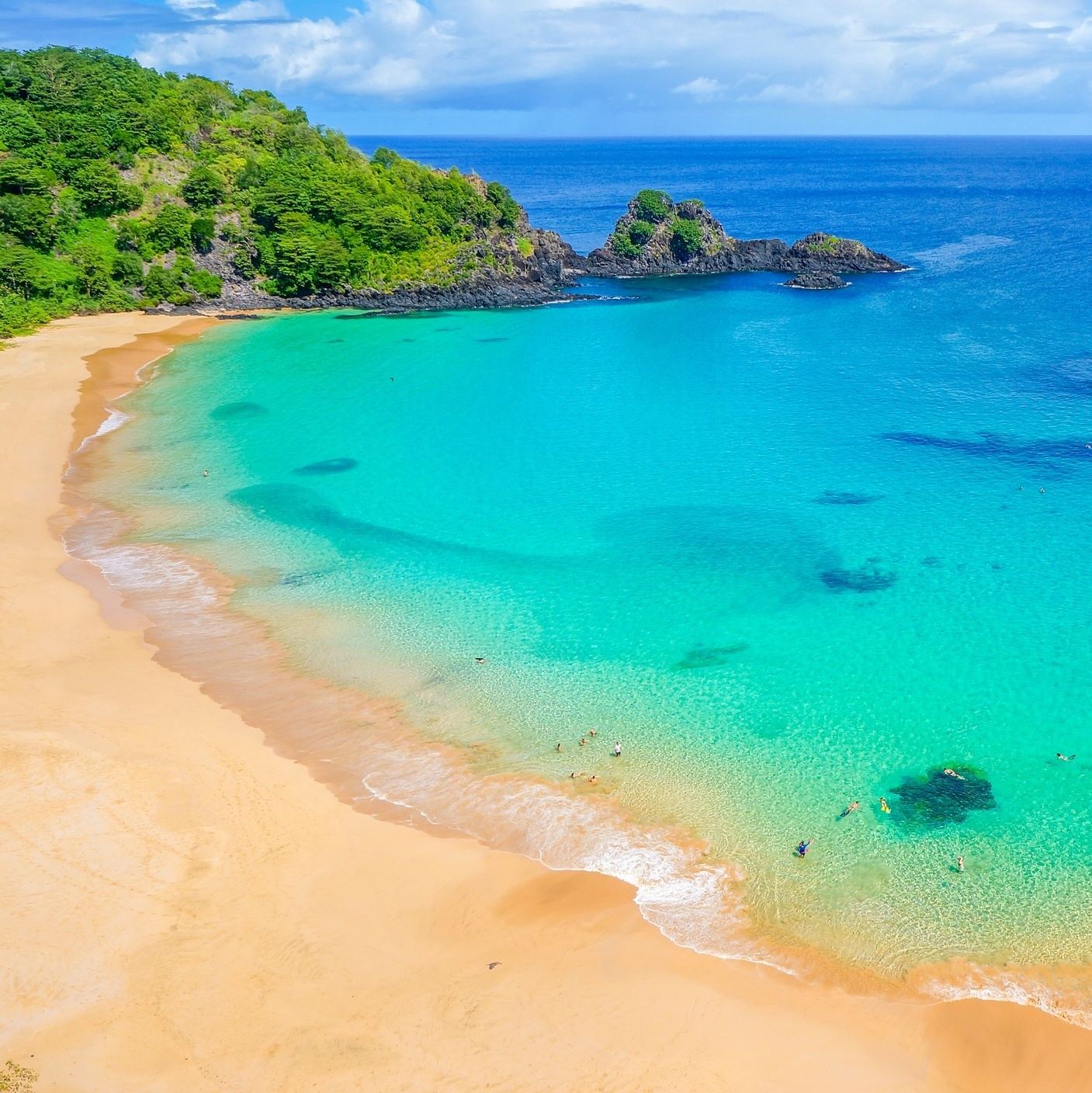
Sancho is the cove that gets called the best beach in the world, and the setting earns the noise. It is a curve of soft golden sand shut inside tall green cliffs and jungle, one of the most dramatic frames in Brazil, with shade under the rock at the right hours. The catch is written into the geography. You reach the sand either by climbing down a steep staircase and ladders set into a crack in the cliff from the Sancho lookout, or by arriving on a boat tour and swimming ashore. The ladder access is timed and one way at busy points, and it is genuinely hard going for anyone unsteady on steep steps. That descent is the whole personality of the place. It filters out the casual, and it is also the real hazard here, more than the water.
Sueste is the opposite temperament. It is a wide strip of darker golden sand tucked between rocky headlands and a fringe of mangrove, the most sheltered bay on the entire archipelago. It does not photograph like a postcard lagoon and it is not trying to. This is a moody, mangrove backed cove with soft green water rather than a bright turquoise crescent, at its best in the low warm light of early morning. You arrive, you pass a staffed control point, you watch a short orientation, and you go in. No cliff, no ladder, no scramble.
The honest split: Sancho asks your legs a question before it rewards your eyes. Sueste asks nothing and simply lets you into the water.
The water and the wildlife: two very different swims
This is where people conflate the two, so let me be precise. Sancho sits on the calmer inner coast and the water is famously clear, with excellent snorkelling visibility. The best of it gathers on the right hand side of the bay near the rocks and reef, where turtles, rays and reef fish hold just off the sand and dolphins often work the open water. Go on a calm morning before the boat tours arrive and it is some of the finest snorkelling in Brazil. The water is usually calm, but there is no lifeguard, so you read the sea yourself.
Sueste is not about visibility for its own sake. It is about a near guarantee of company. It is the island's most reliable place to snorkel with green turtles, which feed and gather in the sheltered bay. The trade is structure: you go in with a guide in a designated snorkel area near the rocks, not freely across the whole cove, because the centre of the bay is protected to shield the turtles. Park monitors and guides manage access rather than patrol a swimming beach. The water reads green rather than turquoise, and it is clearest early and cloudier after rain or wind. Sightings are common, but we call them typical rather than guaranteed, and you should too.
So if the swim itself is the prize, Sancho wins on clarity and drama. If the encounter is the prize, and you specifically want turtles in the frame with the least fuss, Sueste wins and it is not close.
Facilities and crowd: matched at the bottom, different in feel
Neither beach has a club, a vendor or a kiosk on the sand, so pack like you are going somewhere remote: water, sun cover, your own mask, and a bag to carry your rubbish out. That part is identical. The difference is what sits at the top of the sand. Sancho has nothing but the cliff and the ladder. Sueste has a staffed control point, guides for the water, and rental of life jackets and snorkels on site, which matters more than it sounds if you did not travel with gear or if a nervous swimmer in your group wants the reassurance of a jacket.
On crowds, both fill through the middle of the day and both reward an early start. Sancho's ladder throttles numbers on the sand at any given moment, but the boat tours arrive and the clear morning window closes. Sueste's guided system spaces people out in the water, though the beach itself is a steady flow. Early is the answer at both, for different reasons.
When the answer flips
The verdict above holds most of the time. Here is when it inverts, because conditions and who is standing next to you change everything.
- You are travelling with anyone unsteady on steep steps. The Sancho ladder is the deciding factor, not the water. If a knee, a hip or a wary child is in play, Sueste's flat walk in wins outright, and the boat approach to Sancho is the gentler fallback rather than a solution.
- It is turtle season and that is your dream. The strongest window for green turtles gathering to feed and nest at Sueste runs from December to May, with calm mornings the pick of any month. If that is your trip, Sueste stops being the runner up.
- It is the dry season and you want the clearest possible water. Sancho's best months for calm, clear snorkelling run from August to December. If you are here in that window and you are steady on your feet, the cove is very hard to beat.
- The sea is up or it has just rained. Sueste is the most sheltered bay on the island, so on a windy or unsettled day it is the safer read for a swim, while its green water turns cloudy after rain. Sancho stays clearer but demands a calm morning to be at its best.
Notice that none of these flips is about which beach is objectively better. They are about your body, your calendar and the sky on the day.
If neither quite fits
Sometimes the honest answer is a third beach. If you want a tiny rock pool cove you earn on foot and time to the tide, Baia dos Porcos is one of the most photographed scenes in Brazil under the twin peaks of Morro Dois Irmaos. If your priority is a drink on the sand and the island's most alive golden hour rather than a hidden cove, the social crowd gathers at Praia da Conceicao below Morro do Pico. And if you want quiet above all, a small, wild, cliff framed arc read by the tide, Praia do Americano keeps its distance from the busier names. For the wider picture of when to come and what suits whom, the seasons guide and the pages built for two of you and for families are worth a read before you lock anything in.
The bottom line
Sancho is the world class swim you climb down a cliff to reach, best on a calm dry season morning, and not the beach for anyone who dreads steep ladders. Sueste is the sheltered turtle bay you simply walk into, guided and gentle, at its strongest from December to May. Pick by your legs, your dates and the wildlife you came for, and you will not choose wrong. Remember the fees, the missing lifeguards and the fact that calm water is typical rather than promised at either.
Planning a serviced day around it
Because Noronha protects its coast, you will not find gated day beds or reserved club sand at Sancho or Sueste. For loungers, dining and organised trips run by operators who genuinely work the island, use the Fernando de Noronha beach clubs directory to enquire about a club day, where we confirm current details before you commit.