Ao Nang Beach or Bamboo Island: which Krabi beach wins
Published 2026-08-25. Conditions described are typical and never guaranteed.
Here is the short answer before you scroll. If you want a base with dinners, bars, boats and the best sunsets on the coast, choose Ao Nang Beach. If you want dazzling sand and an easy coral reef and you are willing to set an early alarm to enjoy it in peace, choose Bamboo Island. These two shores are not really rivals so much as two different jobs. One is where you sleep, eat and organise your days. The other is where you spend a single glorious morning and then leave before the heat. Book both and you have understood Krabi. Pick only one and the right choice depends entirely on what you came here to do.
Who each beach is really for
Ao Nang is the practical heart of the whole Krabi coast. It suits travellers who value convenience over postcard sand, who want everything to hand, and who love a lively seafront in the evening. It is the launch point for the longtails, the place to find a dive shop, a proper dinner or a cold drink at the exact moment the sky goes orange over the islands. You do not come here for the beach itself. You come for the base and for the sunset.
Bamboo Island is the opposite proposition. It is a tiny national park island reached only by boat, with some of the whitest, finest sand near Phi Phi and a shallow reef ringing much of the shore. It suits snorkellers and beach lovers who will rise early to have the water like glass before the tour fleet arrives. It rewards planning and punishes lateness. Turn up at noon and you get crowds and no shade. Turn up on the first boat and you get one of the most beautiful mornings in the region.
Sand: ordinary golden versus dazzling white
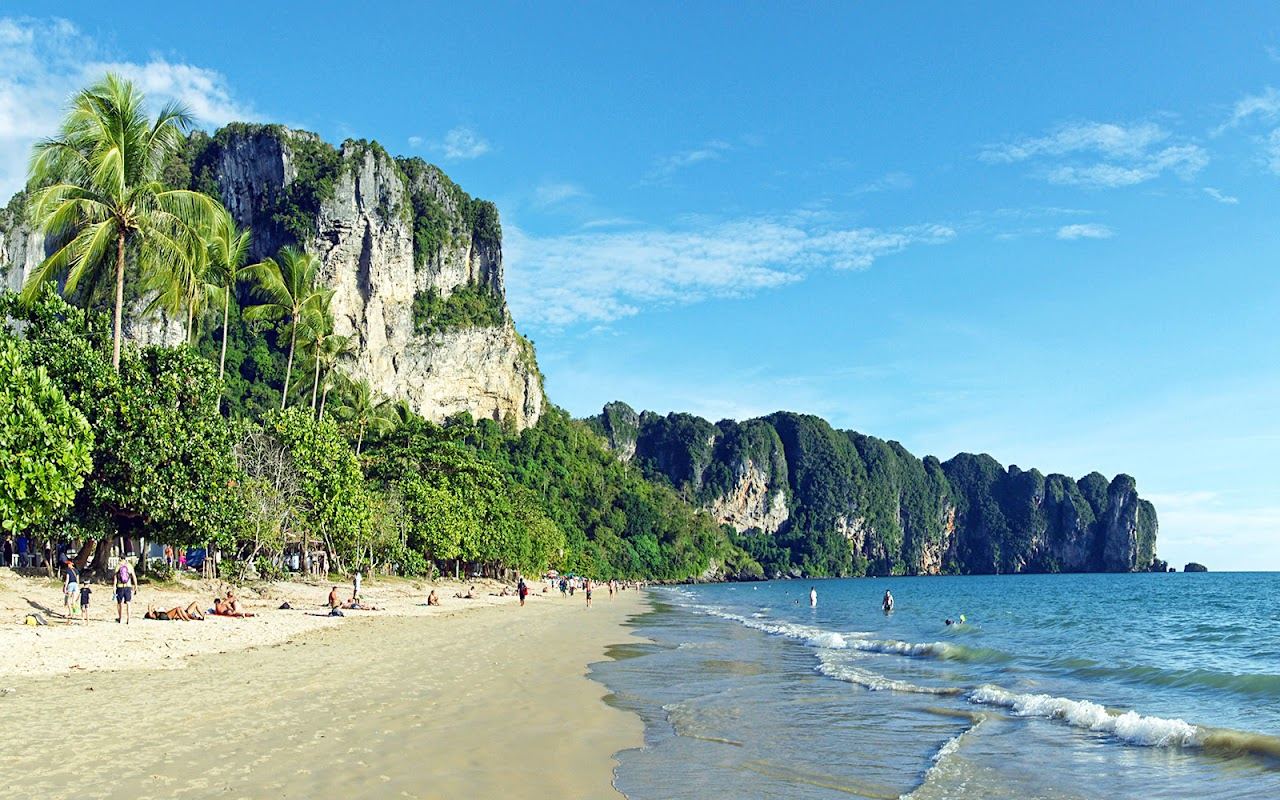
This is the clearest difference of the two. Ao Nang is a long, gently curving strip of golden brown sand, backed closely by the seafront road and promenade, with the longtail piers and the islands gathered at the eastern end. It is perfectly pleasant. It is not why anyone frames a photograph. The road sits right behind you, and that closeness is exactly what makes Ao Nang so convenient and so ordinary at the same time.
Bamboo Island wins the sand contest without a contest. This is a bright, soft strip wrapping a small island, backed by low forest, and it ranks among the finest sand in the area. The catch lives in that same sentence: the forest is low, so there is very little natural shade once the sun climbs. The sand is glorious and it will also cook you by late morning if you have not brought sun cover and a plan to leave.
Think of it this way. Ao Nang sand is the sand you walk across to reach dinner. Bamboo Island sand is the sand you travelled to Thailand to stand on.
Water: busy and calm versus clear and shallow
The sea off Ao Nang is usually calm and swimmable in the dry season, but it is busy with longtail boats near the shore. That traffic is the price of being the coast's main hub. You keep to the marked areas, stay within your depth, and treat the water as a working harbour that happens to be swimmable rather than a snorkelling lagoon. After rain it can cloud.
Bamboo Island offers what Ao Nang cannot: clear, shallow water with a coral reef you can drift over straight off the beach. On a settled dry season day the snorkelling is calm and easy, with clownfish, butterflyfish and sergeant majors over the coral. Neither beach has assured lifeguard cover, so conditions are typical and never guaranteed at both, and you swim within your depth and follow local advice on the day. But if the water itself is the draw, Bamboo Island is the answer every time the sea is settled.
Facilities: the fullest services versus almost nothing
Here the two swap advantages. Ao Nang carries the fullest services in Krabi, with restaurants, bars, dive shops, beach clubs, loungers and toilets strung along the front. Any charge for loungers or services is to be confirmed, but the point stands: you want for nothing here. Forget your sunglasses, want a late dinner, need a boat at dawn, and Ao Nang has it.
Bamboo Island is deliberately bare. There are toilets and a ranger post and little else, with no resorts or beach clubs on the island. You bring your own water, sun cover and anything you need for the day. There is also a national park fee paid in cash to the rangers on arrival, typically around 400 baht for adults and to be confirmed before you travel, and most organised trips leave that fee out of the headline price, so carry cash. If you want a lounger, a bar and a shady lunch, this is the wrong island and Ao Nang is your beach.
Crowds and timing: the detail that flips everything
Ao Nang is busy in a steady, all day way, and it never pretends otherwise. Its best hour is sunset, when the promenade fills, the beach clubs and restaurants come alive, and the islands light up offshore. Being crowded is part of the appeal here, not a flaw.
Bamboo Island lives or dies by the clock. It is glorious in the first hour after the gate opens and crowded by noon. The reward goes entirely to those who arrive on the first boats and snorkel the north reef while the water is still empty. As a national park island it can also close during the green season to let the reef recover, with dates that vary year to year, so check the park status before you book anything in the May to October window and keep a backup island in mind. Ao Nang, by contrast, is open and free year round with no gate to worry about.
When the other one wins
For couples, the answer splits by hour. Ao Nang is the romantic evening: the sunset over the islands, the dinner, the drink in hand. Bamboo Island is the romantic morning: dazzling sand and glass water before anyone else lands. If your idea of romance is a quiet beach day rather than either of those, neither of these is your first choice, and a calmer resort bay like Klong Muang Beach or the wider notes in our guide for two will serve you better.
For snorkellers, Bamboo Island wins on a settled day, but it is not the only reef near Ao Nang. If your dates land on a green season closure, the sandbar and coral of Chicken Island make an easy alternative from the same coast, tide permitting. And if what you actually want is the most famous cove in Thailand rather than a swim, note that Maya Bay is a timed, no swimming sight rather than a beach day, so set expectations honestly there.
The situation that flips the whole decision is your base. You cannot stay on Bamboo Island, so in practice most travellers do not choose between the two at all. They stay near Ao Nang and take a boat to Bamboo Island for the morning. Ao Nang solves where you sleep and eat. Bamboo Island solves where you find the beautiful water. The mistake is treating your Ao Nang stretch as your beach day, when its own honest advice is to love it for convenience and evenings and save your beach days for the boat.
The honest verdict
Ao Nang is the better base, the better evening and the easier day out. Bamboo Island is the better beach and the better snorkel, provided you go first and leave before the heat. Match the beach to the job. Families weighing calm water and facilities can cross reference our family notes, and anyone chasing quiet over crowds should read the secluded shores roundup. To time either trip around the calmest sea and the clearest snorkelling, the dry season months from November to April are the safe window, and our seasons guide spells out why.
Planning a club day in Krabi
Ao Nang is where the loungers, bars and beach clubs actually sit, so if you want a booked day with service rather than a bare island morning, that is your side of this contest. To compare venues and enquire about a club day, browse our Krabi beach clubs directory, and use the wider Krabi hub to line up the boats and the beaches around it.