Anini Beach or Kee Beach: the Kauai verdict
Published 2026-09-07. Conditions described are typical and never guaranteed.
Here is the short version before you commit a north shore morning to either. If you have young children, a car full of gear and no appetite for booking systems, drive to Anini Beach: the parking sits in front of the sand, the facilities are unusually good and the wide reef keeps the inner lagoon among the calmest swims on this coast in summer. If you came for the snorkel of the trip, want a lifeguard on duty and do not mind reserving a park pass in advance, point yourself to the road end and Kee Beach, where a sheltered lagoon holds tropical fish and green turtles under the green Napali cliffs. Both are summer beaches. Both turn dangerous in winter surf. Neither is a beach club, and Kauai does not have that scene in the lounger and cocktail sense, so read this as a straight swim and snorkel comparison.
The one line difference
Anini trades drama for ease. Kee trades ease for spectacle and staff. That single sentence decides most days, and the rest of this piece is about the exceptions.
Getting there, and why it matters more here than usual
This is where the two beaches split hardest, so I will lead with it. Anini is a free county beach park with no entry fee and no reservation, and the lot sits directly in front of the beach. On a coast where the good beaches get harder to reach the further west you go, that drive up ease is rare and it is the main reason families choose Anini over its more famous neighbours.
Kee asks more of you before you ever see the water. It sits at the very end of the north shore road inside Haena State Park, and out of state visitors must reserve a parking pass or a shuttle seat in advance through the official Go Haena system. Passes open a set number of days ahead and sell out fast in the busy season, so you book the moment they release or you do not go. Hawaii residents enter free, and when parking is gone the shuttle from Hanalei is the practical way in. None of this is a criticism of Kee. The reservation cap is what keeps the road end from being overrun. But it means Kee is a planned outing, while Anini can be a same morning decision.
If you are reading this the night before and there is no pass left for Haena State Park, the choice has been made for you. Go to Anini and stop worrying about it.
The sand and the setting
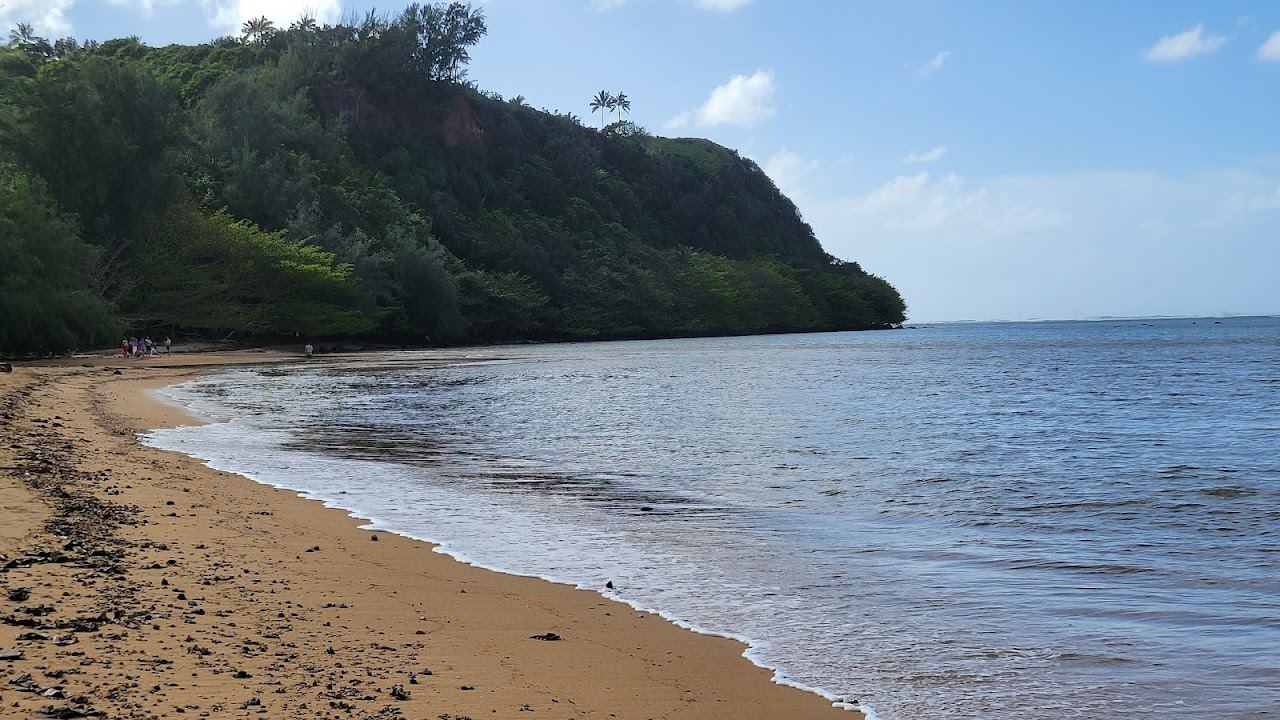
Anini runs for a couple of miles as a narrow golden strip below a wall of ironwood and false kamani trees. That tree line gives you natural shade along the whole back of the sand, which matters with small children through the middle of the day. Because the beach is so long, it rarely feels crowded. Even on a busy day you can walk a little and find a quiet stretch to call your own.
Kee is a single broad golden crescent rather than a long strand, and what it offers instead of length is scenery. This is where the coast turns wild and roadless, the Napali cliffs rising green straight out of the sea. It is one of the most photographed spots on the island, and the reef cove sits right at the foot of the cliffs. Kee is also the trailhead for the Kalalau trail, so the crescent carries hikers as well as swimmers and can feel busier in a smaller space than Anini ever does. For pure sense of place, Kee wins. For room to spread out and shade to retreat to, Anini wins.
The water: two kinds of calm
Both beaches owe their swimming to reef, but the reefs behave differently. Off Anini lies the longest and widest fringing reef in the Hawaiian Islands, and it turns the inner water into a shallow, largely flat lagoon that is among the gentlest on the north shore. On a settled summer morning the inner lagoon off the main park is flat and clear enough for children to wade and float over the coral. The catch is real and worth naming plainly: the reef has channel gaps where the water funnels hard toward the open ocean, and there is no lifeguard at Anini, so every water decision is yours. Keep children in the shallow inner water, stay well clear of the channels and stay out entirely when winter surf is up.
Kee is a reef sheltered lagoon too, clear and calm for snorkelling in summer, and it holds more of a show underwater. Tropical fish, and often green sea turtles, make it one of the best easy snorkels on Kauai when the water is settled. The decisive difference is that lifeguards are on duty by day. On an exposed north shore that is a genuine advantage, and it is why Kee is one of the safer summer swims out here even though the same cove can turn dangerous with high surf and strong currents in winter. So if your priority is the richest fish and turtle snorkel with a guard watching the water, Kee takes it. If your priority is a flat, forgiving paddle for a nervous swimmer or a toddler and you will manage the risk yourself, Anini's lagoon is the softer water.
One honest caveat for both: visibility on the north shore depends heavily on recent rain and swell, since runoff and stirred sand cloud the water. Pick a dry settled spell for either beach, and treat calm as typical rather than guaranteed on any given day.
Facilities
Anini is unusually well equipped for a north shore beach. Expect restrooms, outdoor showers, drinking water, picnic tables, a pavilion and a permitted campground right behind the sand. There is no shop or kiosk at the beach itself, so bring your own food and water regardless. The combination of that kit and the front row parking is exactly why families with a lot of gear gravitate here.
Kee has restrooms, showers and the lifeguard cover, plus its role as the Kalalau trailhead, but no club and no bar. It covers the basics well and adds the guard, which is the facility that counts most in the water. What it does not offer is the settle in for the whole day with a picnic pavilion feel that Anini has behind the sand.
Crowds
Anini feels quiet because it is long, and you can nearly always find space. Kee is capped by the reservation system, which controls the total number of people, but they concentrate on a smaller crescent that also serves the trail, so it can feel fuller in the moment. Neither is a scrum by resort standards, but the texture differs: Anini is spacious, Kee is contained.
So who wins
Anini wins if
- You want a no reservation, drive up morning with small children and a lot of gear.
- You value shade, space and a full set of park facilities for a slow day.
- You are happy to read the water yourself and keep clear of the reef channels.
Kee wins if
- The snorkel is the point and you want tropical fish and a good chance of turtles.
- You want a lifeguard on duty on this exposed coast.
- The Napali cliff scenery is worth the advance booking to you.
The day the answer flips
Two situations change everything. First, if you cannot secure a Haena pass, Kee is simply off the table for out of state visitors, and Anini becomes the obvious north shore swim. Second, winter. High surf and strong currents make both beaches a scenery visit rather than a swim in the cold months, and no reef or lifeguard changes that. When the north swell is running, look south instead. Families after a genuinely protected, year round swim are better served by the rock ponds at Lydgate Beach on the east side or the sheltered keiki pool at Poipu Beach on the sunny south shore. And if it is a calm summer swim under mountains you are chasing rather than a reef, the crescent at Hanalei Bay is the north shore's other great option, covered in our Anini and Hanalei comparison.
Planning a club day on Kauai
Neither Anini nor Kee is a club beach, and we will not pretend otherwise. For loungers, dining and organised days we point you to the operators that genuinely run on the island rather than name and price them here, since we confirm current details before you commit. Start with the Kauai beach clubs directory to enquire about a day, and plan the wider trip through our guide to timing your visit.