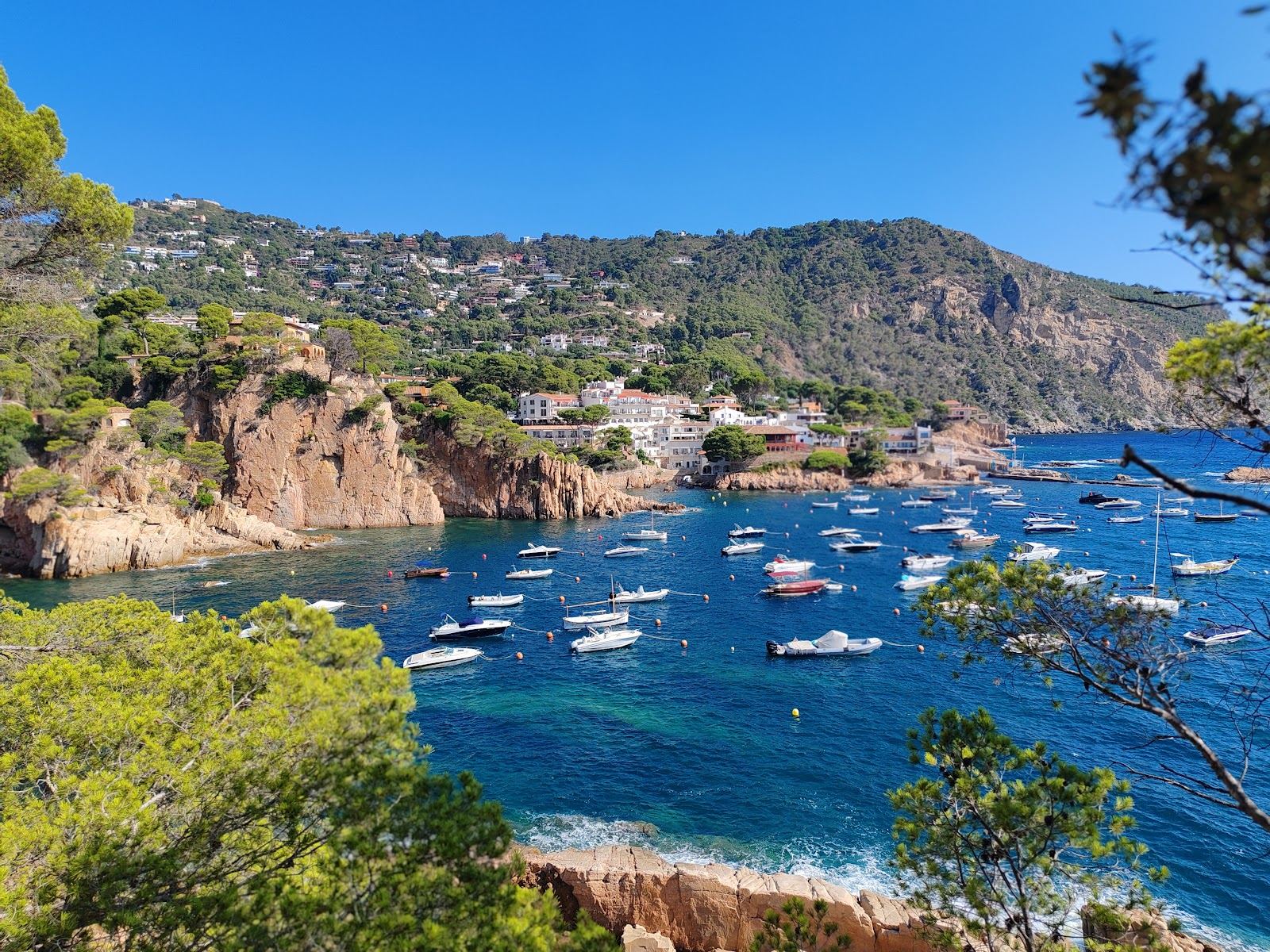
Aiguablava or Calella de Palafrugell: Costa Brava
Published 2026-10-03. Conditions described are typical and never guaranteed.
The verdict in one screen
If you are travelling with young children, or you love putting on a mask and reading the seabed, go to Aiguablava Beach. The cove under Cap de Begur holds some of the clearest and calmest water on this whole coast, it shelves gently from fine golden sand, and the rocky ends shelter seagrass meadows that make for genuinely rewarding snorkelling. It is the better swim, full stop.
If you travel for atmosphere as much as for the water, if the picture in your head is a row of white arches with fishing boats drawn up on the sand and a long seafood lunch in the shade, go to Calella de Palafrugell Beach. You are not coming here for room to stretch out. You are coming for one of the most photographed village fronts on the Costa Brava and the slow meal that goes with it.
Neither is better overall. They answer two different questions. Below I set out exactly which conditions flip the decision, because on the wrong day the loser becomes the winner.
Sand underfoot: a real difference, not a quibble
Aiguablava is a soft gold cove. The sand is fine, it shelves slowly into the shallows, and that gentle gradient is the single biggest reason it suits families and nervous swimmers. You can wade in a long way before it drops, and waves are rare in this sheltered pocket.
Calella de Palafrugell is not one beach at all. It is a string of small coves of mixed sand and pebble set between the rocks. There is sand, but there is stone too, and there is no long sweep to march a cool box down. If your idea of a beach day is a wide open strand with space between towels, this will feel cramped and stony by comparison. If your idea of a beach day is finding a perfect little pocket of shade near the boats, it is exactly right.
So the sand question is really a priorities question. Aiguablava wins on the surface you stand and sit on. Calella wins on the surface you look at, which is to say the village behind the sand rather than the sand itself.
The water: both clear, one calmer
This is where Aiguablava earns its reputation. The cove is sheltered, shallow and short on waves, with excellent clarity, and on settled days visibility reaches around fifteen metres. That combination is why the water photographs turquoise and swims even better. For snorkellers it is one of the more accessible rewarding coves on the coast: swim out to the rocky ends where the posidonia grows and you can spot octopus, starfish and small reef fish.
Calella is clear and calm too in its little coves, and pleasant for a swim or a snorkel along the edges where the rock meets the water. It is a good swim. It is simply not the headline act here the way it is at Aiguablava. You dip in, you cool off, and then you climb back up to the arches for lunch.
One honest note that applies to both: lifeguard cover is seasonal and to be confirmed at each, and it is never guaranteed. Treat the sea as unsupervised at either beach, read the conditions on the day, and make your own call before anyone gets in. Conditions I describe as typical are exactly that, typical rather than promised.
Facilities: close, but the edge changes by day
Both coves are free to enter, as open public shore, with sunbeds and umbrellas as a paid extra in season rather than a given.
Aiguablava has good facilities in season. There is sunbed hire, kayak hire and a beach restaurant, and the Parador sits on the headland above. For lunch, Toc al Mar cooks grilled fish and rice right on the sand, while the Parador de Aiguablava serves Emporda classics in its Mar i Vent dining room. Both are popular through summer, so book ahead. I am not quoting prices, opening status or hours for either, because those change and should be confirmed directly.
Calella has the deeper everyday infrastructure because it is a working village. Seafront restaurants and bars, shops and services run right through it, with limited seasonal sunbed hire in places. The food is the pull: under the arches of the Port Bo seafront the kitchens lean on fresh fish, suquet and Catalan rice dishes, with the boats in view. A slow lunch here is the point of the visit, not an afterthought to it.
Put plainly: Aiguablava has the better beach restaurant setting right on the sand, Calella has the better choice of tables a few steps back. If a memorable long lunch is the centre of your day, Calella edges it. If you want to eat without leaving the sand, Aiguablava does that.
Crowds, parking and the days each one struggles
Both share the same honest catch, and it is worth saying clearly rather than burying it. These are small, famous places, and parking is tight at each. Aiguablava is one of the prettiest and best known coves near Begur, so it is compact and fills fast. Calella de Palafrugell is a village that fills in summer, with parking that is hard work in the peak weeks.
For both, the advice is the same: arrive early or walk in, and favour June or September over August. Those shoulder months bring warm calm water, lighter crowds and easier parking than the peak, and at Aiguablava the early hours are also when the snorkelling is best, before the cove fills.
When the other one wins
Here is where the straightforward verdict bends.
- Choose Calella over Aiguablava if your day is built around food and setting rather than swimming. The arches at Port Bo, a lingering seafood lunch, and the walk along the Cami de Ronda toward Llafranc and on to the Cap Roig gardens make a fuller day out than a pure cove swim.
- Choose Calella if you are visiting in July and want the atmosphere. The Cantada d'Havaneres, an evening of habanera songs sung on the shore and served with flamed cremat, is one of the most atmospheric nights on this coast, and it is something Aiguablava simply does not offer.
- Choose Aiguablava if the trip is about the actual swim and snorkel, or if small children are wading in. The gentle shelf, the calm and the clarity are hard to beat, and the seabed near the rocky ends rewards a mask more reliably.
- Choose Aiguablava if you want to eat with your feet almost in the sand rather than in a village street behind it.
The deciding factor, more often than not, is who is in your group. A family led trip leans to Aiguablava. A couple, or anyone who counts lunch as the main event, leans to Calella.
If neither is quite right
Both these coves are small, and on a hot August afternoon both can feel full. If you want more space or a different character, this stretch of coast has honest alternatives. For a village of whitewashed houses, remarkable light and some of the best food around, with the trade off that the shore is coves and pebbles rather than soft sand, look at the Dali village on Cap de Creus. For a wild rock and sand cove you reach on foot, with no facilities at all and clear water for snorkelling, consider this remote cove beyond Platja de Castell. For a sheltered, green fringed cove paired with a clifftop botanical garden near a working town, there is the green cove below Marimurtra.
It is also worth matching the beach to the trip rather than the other way round. Our notes on timing a visit explain why June and September beat August here, while the family focused guide and the couples guide point you toward the shore that fits your group. If seclusion is the priority, start with the quieter coves roundup, and for the wider picture there is the Costa Brava hub.
If you are still weighing Aiguablava against something smaller and greener, the Aiguablava or Cala Sant Francesc comparison goes deeper. For a wilder alternative there is the walk in cove head to head, and if the village of Cadaques is tempting you, read the village versus cove verdict.
Planning a club day on the Costa Brava
If a sunbed, shade and table service are part of how you want to spend the day, plan that side in advance rather than hoping to walk up to space on a busy cove. Browse the options and enquire about a club day through the Costa Brava beach clubs page, and confirm current prices, opening status and hours directly before you travel.