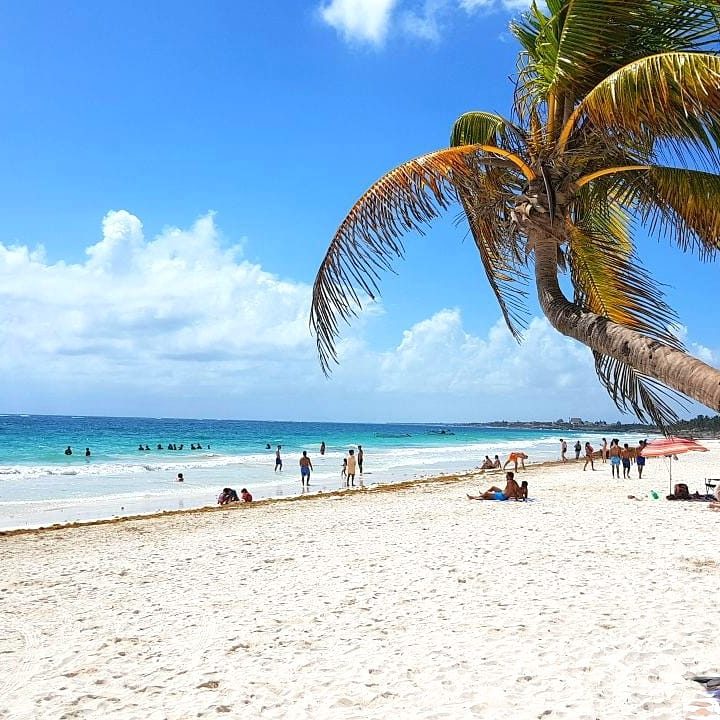
 Photo: S. Lankowski via Google
The shape of the week
- The routeOpen at Playa Paraiso below the ruins, settle into the hotel zone public sand at Playa Pescadores and Santa Fe, take a cenote day inland, go wild into Sian Kaan, snorkel Xcacel, and end on the calm of Tankah Bay.
- Where to splurgeOne designed beach club day in the hotel zone and a guided boat into the Sian Kaan biosphere.
- Where to saveUse the free public beaches in town, rent a bike for the beach road, and keep a cenote in reserve for a seaweed day.
Published 10 February 2026. Last reviewed 2 May 2026
Tulum is a coast of two textures, the bright Caribbean and the dark jungle, and the pleasure of a week here is moving between them. The light on Playa Paraiso is the postcard everyone comes for, white sand and that impossible turquoise glowing under the Mayan ruins, while a few minutes inland the colour inverts completely, cool green water in a limestone cenote, shafts of sun falling through the cave mouth. The hotel zone runs as one long thin strip of sand and palm, design hotels on one side and the sea on the other, and the days here are slow and barefoot.
The one honest planning rule that ranks above the rest is the seaweed. From roughly April into late summer, sargassum, a brown weed, can wash heavily onto the Caribbean facing beaches and pile up along the hotel zone, beautiful one week and buried the next. A winter trip from December to March gives the cleanest sand and the driest sky, and a cenote in reserve saves any day the weed rolls in. Check a current sargassum forecast before you book, and read when to go to Tulum and the best beaches in Tulum for the wider picture.
The route, day by day
| Days | Base or trip | Why you are there |
|---|---|---|
| Day 1 | Playa Paraiso and the ruins | Land, settle and take the iconic beach below the Mayan ruins. |
| Days 2 to 3 | Hotel zone | The public sand at Pescadores and Santa Fe, beach clubs and slow days. |
| Day 4 | Cenotes inland | Cool freshwater swims in the jungle, a counterpoint to the coast. |
| Day 5 | Sian Kaan biosphere | Wild, empty sand and a boat into the lagoons south of town. |
| Day 6 | Xcacel and the coast north | Turtle beach, snorkelling and a cenote hidden behind the dunes. |
| Day 7 | Tankah Bay | A calmer, sheltered bay for an easy last swim before flying home. |
Conditions are typical and never guaranteed. Prices and opening details should be confirmed at the time of booking.
Day 1, Playa Paraiso and the ruins
Fly into Cancun or the new Tulum airport, settle in and take the beach that gives the town its image. Playa Paraiso sits directly below the cliff top Mayan ruins, a wide curve of white sand and clear turquoise that is among the most photographed in Mexico. Pair a morning at the archaeological site, best early before the heat and crowds, with an afternoon swim and a first sunset. The nearby Playa Ruinas shares the same view with public access.
Days 2 to 3, the hotel zone
Settle into the long thin beach strip that is Tulum's heart. The free public beaches at Playa Pescadores and Santa Fe give the easiest access to the sand without a minimum spend, while Las Palmas is the wide open stretch the design hotels look onto. These are the days for slow mornings, a bike along the beach road and one polished beach club as a deliberate splurge. Browse the best beach clubs in Tulum to choose ahead.
Day 4, a cenote day
Trade the coast for the jungle. The cenotes inland from Tulum are freshwater sinkholes in the limestone, cool and crystalline, and a perfect counterpoint to the salt and sun of the beach, doubly so on any day the seaweed has rolled in. Gran Cenote and the vast Dos Ojos system are the classics, clear enough to snorkel among the cave formations. It is the single most distinctive day of a Tulum week and the one that stays with people.
Day 5, Sian Kaan
Head south into the Sian Kaan biosphere reserve, where the development stops and the coast turns wild, a long empty strand backed by lagoons and mangroves. A guided boat trip drifts you through the channels and out to sandbars, and the beach here is the emptiest and most untouched on the route. The road in is rough, so it is a slower day, but it is the antidote to the hotel zone polish.
Day 6, Xcacel and the coast north
Drive up the coast to Xcacel, a protected turtle nesting beach with fine white sand, good snorkelling on the reef and a small cenote tucked behind the dunes. It is a quieter, more natural stretch than the hotel zone and a fine half day, with Punta Piedra closer to town if you want to stay near base. See the best beaches for snorkelling in Tulum to plan the water.
Day 7, Tankah Bay
End somewhere sheltered and calm. Tankah Bay, just north of the hotel zone, is a quiet cove with a cenote running into the sea and gentle, clear water that is among the easiest swimming on this coast. A relaxed last morning here, away from the crowds, is a soft close before the drive to the airport. If you have longer, our 10 days in Mexico route carries on up the coast.
How to plan it, and where to save
Tulum rewards a little mobility. The hotel zone is a long thin strip and the cenotes, Sian Kaan and the beaches up the coast are spread out, so a rental car or a mix of taxis and bicycles makes the week far easier. A bike is perfect for the beach road itself once you are based, while a car earns its keep on the cenote and Sian Kaan days. Allow extra time on the single beach road, which clogs at peak hours.
What to save on. The public beaches in town, Pescadores, Santa Fe and Playa Ruinas, are free and give you the same sea as the clubs, so keep the beach clubs to one deliberate day. Eat in Tulum town rather than the beachfront, where the food is better value, and keep a cenote in your back pocket for any seaweed day. Check when to go to Tulum to time the sargassum, and place Tulum in the wider region with the best beaches in Mexico and the Riviera Maya.
Plan your day on the sand
Independent and honest · 1,340 beaches ranked across 103 destinations · We answer to no resort
Plan it properly
Is one week enough for Tulum's beaches?
Yes, and it leaves room for more. A week covers the iconic Playa Paraiso and the ruins, the public sand of the hotel zone, a cenote day inland, the wild biosphere of Sian Kaan and the turtle beach at Xcacel, with time still spare for slow mornings and a sunset or two.
When is the best time to go to Tulum?
From about December to March, when the air is dry, the sun reliable and the sargassum seaweed at its lowest. The brown seaweed can wash up heavily on Caribbean facing beaches roughly from April to August, so a winter trip gives the cleanest sand. Conditions are typical and never guaranteed.
What is sargassum and will it affect Tulum's beaches?
Sargassum is a brown seaweed that drifts onto Caribbean facing beaches, mainly from spring into late summer, and can pile up along Tulum's hotel zone in heavy years. Amounts vary day to day and beach to beach, so check a current sargassum forecast before you travel and keep a cenote or a sheltered cove in reserve. Conditions are typical and never guaranteed.
Which is the best beach in Tulum?
For the classic view, Playa Paraiso below the ruins. For free public sand, Playa Pescadores, Santa Fe and Playa Ruinas in town. For wild and empty, the long strand into Sian Kaan, and for snorkelling, Xcacel and Tankah Bay. The route strings these different moods together rather than picking one.
Do you need a car in Tulum?
It helps. The hotel zone is a long thin strip and the cenotes, Sian Kaan and the beaches further up the coast are spread out, so a car or a mix of taxis and bikes makes the week easier. A bicycle is perfect for moving along the beach road itself once you are based. Allow extra time on busy days.
Can you swim in the cenotes near Tulum?
Yes, and they are a highlight. The cenotes are freshwater sinkholes in the jungle, clear and cool, and make a perfect counterpoint to a seaweed day on the coast. Popular ones near Tulum include Gran Cenote and the Dos Ojos system. Conditions are typical and never guaranteed and no swim is ever guaranteed safe.