 Photo: Raquel Gomez via Google
The shape of the week
- The planBase in Chania for the famous western beaches of Balos, Elafonisi and Falassarna, then shift toward Rethymno for Preveli and the central coast, swimming early before the famous beaches fill and driving between regions rather than back and forth
- Best baseChania and its lovely old harbour for the first half, then a night or two toward Rethymno; splitting the week keeps the long drives over the mountains from stacking up
- The honest noteBalos and Elafonisi are as beautiful as the photos and just as crowded by midday, with rough roads or a boat to reach them, so the early hours and the spring and autumn shoulders are when they shine
- Getting aroundA hire car makes this itinerary, ideally with a little clearance for the Balos track; drives take longer than the map says over the hills, and the far eastern beaches suit a separate trip
Published 5 February 2026. Last reviewed 11 May 2026
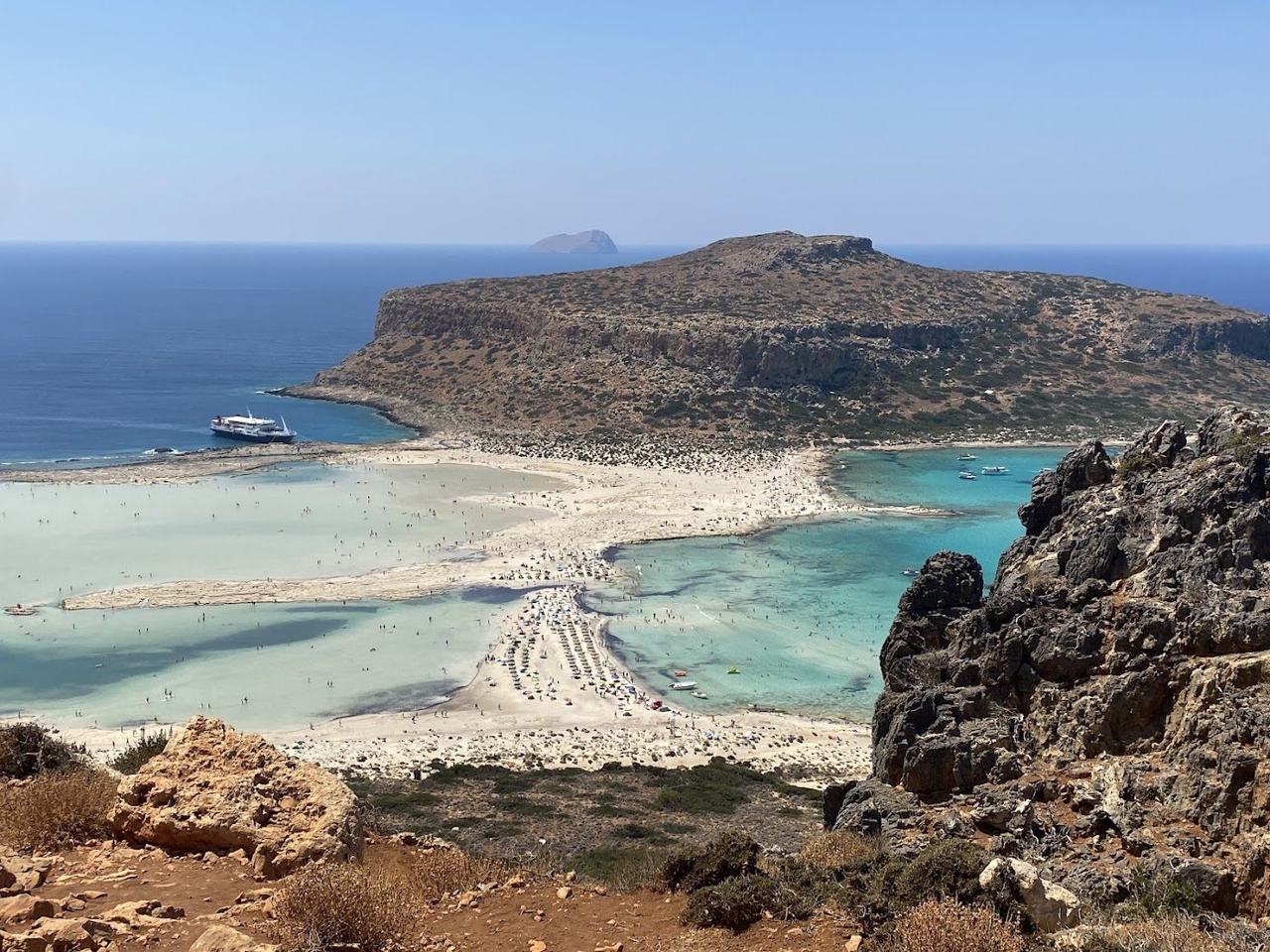
Crete is the largest of the Greek islands and far too long to see end to end in a week, but its western third holds many of the beaches that make its name, all within reach of one lovely base in Chania. The northwest has the shallow turquoise lagoon of Balos and the islet of Gramvousa. The southwest corner has Elafonisi, with its famously pink tinged sand. The west coast has the long sunset beach of Falassarna, and the rugged north has the dramatic gorge cove of Seitan Limania. Move toward the centre and the south coast adds Preveli, where a palm lined river meets the sea. The art of a week here is to cover the west well rather than chase the whole island.
This itinerary bases you in Chania for the western beaches, then shifts you toward Rethymno for the central and south coast. Treat the days as flexible and, above all, be on the sand early. The headline beaches are genuinely spectacular and genuinely busy, filling by late morning in season, with rough roads or a boat to reach the best of them. The far eastern beaches such as the palm forest of Vai are wonderful but a long drive away, and they reward a trip based in the east rather than a dash from Chania. Take the winding roads slowly, swim before the crowds, and let the island set the pace.
Seven days from the west
Settle in and an easy first swim
Arrive, pick up the car and settle into Chania, whose Venetian harbour and old town lanes are among the prettiest in Greece. Let the first day be gentle, with an easy swim at one of the calm beaches just east of town, such as the long sands around Agioi Apostoloi, or a short drive to the Stavros cove on the Akrotiri peninsula. Wander the old town in the evening, eat well by the harbour, and learn the rhythm of the island before the bigger beach days begin.
The turquoise lagoon at the northwest tip
Give the day to Balos, the shallow turquoise lagoon at the island's northwest tip and one of the most photographed beaches in Greece. Reach it either by the long unpaved road to a car park and a walk down, or more easily by a tour boat from Kissamos that usually calls at the islet of Gramvousa with its old fort. Either way go early, as it fills fast and there is little shade. The wade out across the warm shallow lagoon is the image of Crete, so give it time and bring water and sun cover.
The pink tinged sand of the southwest
Drive down to Elafonisi in the southwest corner, about an hour and a half of scenic road from Chania, for the famous beach where the sand takes on a pink tinge in places and a shallow lagoon separates the mainland from a small islet you can wade across to. It is shallow, warm and good for families, and like Balos it is beautiful and busy, so an early arrival pays off. Spend the day wading the lagoon and exploring the dunes, then take the pretty inland road back as the light softens.
A sunset beach and a dramatic cove
Spend the day on two very different western beaches. Falassarna, on the west coast, is a long, wide stretch of pale sand famous for its sunsets and its sometimes lively surf, an easy place to linger through the afternoon. For something wilder, the narrow fjord like cove of Seitan Limania, on the Akrotiri peninsula near Chania, is a dramatic gash of turquoise reached by a steep path down. Pick a calm day for it, go early for parking, and end the day watching the sun drop into the sea at Falassarna.
Move toward the centre and the old town
Shift your base east toward Rethymno, whose Venetian old town and long sandy beach make a fine second base. The drive along the north coast is straightforward, so take your time and stop where it tempts you. Settle in, swim on the town beach or one of the quieter strands nearby, and explore the old town's harbour and fortress in the evening. After the big western beach days, Rethymno's easy mix of town and sand is a welcome change of pace for the second half of the week.
The palm lined river beach of the south coast
Cross to the south coast for Preveli, one of Crete's most distinctive beaches, where a palm lined river runs down a gorge to meet the sea on a sand and pebble beach. You park above and walk down a path and steps, so wear decent shoes and go early before it fills. You can swim in the sea or paddle up the freshwater river under the palms, a rare combination. The drive over the mountains is part of the day, so allow time, and confirm any seasonal access notes locally before you set off.
A favourite beach, or a slow finish
End with an easy day. Return to whichever beach won you over, whether a calm morning swim near Rethymno, another go at the western lagoons, or a quiet southern cove. If you would rather rest, simply take a final slow morning in the old town with a long breakfast by the water. A week in Crete covers a lot of very different coast, so the right note to finish on is an unhurried one, a last warm Aegean swim before the journey home.
The practical notes
| What | The short answer |
|---|---|
| Best base | Chania for the western beaches first, then Rethymno for the central and south coast |
| Headline beaches | Balos and Gramvousa, Elafonisi, Falassarna, Seitan Limania, Preveli on the south coast |
| Getting around | A hire car, ideally with some clearance for the Balos track; drives are slow over the mountains |
| Best hours | Early morning at the famous beaches, which fill by late morning and offer little shade |
| When to go | Late May to June and September into early October for warm sea and lighter crowds |
| Good to know | The far eastern beaches such as Vai are a long drive and suit a trip based in the east |
Plan your day on the sand
Independent and honest · 1,340 beaches ranked across 103 destinations · We answer to no resort
The Crete week, answered
Is 7 days enough for a Crete beach trip?
Seven days is enough to cover the west of Crete well and reach into the centre. This itinerary bases you in Chania for the famous western beaches, Balos, Elafonisi and Falassarna, then shifts toward Rethymno for Preveli and the central coast. Crete is a long island, so trying to add the far eastern beaches such as Vai in the same week means long drives, and they are better saved for a trip based in the east.
Do you need a car in Crete?
For this itinerary, yes. Crete is large and many of its best beaches lie at the end of long or rough roads, so a hire car gives you the freedom to arrive early and move between regions. Balos in particular is reached by a rough unpaved track or by boat from Kissamos, and a car with some clearance helps. Buses serve the main towns better than the remote beaches. Drives take longer than the map suggests over the mountains.
How do you get to Balos and Elafonisi?
Balos lagoon, at the northwest tip, is reached either by a long unpaved road to a car park and then a walk down, or more easily by a tour boat from Kissamos that often calls at Gramvousa islet too. Elafonisi, with its pink tinged sand, is at the southwest corner, a scenic drive of roughly an hour and a half from Chania. Both are stunning and both get extremely busy by midday, so an early start is the single best decision you can make.
When is the best time for a Crete beach holiday?
Late May to June and September into early October are the sweet spots, with warm sea, long days and lighter crowds than the July and August peak. Midsummer is hottest and busiest, and the meltemi wind can whip up the north coast on some days, while spring and autumn are gentler. The famous beaches fill fast in season whatever the month, so the early hours matter most. Conditions are typical and never guaranteed.
Which are the best beaches in this Crete itinerary?
The headline beaches here are the turquoise lagoon of Balos and the islet of Gramvousa, the pink tinged sand of Elafonisi, the long sunset beach of Falassarna, the dramatic cove of Seitan Limania near Chania, and the palm fringed river beach of Preveli on the south coast. Each is quite different, from shallow lagoon to wild gorge mouth, which is why the drive between them is part of the pleasure of a week here.