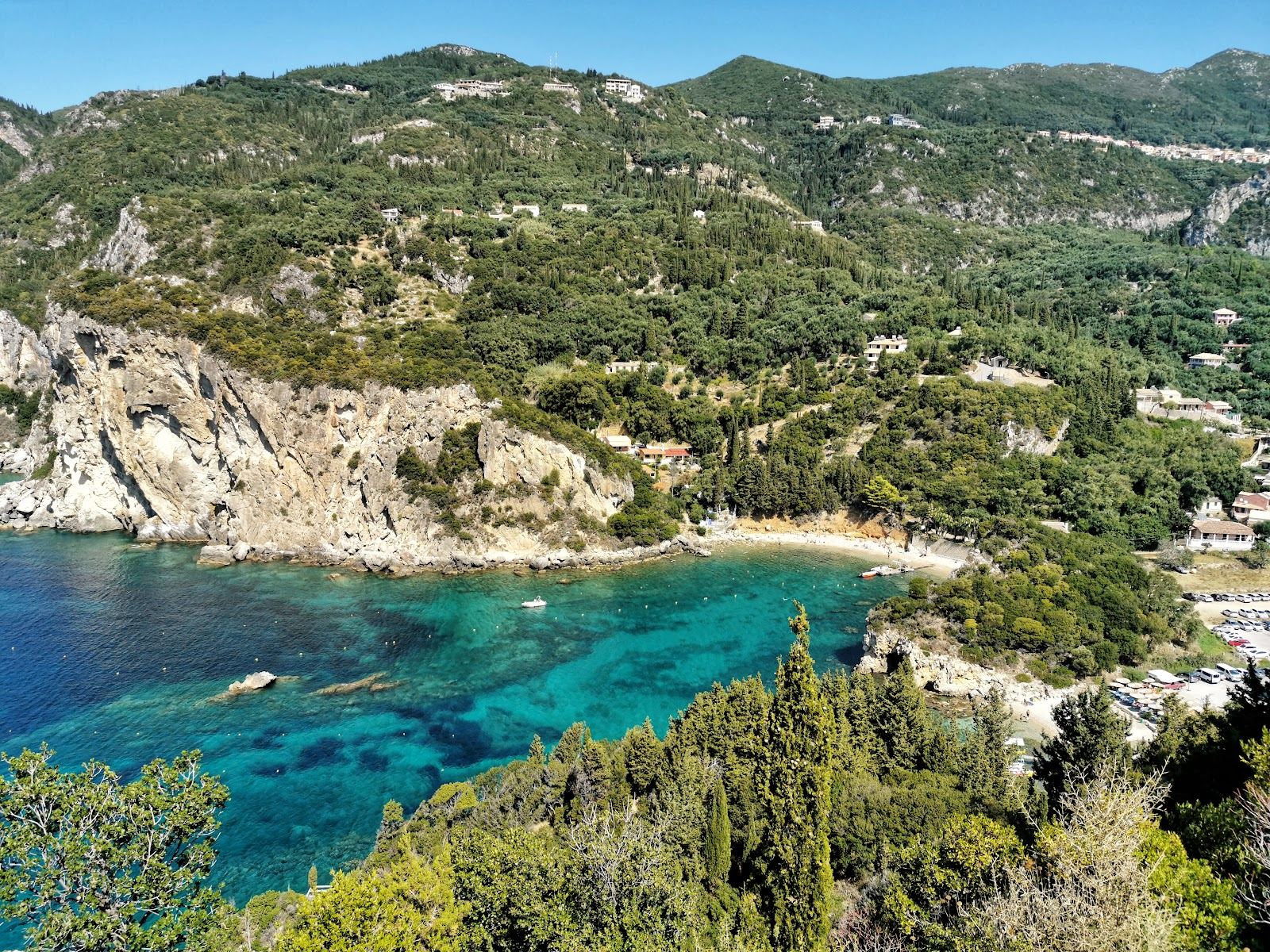
 Photo: Dominik Heblich (Bbq_spiced_wine) via Google
The practical plan
- The routeFly into Corfu, hire a car at the airport, base on the west or centre near Paleokastritsa, and ring out to the west coast, the northwest, the northeast coves and the south across the week.
- What you actually needA small car or scooter. The best beaches are spread across the island and the buses are too slow for beach hopping.
- Where to saveBook the car early, swim on the free public sand beside the clubs, and base inland of the marquee coves where rooms cost less.
Published 4 February 2026. Last reviewed 26 February 2026
Corfu is bigger than it looks on a map, and that one fact decides the whole trip. The beaches you came for are scattered around the edges of a green, mountainous island, the cliffed coves of the northwest, the long golden sweeps of the west, the calm pebble bays of the northeast and the soft sands of the south, and none of them are close to each other or to Corfu Town. Plan it as a driving week with a fixed base and the island opens up easily. Treat it like a place you can do on foot and buses and you will spend the holiday waiting at the roadside.
So the first decision is the car. Pick up a small hire car or a scooter at the airport, which sits just south of Corfu Town, and drive straight to a base on the west coast or the centre, within easy reach of the marquee beaches and the sunsets. From there the week is a series of day trips out to one coast at a time, with the drives kept short and the swimming long. Reserve the car ahead in summer, when the airport desks run dry, and choose accommodation with its own parking, because the popular west coast beaches fill their small car parks early. Here is the week, day by day. If you would rather pin the dates first, our guide on when to go to Corfu has the month by month picture.
The week, day by day
| Day | Where | Why you are there |
|---|---|---|
| Day 1 | Arrival and Corfu Town | Land, collect the car, settle into your base, then wander the old town in the evening. |
| Days 2 to 3 | The west coast | Paleokastritsa, Glyfada, Myrtiotissa and the Pelekas sunset, the island's marquee beaches. |
| Day 4 | The northwest | The double bay at Porto Timoni and the soft sandstone of Canal d'Amour at Sidari. |
| Day 5 | The northeast | The calm pebble coves below the olive groves around Barbati and Kassiopi. |
| Day 6 | The south | The long sand of Agios Gordios and the wild dunes at Issos. |
| Day 7 | A last swim and home | One final cove near your base before you drop the car and fly out. |
Drive times and prices are typical guides and should be confirmed when you book. Conditions are typical and never guaranteed.
Day 1, arrival and Corfu Town
Land at Corfu airport, which sits a few minutes south of Corfu Town, and collect your hire car at the terminal rather than chasing a bus on day one. Drive to your base, drop the bags, and give the first evening to Corfu Town itself, a Venetian old quarter of arcaded lanes, two fortresses and a cricket pitch left over from British rule, made for a slow stroll and an early dinner. It is the one part of the trip that does not need a beach, so use the tired arrival day for it and save your energy for the coast.
Days 2 to 3, the west coast
This is the heart of the island and the reason most people come. Start at Paleokastritsa, a cluster of green cliffed coves with clear water and boat trips out to the sea caves, about 35 to 40 minutes from the airport. Drop south to Glyfada, a long golden sweep with organised sunbeds and a couple of beach bars, and to the wild, undeveloped sand of Myrtiotissa, reached down a steep track that keeps the crowds thin. Finish the second day above Pelekas at the famous sunset viewpoint, then eat in the hill village behind it. Two days lets you swim properly rather than dashing between car parks.
Day 4, the northwest
Head up to the island's northwest tip for its two showpieces. Park near Afionas and walk down to Porto Timoni, a double bay where two crescents of pebble and clear water meet on a narrow isthmus, one of the most photographed spots on Corfu and worth the descent. Then drive on to Sidari for Canal d'Amour, the soft sculpted sandstone channels and little coves that give the resort its name. The northwest is a longer drive, so make it a full day and bring water and shoes for the walks. For another quiet sand stop nearby, Agios Georgios Pagon is a long open bay on the same coast.
Day 5, the northeast
The mood changes on the northeast coast, where olive groves run down to calm, deep pebble coves with a view across to the mountains of mainland Greece and Albania. Barbati is the easy choice, a long pebble beach with sunbeds and watersports below the green hills, while Kassiopi further north is a pretty harbour village ringed by small swimming coves. This stretch, long favoured by visitors who return year after year, is gentler and more sheltered than the open west coast, which makes it the calm day of the week. The water here is clear and the swimming is easy.
Day 6, the south
Point the car south for the island's broadest sands. Agios Gordios is a long west facing beach backed by green cliffs and a rock pinnacle offshore, with room to spread out and a string of tavernas, while further down the coast Issos spreads into wild dunes beside a lagoon, a favourite for kitesurfers and anyone who likes their sand empty. The south is flatter and less dramatic than the west, but it has the space, and on a busy week that is its own reward.
Day 7, a last swim and home
Use the final morning for one more swim at whichever cove near your base won you over, then drop the car back at the airport in good time. Because everything ran from a single base, there is no packing and repacking, just a clean last dip and the drive out. If you want the full ranking before you go, our guide to the best beaches in Corfu covers every beach on the island.
What it costs, and where to save
The two levers on a Corfu beach week are the car and the sunbeds. A small hire car runs roughly 35 to 55 euros a day in season plus fuel, and booking it ahead beats the airport walk up rate, especially in July and August when the desks sell out. On the beaches, the organised sunbed pairs at the smarter west coast spots carry a daily charge, so if the budget matters, take a back row pair or simply swim on the free public sand alongside, which is the same sea. Fuel adds up on a driving week, but distances are short, so it stays modest.
Where to spend. Put the money into one good beach club day on the west coast and a boat trip out from Paleokastritsa to the sea caves, which is the kind of thing you cannot do from the sand. Travel in June or September rather than the August peak and the same week costs noticeably less, with cooler driving and emptier car parks. For the venues that take bookings, our guide to the best beach clubs in Corfu has the shortlist.
Plan your day on the sand
Independent and honest · 1,340 beaches ranked across 103 destinations · We answer to no resort
Plan it properly
Do you need a car for a week in Corfu?
For a beach trip, yes. Corfu is a big island and the best beaches sit on the rugged west coast and the scattered north, well away from each other and from Corfu Town. Buses radiate from the town and reach the main resorts, but they are slow and infrequent for beach hopping, so a small hire car or a scooter turns a fiddly week into an easy one. Expect roughly 35 to 55 euros a day for a small car plus fuel, best confirmed when you book.
How do you get from Corfu airport to the beaches?
Corfu airport sits just south of Corfu Town, so it is close to everything by island standards. Glyfada on the west coast is about a twenty minute drive, Paleokastritsa in the northwest about 35 to 40 minutes, and the far north around Sidari and Kassiopi closer to an hour. Pick the car up at the airport and drive straight to your base, or prebook a transfer. Taxis and a limited bus network exist but a car is far simpler for a beach week. Times are typical and traffic dependent.
Which side of Corfu has the best beaches?
The west coast for drama and the north for variety. The west has the cliffed coves of Paleokastritsa, the long golden sweeps of Glyfada and Agios Gordios and the wild sand of Myrtiotissa, all backed by green hills and big sunsets. The northeast has calmer pebble coves below olive groves around Barbati and Kassiopi, and the far north has the soft sandstone of Canal d'Amour at Sidari. The east coast near the town is busier and less scenic for swimming.
Where should you base yourself in Corfu for a beach holiday?
Splitting the week into two bases cuts the driving. A west or central base near Paleokastritsa, Pelekas or Agios Gordios puts you minutes from the marquee coves and the sunsets, while a northern base around Barbati or Kassiopi suits the calmer pebble bays and the day trips north. If you would rather not move, a central west coast base keeps every beach within an hour. Either way, give yourself somewhere with parking.
Is one week enough to see Corfu?
For the beaches, comfortably. Seven days lets you cover the west coast highlights, the northwest around Porto Timoni and Sidari, the northeast coves and the southern sands without rushing, with time left for Corfu Town and a long lunch or two. You will not see every cove on an island this size, but you will see the best of them at a pace that still feels like a holiday.
When is the best time to visit Corfu?
Late May into June and September give the best balance, with warm sea, green hills before the summer browns them and fewer crowds than the July and August peak. High summer is hot and busy, while spring is lush but the sea is still cool and early or late season sees some venues closed. Conditions are typical and never guaranteed. See our guide on when to go to Corfu for the month by month detail.