 Photo: Quang Lưu Ngọc via Google
The shape of the trip
- The planStart in the centre at Da Nang and the lantern town of Hoi An, fly south to the bay and islands of Nha Trang, then finish on the white sands of Phu Quoc, using short domestic flights to cross the long distances and keeping each base for a few unhurried nights
- Best basesDa Nang or Hoi An for the central coast, Nha Trang for its bay and island trips, and Phu Quoc for the classic white sand and the calmest water of the trip
- The honest noteVietnam spans different climate zones, so the regions peak at different times of year; check the season for each before fixing the order, since the centre and the south are best in different months
- Getting aroundShort domestic flights between regions save days; taxis, ride hailing, drivers, scooters and boats handle the local hops
Published 28 February 2026. Last reviewed 18 May 2026
Vietnam is a long, thin country, and its coast runs for well over a thousand miles, which means a beach trip here is really a journey down a sequence of very different shores. The trick to doing it slowly rather than frantically is to accept that you cannot drive it all, and to let short domestic flights carry you between three or four bases while you settle into each for a few nights. That way the days fill with mornings on the sand and evenings in lantern lit towns rather than with the road.
This ten day route reads the coast from the centre to the far south. It opens around Da Nang and Hoi An, where a long city beach sits beside one of the most charming old towns in Asia, then flies to Nha Trang for its bay and the snorkelling islands offshore, before finishing on Phu Quoc, the southern island where the white sand and clear water come closest to the postcard. Keep the days loose, lead with the early hours when the light is soft and the sand quiet, and remember that the country's split climate means the season is worth checking for each leg before you lock the order.
Ten slow days
My Khe and the long city sand
Begin in Da Nang, the easiest central gateway, where the long sweep of My Khe beach runs for miles right beside the modern city. It is an unfussy, open beach, lovely for an early swim and a slow walk before the heat, with the Marble Mountains and the Son Tra peninsula nearby for a change of scene. Take the first two days gently, learning the rhythm of the coast, with seafood dinners by the water and the famous Dragon Bridge for an evening wander.
An Bang and the lantern town
A short drive south brings you to Hoi An, where the relaxed An Bang beach pairs with the UNESCO listed old town of lantern lit lanes and tailor shops. Spend the mornings on the sand at An Bang or the quieter Cua Dai, and the late afternoons among the yellow walls and silk lanterns as the town glows. It is the most atmospheric base of the trip, the kind of place that earns an extra slow day if you can spare it.
The bay and the city beach
Take a short domestic flight to Nha Trang, the central south's big beach city, set on a long curving bay backed by mountains. The main city beach is busy and easy, good for an afternoon swim once you arrive, while the promenade and the seafood markets give the evening its shape. It is a livelier, more developed beach scene than the central coast, a deliberate change of pace before the quieter island to come.
Snorkelling off the bay
Give a day to the islands scattered across Nha Trang bay, reached by boat and ringed with some of the clearer water on this stretch of coast. A snorkelling trip among them is the highlight here, with calm coves for swimming and a slower pace away from the city front. Choose a smaller boat for a quieter day, and time your return for a sunset over the bay. Operators and conditions vary and are best confirmed on the day.
Long Beach and the first sunset
Fly to Phu Quoc, the large island off the far southern coast, where the trip's best sand waits. Settle in along Bai Dai, also called Long Beach, the island's main west facing strand, which is celebrated for its sunsets over the gulf. The first evening is for doing very little, a long swim in the warm calm water and a simple dinner with the sun going down over the sea. Phu Quoc is where the pace finally drops to island time.
The white sand coves of the south
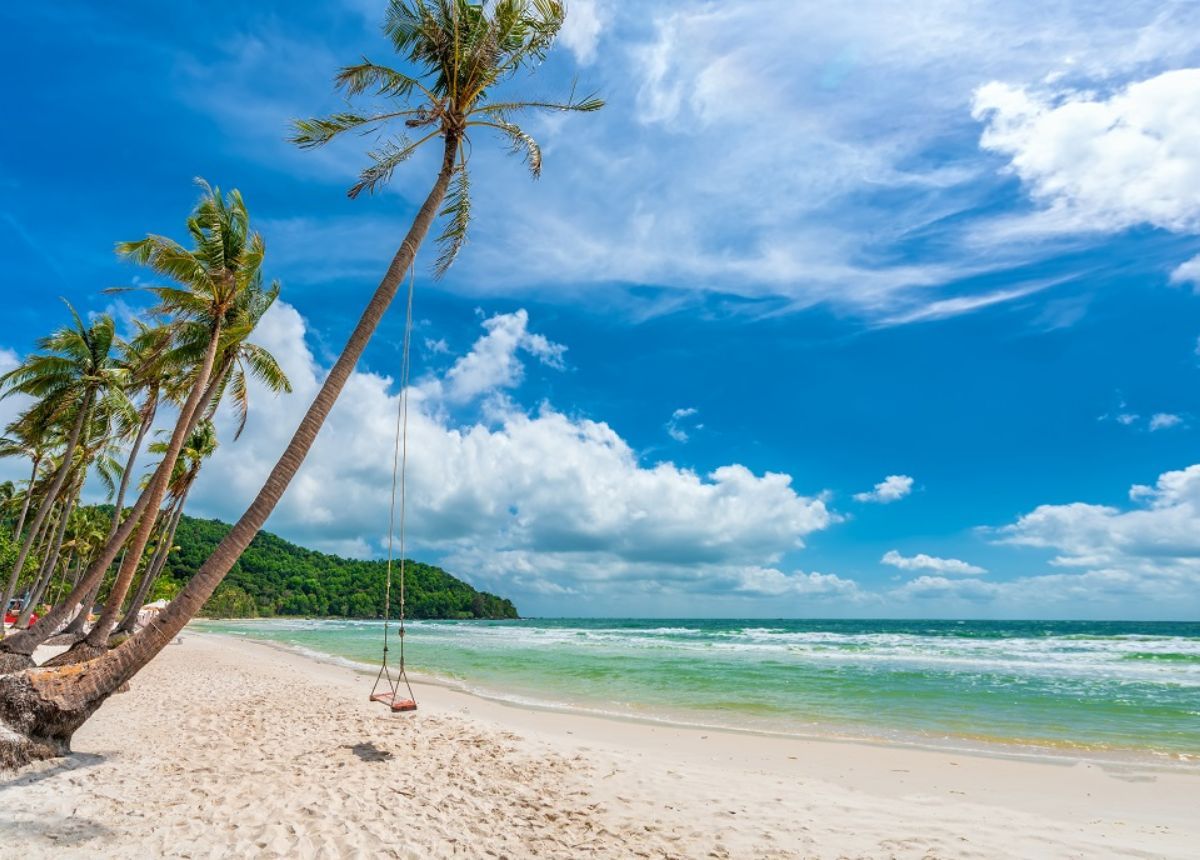
Give two days to the island's headline beaches in the south, Sao Beach and Khem Beach, where the sand is at its whitest and the water its clearest. These are the images that sell Phu Quoc, palm backed crescents of soft white sand and gentle turquoise shallows, at their most beautiful and least crowded early in the day. Rent a scooter or hire a driver to reach them, pack a picnic, and let each day be a slow drift between swims.
Snorkel the south, and a slow finish
For the final day, take a boat out to the An Thoi archipelago off the southern tip, a cluster of small islands with clear water and reefs that make for the best snorkelling on the island. Spend the morning swimming off the boat, then return for one last unhurried swim on Bai Dai as the sun sets over the gulf to close the trip. It is the gentlest possible end, all warm water and soft light, ten days after the city sand of Da Nang.
The practical notes
| What | The short answer |
|---|---|
| The route | Da Nang and Hoi An in the centre, then Nha Trang, then Phu Quoc in the south |
| Headline beaches | My Khe, An Bang, Nha Trang bay and islands, Bai Dai, Sao Beach and Khem Beach |
| Getting around | Short domestic flights between regions; taxis, drivers, scooters and boats for local hops |
| Best hours | Early morning for the quietest, softest light on the sand |
| When to go | Central coast roughly February to August; Phu Quoc roughly November to April |
| Good to know | The country spans climate zones, so the centre and south peak in different months |
Plan your day on the sand
Independent and honest · 1,340 beaches ranked across 103 destinations · We answer to no resort
The Vietnam trip, answered
Is 10 days enough for a Vietnam beach trip?
Ten days is a comfortable amount of time to follow Vietnam's coast at a slow pace. It is enough to enjoy the central beaches at Da Nang and the lantern town of Hoi An, add the islands and bays of Nha Trang, then finish on the white sands of Phu Quoc in the far south, using short domestic flights to cover the long distances between them.
What is the best order for a Vietnam beach itinerary?
Most travellers run it north to south or south to north along the coast. A natural flow is Da Nang and Hoi An in the centre, then Nha Trang, then Phu Quoc in the south, linked by short domestic flights. Because Vietnam straddles different climate zones, the best order can also depend on the season, so it is worth checking the weather for each region before fixing the route.
Which has the best beaches in Vietnam?
Phu Quoc is generally rated the standout for classic white sand and clear water, with Sao Beach, Bai Dai and Khem Beach among the best known. Da Nang's My Khe is a long, easy city beach, Hoi An's An Bang is relaxed and charming, and Nha Trang offers a lively bay with island trips. Each has its own character, so the best depends on whether you want quiet sand or a busier scene.
How do you get around Vietnam's beaches?
Short domestic flights are the practical way to cover the long distances between Da Nang, Nha Trang and Phu Quoc. Within each area, taxis, ride hailing apps, private drivers and rented scooters get you between the beaches and towns, and boats serve the offshore islands. Distances along the coast are large, so flying between regions saves days. Schedules are typical and best confirmed locally.
When is the best time for a Vietnam beach holiday?
Vietnam has several climate zones, so timing matters. The central coast around Da Nang and Hoi An is usually driest and best from roughly February to August. Phu Quoc in the south is typically at its best from November to April. Because the regions peak at different times, the ideal window depends on which beaches matter most to you. Conditions are typical and never guaranteed.