 Photo: Samuel Malmborg via Google
The shape of the trip
- The planStart in Dubrovnik, then hop by ferry to the islands of Korcula and Hvar, give time to the famous spit of Zlatni Rat on Brac, and finish in Split, letting the short, scenic sea crossings carry you between stops while you settle into each for a few unhurried nights
- Best basesDubrovnik for the walled old town and city beaches, Hvar for its lively harbour and the Pakleni islands, Brac for Zlatni Rat, and Split for the coast and the easy flights home
- The honest noteMost of Croatia's beaches are pebble rather than soft sand, which is exactly why the water is so clear; bring water shoes and come for the swimming, not the sand underfoot
- Getting aroundFerries and catamarans link the islands across short crossings; buses, taxis, scooters and small boats reach the beaches, and the old town cores are walkable
Published 19 March 2026. Last reviewed 23 April 2026
Croatia's Dalmatian coast is built for a slow island trip. The Adriatic here is famously clear, the old towns are stone and sun bleached and full of life, and the islands sit close enough together that a chain of short ferries can carry you from one to the next without a single long travel day. The honest thing to know upfront is that most of the beaches are pebble rather than soft sand, but that is the secret to the water, which stays glass clear because there is no sand to cloud it. Bring water shoes, come for the swimming, and the coast rewards you.
This ten day route reads down the coast from south to north. It opens in Dubrovnik, the walled city above the sea, then crosses to the quieter island of Korcula and on to lively Hvar, with its harbour scene and the little Pakleni islands just offshore. From there it gives proper time to Brac and the famous golden spit of Zlatni Rat, the beach that shifts its shape with the wind, before finishing in Split, where Roman walls meet a working coast and the airport makes for an easy exit. Lead with the early hours and the late light, let the ferries set the rhythm, and the trip falls into an easy, sea bright pace.
Ten slow days
The walled city and its beaches
Begin in Dubrovnik, the famous walled city rising straight from the Adriatic. Spend the first two days gently, walking the city walls in the cool of the morning, then dropping to the pebble beach at Banje just outside the gates for a swim with the old town and the island of Lokrum in view. The Lapad peninsula has calmer, family friendly bays a short hop away. It is the busiest, most dramatic stop of the route, a strong opening before the slower islands.
The quiet island crossing
Take a ferry north to Korcula, the wooded island sometimes called a little Dubrovnik for its walled old town. The crossing is part of the pleasure, all blue water and passing islands, and arriving feels like a deliberate change of gear. Settle into the old town, where stone lanes open onto the sea, and spend the afternoon easing into the slower island pace with a swim off the rocks and a harbour side dinner as the light softens.
Pebble coves and vineyards
Give a full day to Korcula's beaches and its gentler interior. The south coast hides pretty pebble coves like Pupnatska Luka, reached by a short drive or boat, where the water is clear and the crowds thin. Between swims, the island's vineyards make for an easy detour, since this is one of Croatia's noted wine islands. It is the quietest, most rural stretch of the route, the kind of slow island day that the whole trip is built around.
The lively harbour and the islets offshore
Ferry on to Hvar, the most sociable of the Dalmatian islands, where a handsome harbour town buzzes through the evening and the little Pakleni islands lie just offshore. Give one day to the town and its swimming spots, and another to a boat out to the Pakleni islets, a scatter of pine fringed rocks with clear coves perfect for a day of swimming and drifting. It is the trip's energetic heart, busy and beautiful, with the quiet of the islets always within reach.
The beach that changes shape
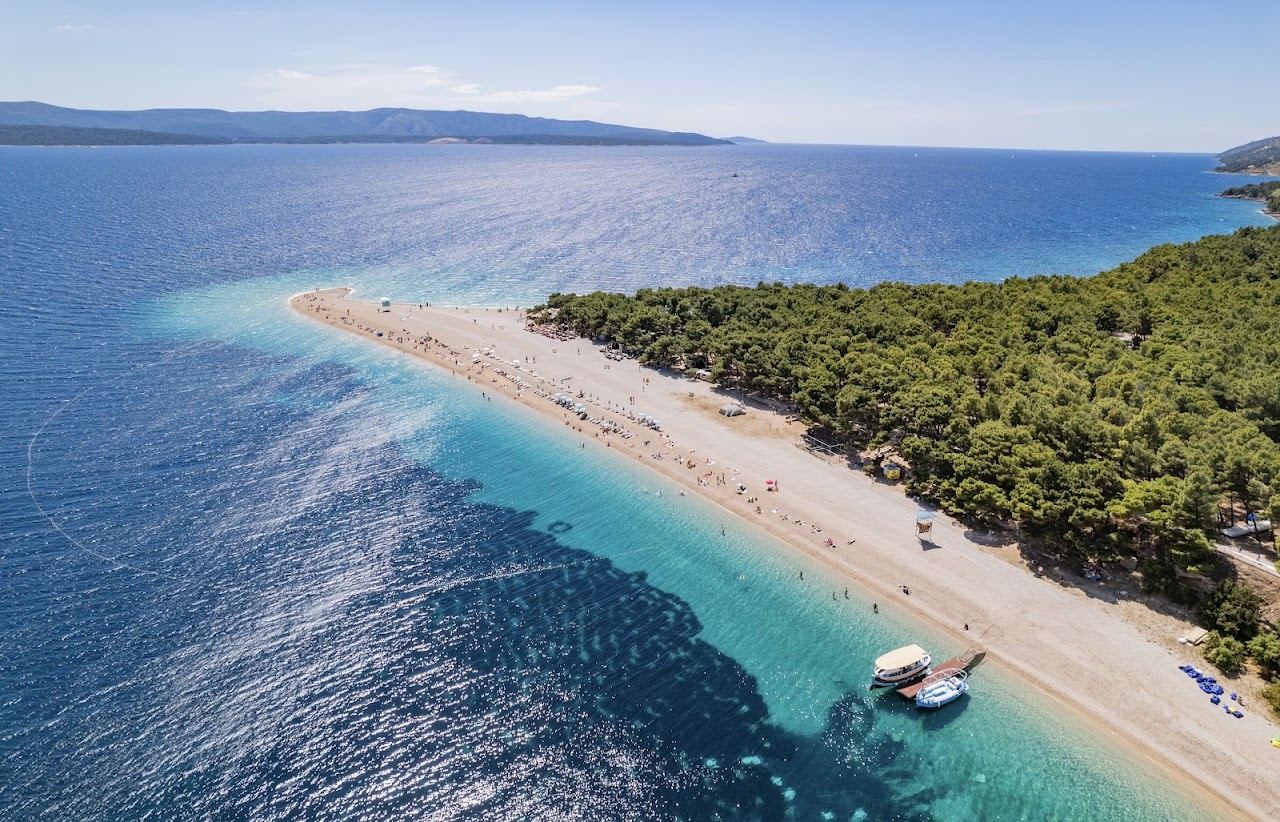
Cross to Brac for the most famous beach in Croatia, the golden spit of Zlatni Rat near the town of Bol. This long pebble tongue reaches out into the clear Adriatic and shifts its tip with the wind and current, a genuine natural curiosity as well as a beauty, and its breezy side draws windsurfers. Give two days to Bol and the beach, swimming off the spit early before the day trippers arrive and saving the late afternoon for the soft light along the shore.
Roman walls and a city swim
Take the short ferry to Split, the coast's big, lively city, built around the ancient walls of Diocletian's Palace. Spend the day balancing the old town's stone lanes with a swim at Bacvice, the city's shallow, sandy backed beach, or a walk up the wooded Marjan hill for coves and views. It is a fitting near finish, a working Adriatic city with the sea woven through it, and the easiest place to base for the journey home.
The gentle finish
Save the final morning for one more unhurried Adriatic swim before the transfer out, whether you fly from Split or loop back along the coast. It is the gentlest possible close, all clear water and warm stone, ten days after the city walls of Dubrovnik. Keep the morning loose, take a last walk by the harbour, and let the Dalmatian coast send you off slowly.
The practical notes
| What | The short answer |
|---|---|
| The route | Dubrovnik, then Korcula and Hvar, then Brac, then Split |
| Headline beaches | Banje, the Korcula coves, the Pakleni islands, Zlatni Rat and Bacvice |
| Getting around | Ferries and catamarans between islands; buses, taxis, scooters and boats locally |
| Beach type | Mostly pebble and shingle, with very clear water; bring water shoes |
| When to go | Roughly June to September; June and September are calmer than midsummer |
| Good to know | Ferries are seasonal and busy in summer, so book ahead and confirm times |
Plan your day on the sand
Independent and honest · 1,340 beaches ranked across 103 destinations · We answer to no resort
The Croatia trip, answered
Is 10 days enough for a Croatia beach trip?
Ten days is a comfortable amount of time to follow the Dalmatian coast at a slow pace. It is enough to enjoy Dubrovnik, hop by ferry to the islands of Korcula and Hvar, give time to the famous spit of Zlatni Rat on Brac, and finish in Split, using the easy island ferries to link each stop without long travel days.
What is the best order for a Croatia beach itinerary?
A natural flow runs south to north along the coast, starting in Dubrovnik, then crossing to Korcula and Hvar, on to Brac, and finishing in Split, all linked by ferries. You can run it in reverse just as easily if your flights suit Split better. The route is a chain of short sea crossings rather than a long drive, so the order is flexible around your arrival and departure points.
Are Croatia's beaches sand or pebble?
Most of Croatia's famous beaches are pebble or shingle rather than soft sand, including the celebrated spit of Zlatni Rat on Brac. The trade off is some of the clearest water in the Mediterranean, since pebbles keep the sea from clouding. Water shoes make the pebbles more comfortable underfoot, and the swimming is the real draw. A few sandier spots exist but the pebble bays are the classic Dalmatian beach.
How do you get around Croatia's islands?
Ferries and catamarans are the heart of this route, linking Dubrovnik, Korcula, Hvar, Brac and Split across short, scenic crossings. On each island, buses, taxis and rented scooters or small boats reach the beaches, and many old towns are walkable and car free at their core. Ferry timetables are seasonal and busier in summer, so it is worth booking ahead and confirming schedules locally.
When is the best time for a Croatia beach holiday?
The Croatian coast is usually at its best from roughly June to September, with the warmest sea and the longest beach days through high summer. July and August are the hottest and busiest, while June and September often balance warm water with thinner crowds and easier ferries. Conditions are typical and never guaranteed, so it is worth checking the forecast before you travel.